Tubulysin H
Modify Date: 2025-08-26 15:09:53
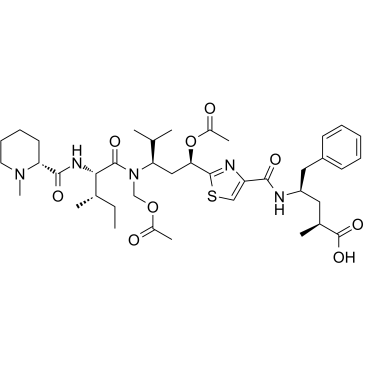
Tubulysin H structure
|
Common Name | Tubulysin H | ||
|---|---|---|---|---|
| CAS Number | 799822-09-6 | Molecular Weight | 785.99 | |
| Density | N/A | Boiling Point | N/A | |
| Molecular Formula | C40H59N5O9S | Melting Point | N/A | |
| MSDS | N/A | Flash Point | N/A | |
Use of Tubulysin HTubulysin H is a highly cytotoxic peptide isolated from the myxobacterial species Archangium geophyra and Angiococcus disciformis[1]. Tubulysin displays extremely potent cytotoxic activity in mammalian cells, including multidrug-resistant cell lines, with IC50 values in the lower nanomolar range[2]. Tubulysin H is a cytotoxic activity tubulysin which inhibits tubulin polymerization and leads to cell cycle arrest and apoptosis[3]. |
| Name | Tubulysin H |
|---|
| Description | Tubulysin H is a highly cytotoxic peptide isolated from the myxobacterial species Archangium geophyra and Angiococcus disciformis[1]. Tubulysin displays extremely potent cytotoxic activity in mammalian cells, including multidrug-resistant cell lines, with IC50 values in the lower nanomolar range[2]. Tubulysin H is a cytotoxic activity tubulysin which inhibits tubulin polymerization and leads to cell cycle arrest and apoptosis[3]. |
|---|---|
| Related Catalog | |
| References |
| Molecular Formula | C40H59N5O9S |
|---|---|
| Molecular Weight | 785.99 |
| Hazard Codes | Xi |
|---|