trioctylphosphane oxide
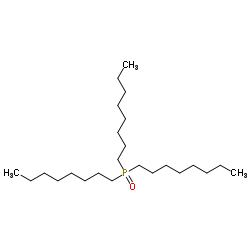
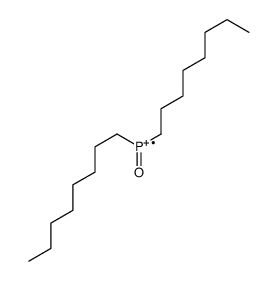
trioctylphosphane oxide structure
|
Common Name | trioctylphosphane oxide | ||
|---|---|---|---|---|
| CAS Number | 78-50-2 | Molecular Weight | 386.635 | |
| Density | 0.9±0.1 g/cm3 | Boiling Point | 408.8±0.0 °C at 760 mmHg | |
| Molecular Formula | C24H51OP | Melting Point | 50-52 °C(lit.) | |
| MSDS | Chinese USA | Flash Point | 259.8±21.5 °C | |
| Symbol |

GHS05 |
Signal Word | Danger | |
| Name | Trioctylphosphine oxide |
|---|---|
| Synonym | More Synonyms |
| Density | 0.9±0.1 g/cm3 |
|---|---|
| Boiling Point | 408.8±0.0 °C at 760 mmHg |
| Melting Point | 50-52 °C(lit.) |
| Molecular Formula | C24H51OP |
| Molecular Weight | 386.635 |
| Flash Point | 259.8±21.5 °C |
| Exact Mass | 386.367737 |
| PSA | 26.88000 |
| LogP | 9.40 |
| Vapour Pressure | 0.0±0.9 mmHg at 25°C |
| Index of Refraction | 1.448 |
| Stability | Stable. Incompatible with strong oxidizing agents. |
| Water Solubility | Insoluble |
| Symbol |
GHS05 |
|---|---|
| Signal Word | Danger |
| Hazard Statements | H315-H318 |
| Precautionary Statements | P280-P305 + P351 + P338 |
| Personal Protective Equipment | dust mask type N95 (US);Eyeshields;Gloves |
| Hazard Codes | Xi:Irritant; |
| Risk Phrases | R38;R41 |
| Safety Phrases | S26-S36/39-S39 |
| RIDADR | 3261.0 |
| WGK Germany | 2 |
| RTECS | SZ1662500 |
| Packaging Group | II |
| Hazard Class | 8.0 |
| HS Code | 32019090 |
| Precursor 9 | |
|---|---|
| DownStream 3 | |
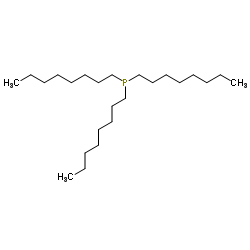 CAS#:4731-53-7
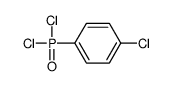 CAS#:22585-81-5
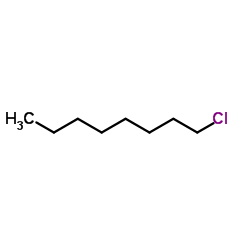 CAS#:111-85-3
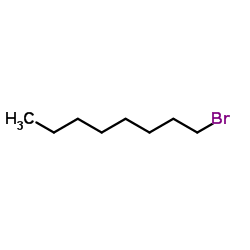
 CAS#:3011-82-3
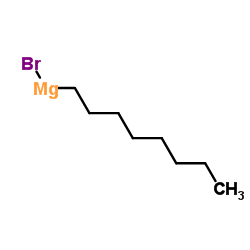
 CAS#:111-83-1
 CAS#:106446-20-2
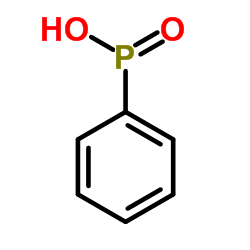
 CAS#:17049-49-9
 CAS#:1779-48-2
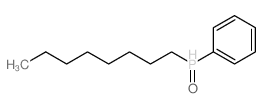 CAS#:107694-27-9
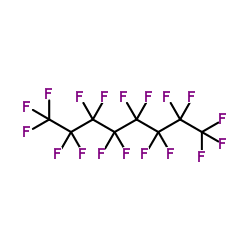 CAS#:307-34-6
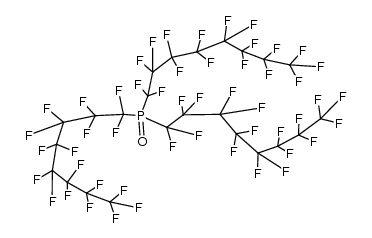 CAS#:58431-38-2
| HS Code | 32019090 |
|---|
|
L-cysteine-capped core/shell/shell quantum dot-graphene oxide nanocomposite fluorescence probe for polycyclic aromatic hydrocarbon detection.
Talanta 146 , 780-8, (2015) Environmental pollutants, such as the polycyclic aromatic hydrocarbons (PAHs), become widely distributed in the environment after emission from a range of sources, and they have potential biological e... |
|
|
Luminescent determination of quinolones in milk samples by liquid chromatography/post-column derivatization with terbium oxide nanoparticles.
J. Chromatogr. A. 1405 , 126-32, (2015) The usefulness of terbium oxide nanoparticles (Tb4O7NPs) as post-column derivatizing reagent for the liquid chromatographic determination of residues of quinolone antibiotics in milk samples has been ... |
|
|
Removal of acetic acid from simulated hemicellulosic hydrolysates by emulsion liquid membrane with organophosphorus extractants.
Bioresour. Technol. 192 , 340-5, (2015) Selective removal of acetic acid from simulated hemicellulosic hydrolysates containing xylose and sulfuric acid was attempted in a batch emulsion liquid membrane (ELM) system with organophosphorus ext... |
| trioctylphosphane oxide |
| 1-dioctylphosphoryloctane |
| EINECS 201-121-3 |
| tri-n-octylphosphine oxide |
| MFCD00002083 |
| Trioctylphosphine oxide |
| Phosphorane, trioctyl-, oxide |
The content on this webpage is sourced from various professional data sources. If you have any questions or concerns regarding the content, please feel free to contact service1@chemsrc.com.
- Shanghai Nianxing Industrial Co., Ltd
- China
- Product Name: trioctylphosphane oxide
- Price: Check
- Purity: 90.0%
- Delivery: 10 Day
- Contact: Yang
- Email: sales@echemcloud.com
- Shanghai Jizhi Biochemical Technology Co., Ltd
- China
- Product Name: trioctylphosphane oxide
- Price: ¥748.0/100g ¥278.0/25g ¥98.0/5g
- Purity: 98.0%
- Delivery: 3 Day
- Contact: Liu jia


- Email: 2130147988@qq.com
- Dayang Chem (Hangzhou) Co., Ltd.
- China
- Product Name: Trioctylphosphine oxide
- Price: $Inquiry/100g $Inquiry/1kg $Inquiry/100kg $Inquiry/1000kg
- Purity: 98.0%
- Delivery: Inquiry
- Contact: Ms Wang
- Email: enquiry@dycnchem.com
- Henan Tianfu Chemical Co., Ltd.
- China
- Product Name: TIANFU-CHEM Trioctylphosphine oxide
- Price: $Inquiry/1kg $Inquiry/25kg $Inquiry/1000kg $Inquiry/10ton
- Purity: 99.0%
- Delivery: Inquiry
- Contact: Anson
- Email: info@tianfuchem.com
Get all suppliers and price by the below link: