Acriflavine hydrochloride
Modify Date: 2025-08-25 08:59:29
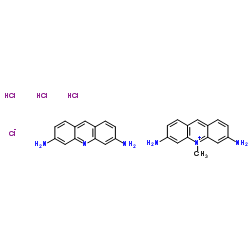
Acriflavine hydrochloride structure
|
Common Name | Acriflavine hydrochloride | ||
|---|---|---|---|---|
| CAS Number | 69235-50-3 | Molecular Weight | 578.363 | |
| Density | N/A | Boiling Point | N/A | |
| Molecular Formula | C27H28Cl4N6 | Melting Point | N/A | |
| MSDS | N/A | Flash Point | N/A | |
Use of Acriflavine hydrochlorideAcriflavine hydrochloride (Acriflavinium chloride hydrochloride) is a fluorescent acridine dye that can be used to label nucleic acid[1][2]. Acriflavine hydrochloride is an antiseptic. Acriflavine hydrochloride is a potent HIF-1 inhibitor, with antitumor activity. Acriflavine hydrochloride has antimicrobial and antiviral activities[3][4][5]. Acriflavine hydrochloride is a potent papain-like protease (PLpro) inhibitor, which inhibits SARS-CoV-2[6] |
| Name | 3,6-Diamino-10-methylacridinium chloride 3,6-acridinediamine hydrochloride (1:1:1:3) |
|---|---|
| Synonym | More Synonyms |
| Description | Acriflavine hydrochloride (Acriflavinium chloride hydrochloride) is a fluorescent acridine dye that can be used to label nucleic acid[1][2]. Acriflavine hydrochloride is an antiseptic. Acriflavine hydrochloride is a potent HIF-1 inhibitor, with antitumor activity. Acriflavine hydrochloride has antimicrobial and antiviral activities[3][4][5]. Acriflavine hydrochloride is a potent papain-like protease (PLpro) inhibitor, which inhibits SARS-CoV-2[6] |
|---|---|
| Related Catalog | |
| References |
[1]. L M Chan, et al. Interaction of acriflavine with DNA and RNA. J Mol Biol. 1969 Mar 28;40(3):491-5. |
| Molecular Formula | C27H28Cl4N6 |
|---|---|
| Molecular Weight | 578.363 |
| Exact Mass | 576.112976 |
| MFCD00069039 |
| 3,6-Diamino-10-methylacridinium chloride 3,6-acridinediamine hydrochloride (1:1:1:3) |