P-toluenethiol
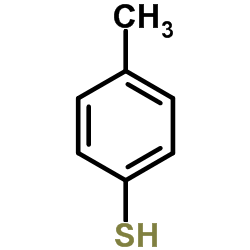
P-toluenethiol structure
|
Common Name | P-toluenethiol | ||
|---|---|---|---|---|
| CAS Number | 106-45-6 | Molecular Weight | 124.203 | |
| Density | 1.0±0.1 g/cm3 | Boiling Point | 195.0±0.0 °C at 760 mmHg | |
| Molecular Formula | C7H8S | Melting Point | 84-86(lit.) | |
| MSDS | Chinese USA | Flash Point | 68.3±0.0 °C | |
| Symbol |

GHS07 |
Signal Word | Warning | |
| Name | p-Toluenethiol |
|---|---|
| Synonym | More Synonyms |
| Density | 1.0±0.1 g/cm3 |
|---|---|
| Boiling Point | 195.0±0.0 °C at 760 mmHg |
| Melting Point | 84-86(lit.) |
| Molecular Formula | C7H8S |
| Molecular Weight | 124.203 |
| Flash Point | 68.3±0.0 °C |
| Exact Mass | 124.034668 |
| PSA | 38.80000 |
| LogP | 2.98 |
| Vapour density | 6.2 (vs air) |
| Vapour Pressure | 0.6±0.3 mmHg at 25°C |
| Index of Refraction | 1.578 |
| InChIKey | WLHCBQAPPJAULW-UHFFFAOYSA-N |
| SMILES | Cc1ccc(S)cc1 |
| Water Solubility | slightly soluble |
CHEMICAL IDENTIFICATION
HEALTH HAZARD DATAACUTE TOXICITY DATA
|
| Symbol |
GHS07 |
|---|---|
| Signal Word | Warning |
| Hazard Statements | H319 |
| Precautionary Statements | P280-P305 + P351 + P338-P337 + P313 |
| Personal Protective Equipment | Eyeshields;Gloves;type N95 (US);type P1 (EN143) respirator filter |
| Hazard Codes | Xn:Harmful; |
| Risk Phrases | R20/21/22;R36/37/38 |
| Safety Phrases | S26-S36-S36/37/39 |
| RIDADR | 2811 |
| WGK Germany | 3 |
| RTECS | XT8925000 |
| Packaging Group | III |
| Hazard Class | 6.1 |
| HS Code | 29309070 |
| Precursor 9 | |
|---|---|
| DownStream 10 | |
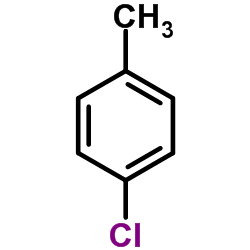 CAS#:106-43-4
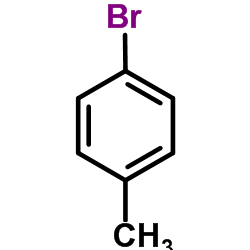 CAS#:106-38-7
 CAS#:624-31-7
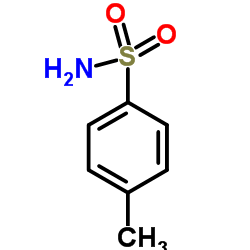 CAS#:70-55-3
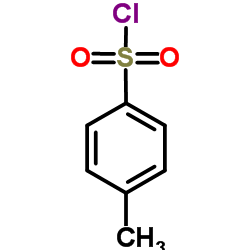 CAS#:98-59-9
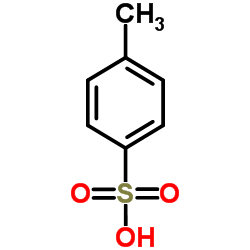 CAS#:104-15-4
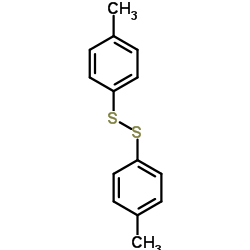 CAS#:103-19-5
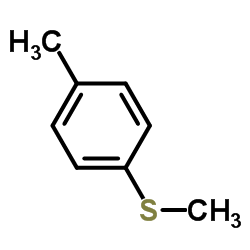 CAS#:623-13-2
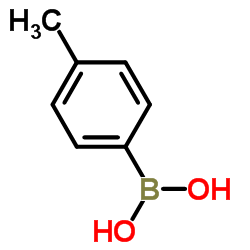 CAS#:5720-05-8
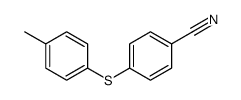 CAS#:104128-50-9
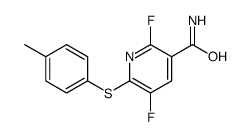 CAS#:108108-37-8
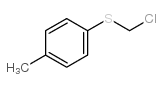 CAS#:34125-84-3
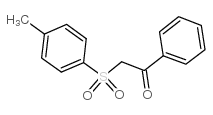 CAS#:31378-03-7
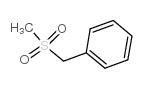 CAS#:3112-90-1
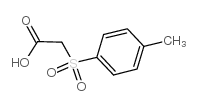 CAS#:3937-96-0
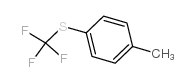 CAS#:352-68-1
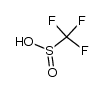 CAS#:34642-42-7
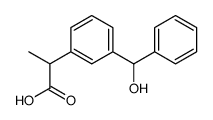 CAS#:59960-32-6
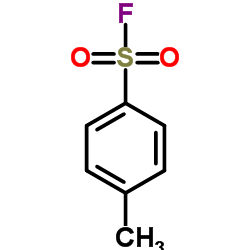 CAS#:455-16-3
| HS Code | 2930909090 |
|---|---|
| Summary | 2930909090. other organo-sulphur compounds. VAT:17.0%. Tax rebate rate:13.0%. . MFN tariff:6.5%. General tariff:30.0% |
|
Position and length of fatty acids strongly affect receptor selectivity pattern of human pancreatic polypeptide analogues.
ChemMedChem 9(11) , 2463-74, (2014) Pancreatic polypeptide (PP) is a satiety-inducing gut hormone targeting predominantly the Y4 receptor within the neuropeptide Y multiligand/multireceptor family. Palmitoylated PP-based ligands have al... |
|
|
Receptor-mediated uptake of boron-rich neuropeptide y analogues for boron neutron capture therapy.
ChemMedChem 10(1) , 164-72, (2014) Peptidic ligands selectively targeting distinct G protein-coupled receptors that are highly expressed in tumor tissue represent a promising approach in drug delivery. Receptor-preferring analogues of ... |
|
|
Color Tuning of the Aggregation-Induced Emission of Maleimide Dyes by Molecular Design and Morphology Control.
Chemistry 21 , 12105-11, (2015) Aggregation-induced emission (AIE)-active maleimide dyes, namely, 2-p-toluidino-N-p-tolylmaleimide, 3-phenyl-2-toluidino-N-p-tolylmaleimide, 2-p-thiocresyl-3-p-toluidino-N-p-tolylmaleimide, and 2,3-di... |
| p-Tolyl Mercaptan |
| 4-TOLUENETHIOL |
| p-Thiolcresol |
| EINECS 203-399-1 |
| p-Tolylthiol |
| para-thiocresol |
| Benzenethiol, 4-methyl- |
| 4-Mercaptotoluene |
| 4-methylphenyl mercaptan |
| p-methylphenylmercaptan |
| Thio-p-cresol |
| 4-Methylthiophenol |
| p-Thiocresol |
| 4-Methylbenzenethiol |
| MFCD00004851 |
| p-Thiocreso |
| usafek-510 |
| 4-thiocresol |
The content on this webpage is sourced from various professional data sources. If you have any questions or concerns regarding the content, please feel free to contact service1@chemsrc.com.
- Shanghai Nianxing Industrial Co., Ltd
- China
- Product Name: P-toluenethiol
- Price: Check
- Purity: 98.0%
- Delivery: 10 Day
- Contact: Yang
- Email: sales@echemcloud.com
- Shanghai Jizhi Biochemical Technology Co., Ltd
- China
- Product Name: P-toluenethiol
- Price: ¥105.0/25g ¥305.0/100g
- Purity: 98.0%
- Delivery: Inquiry
- Contact: Liu jia


- Email: 2130147988@qq.com
- Dayang Chem (Hangzhou) Co., Ltd.
- China
- Product Name: p-Toluenethiol
- Price: $Inquiry/100g $Inquiry/1kg $Inquiry/100kg $Inquiry/1000kg
- Purity: 98.0%
- Delivery: Inquiry
- Contact: Ms Wang
- Email: enquiry@dycnchem.com
- Henan Tianfu Chemical Co., Ltd.
- China
- Product Name: p-Toluenethiol
- Price: $Inquiry/1kg $Inquiry/25kg $Inquiry/1000kg $Inquiry/10ton
- Purity: 99.0%
- Delivery: Inquiry
- Contact: Anson
- Email: info@tianfuchem.com
Get all suppliers and price by the below link: