Necrostatin-1

Necrostatin-1 structure
|
Common Name | Necrostatin-1 | ||
|---|---|---|---|---|
| CAS Number | 4311-88-0 | Molecular Weight | 259.327 | |
| Density | 1.4±0.1 g/cm3 | Boiling Point | 441.9±37.0 °C at 760 mmHg | |
| Molecular Formula | C13H13N3OS | Melting Point | 151ºC | |
| MSDS | Chinese USA | Flash Point | 221.1±26.5 °C | |
Use of Necrostatin-1Necrostatin-1 is a potent, selective and cell-permeable necroptosis inhibitor with an EC50 of 490 nM in Jurkat cells. It acts by inhibiting the death domain kinase RIP (RIP1) in the necroptosis pathway. |
| Name | 5-(1H-indol-3-ylmethyl)-3-methyl-2-sulfanylideneimidazolidin-4-one |
|---|---|
| Synonym | More Synonyms |
| Description | Necrostatin-1 is a potent, selective and cell-permeable necroptosis inhibitor with an EC50 of 490 nM in Jurkat cells. It acts by inhibiting the death domain kinase RIP (RIP1) in the necroptosis pathway. |
|---|---|
| Related Catalog | |
| Target |
RIP1 kinase[1] |
| In Vitro | Necrostatin-1 (Nec-1) is a specific and potent small-molecule inhibitor of cell death caused by death-domain receptor (DR) stimulation in the presence of caspase inhibition in multiple cell types. Necrostatin-1 efficiently inhibits the TNFα-induced necrotic death of L929 cells, which does not require exogenous caspase inhibitors[1]. Necrostatin-1 (Nec-1) prevents radiocontrast media (RCM)-induced dilation of peritubular capillaries, suggesting a novel role unrelated to cell death for the RIP1 kinase domain in the regulation of microvascular hemodynamics and pathophysiology of contrast-induced AKI (CIAKI)[2]. The decreased viability of C6 glioma cells caused by 3.0 µM and 6.0 µM shikonin is improved by pretreatment with Necrostatin-1 (Nec-1) to 92.3% and 82.9% at 1.5 h and 84.4% and 78.6% at 3.0 h, respectively. Similarly, the viability of U87 glioma cells is elevated by Necrostatin-1 to 91.6% and 81.5% at 1.5 h, and 81.8% and 71.2% at 3.0 h, respectively[3]. Necrostatin-1 (Nec-1) (30 µM) increases the survival of cardiomyocyte progenitor cell (CMPCs) by inhibiting necrotic cell death[4]. |
| In Vivo | Necrostatin-1 (Nec-1) induces tubular bilation and affects the kinetics of the dilation of peritubular capillaries after RCM application. Upon a single intraperitoneal application of a single dose of Necrostatin-1 (1.65 mg/kg body weight, i.p.) 15 minutes before RCM, the return to baseline levels is prevented within the observation period[2]. |
| Cell Assay | C6 (3×10⁵ cells/well) and U87 (1.5×10⁵ cells/well) glioma cells are seeded onto 96-well microplate and cultured 24 h. PBS is added into the control group and Shikonin is added into experimental group to reach the final concentration. Cellular viability is assessed using an MTT assay after Shikonin treatment at indicated time point. The absorbance value (A) at 570 nm is read using an automatic multi-well spectrophotometer. Two groups of glioma cells from the same cell line are treated with Shikonin at lower or higher concentration, respectively; other two groups of glioma cells are treated 1 h with 100 µM Necrostatin-1 or 40 µM z-VAD-fmk prior to co-incubation with Shikonin at indicated concentration. Additionally, another two groups of glioma cells are treated only with 100 µM Necrostatin-1 or 40 µM Z-VAD-fmk at corresponding time point[3]. |
| Animal Admin | Mice[2] 8-10 week old male C57BL/6 mice (average weight approx.23 g) are used. Mice receive intravenous application of 200 μL PBS or radiocontrast media (RCM) via the tail vein. A single dose of Z-VAD-fmk (10 mg/kg body weight) or Necrostatin-1 (1.65 mg/kg body weight) is applied intraperitoneally 15 min. before RCM-injection. Mice are harvested another 24 hours after RCM-application (48 hours after reperfusion). Blood samples are obtained from retroorbital bleeding and serum levels of urea and creatinine are determined. |
| References |
| Density | 1.4±0.1 g/cm3 |
|---|---|
| Boiling Point | 441.9±37.0 °C at 760 mmHg |
| Melting Point | 151ºC |
| Molecular Formula | C13H13N3OS |
| Molecular Weight | 259.327 |
| Flash Point | 221.1±26.5 °C |
| Exact Mass | 259.077942 |
| PSA | 80.22000 |
| LogP | 1.26 |
| Appearance of Characters | solid |
| Vapour Pressure | 0.0±1.1 mmHg at 25°C |
| Index of Refraction | 1.738 |
| InChIKey | TXUWMXQFNYDOEZ-UHFFFAOYSA-N |
| SMILES | CN1C(=O)C(Cc2c[nH]c3ccccc23)NC1=S |
| Storage condition | −20°C |
| Water Solubility | DMSO: >10 mg/mL |
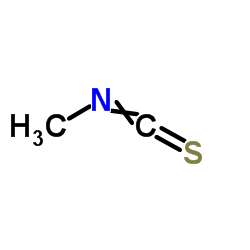

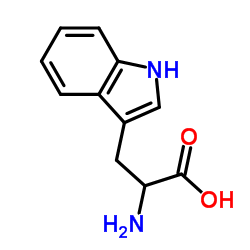
| Precursor 3 | |
|---|---|
| DownStream 0 | |
| HS Code | 2933990090 |
|---|---|
| Summary | 2933990090. heterocyclic compounds with nitrogen hetero-atom(s) only. VAT:17.0%. Tax rebate rate:13.0%. . MFN tariff:6.5%. General tariff:20.0% |
|
Dynamin-related protein Drp1 and mitochondria are important for Shigella flexneri infection.
Int. J. Med. Microbiol. 304(5-6) , 530-41, (2014) Shigella infection in epithelial cells induces cell death which is accompanied by mitochondrial dysfunction. In this study the role of the mitochondrial fission protein, Drp1 during Shigella infection... |
|
|
Activation of the MAPK11/12/13/14 (p38 MAPK) pathway regulates the transcription of autophagy genes in response to oxidative stress induced by a novel copper complex in HeLa cells.
Autophagy 10(7) , 1285-300, (2014) Transition metal copper (Cu) can exist in oxidized or reduced states in cells, leading to cytotoxicity in cancer cells through oxidative stress. Recently, copper complexes are emerging as a new class ... |
|
|
Poly-ADP-ribosylation of HMGB1 regulates TNFSF10/TRAIL resistance through autophagy.
Autophagy 11(2) , 214-24, (2015) Both apoptosis ("self-killing") and autophagy ("self-eating") are evolutionarily conserved processes, and their crosstalk influences anticancer drug sensitivity and cell death. However, the underlying... |
| 5-(1H-Indol-3-ylmethyl)-3-methyl-2-thioxo-4-imidazolidinone |
| Necrostatin-1 |
| 5-(1H-Indol-3-ylmethyl)-3-methyl-2-thioxoimidazolidin-4-one |
| Necrostatin 1 |
| MTH-trp |
| 5-indol-3-ylmethyl-3-methyl-2-thioxo-imidazolidin-4-one |
| Nec-1 |
| Necroptotic Inhibitor,Nec-1 |
| MTH-DL-Tryptophan |
| methyl-thiohydantoin-tryptophan |