1,6-DIBROMO-1,6-DIDEOXY-D-MANNITOL
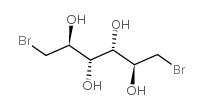
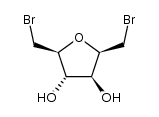
1,6-DIBROMO-1,6-DIDEOXY-D-MANNITOL structure
|
Common Name | 1,6-DIBROMO-1,6-DIDEOXY-D-MANNITOL | ||
|---|---|---|---|---|
| CAS Number | 488-41-5 | Molecular Weight | 307.96500 | |
| Density | 2.117g/cm3 | Boiling Point | 511.2ºC at 760mmHg | |
| Molecular Formula | C6H12Br2O4 | Melting Point | 176-178° | |
| MSDS | N/A | Flash Point | 263ºC | |
Use of 1,6-DIBROMO-1,6-DIDEOXY-D-MANNITOLMitobronitol (Myelobromol; DBM) is a brominated analog of mannitol, also known as an anticancer agent that is classified as an alkylating agent. Mitobronitol has potential for myelosuppression associated with significantly decreased risk for several complications of allogeneic bone marrow transplantation in accelerated chronic granulocytic leukemia[1][2]. |
This table lists Chinese names, IUPAC names and various aliases of this chemical substance.
| Name | 1,6-dibromo-1,6-dideoxy-d-mannitol |
|---|---|
| Synonym | More Synonyms |
This table contains bioactivity, target information and biological‑assay experimental data of this compound.
| Description | Mitobronitol (Myelobromol; DBM) is a brominated analog of mannitol, also known as an anticancer agent that is classified as an alkylating agent. Mitobronitol has potential for myelosuppression associated with significantly decreased risk for several complications of allogeneic bone marrow transplantation in accelerated chronic granulocytic leukemia[1][2]. |
|---|---|
| Related Catalog | |
| In Vivo | Mitobronitol (850 mg/kg; i.p.; single dose) improves spleen cells to mitogens and enhances thymus regeneration in mice model[2]. Animal Model: Female BALB/c mice (8-10 weeks old)[2] Dosage: 850 mg/kg; 1500 mg/kg (suspended in 5% Tween 80 in saline, 0.5 mL) Administration: Intraperitoneal injection; single dose Result: Showed effect on the in vitro proliferative response of spleen cells to mitogens at 850 mg/kg. Enhanced thymus regeneration and was earlier than control, with the starting resititution time-course of 2 weeks and subtotal resititution time course of 3 weeks under 1500 mg/kg dose. |
This table shows physicochemical parameters including melting point, boiling point, density, solubility and optical rotation. Missing data is marked as N/A.
| Density | 2.117g/cm3 |
|---|---|
| Boiling Point | 511.2ºC at 760mmHg |
| Melting Point | 176-178° |
| Molecular Formula | C6H12Br2O4 |
| Molecular Weight | 307.96500 |
| Flash Point | 263ºC |
| Exact Mass | 305.91000 |
| PSA | 80.92000 |
| Vapour Pressure | 1.37E-12mmHg at 25°C |
| Index of Refraction | 1.622 |
| InChIKey | VFKZTMPDYBFSTM-UNTFVMJOSA-N |
| SMILES | OC(CBr)C(O)C(O)C(O)CBr |
| Storage condition | −20°C |
This table summarizes toxicological test data, acute & chronic toxicity and ecological hazard parameters for this chemical.
CHEMICAL IDENTIFICATION
HEALTH HAZARD DATAACUTE TOXICITY DATA
MUTATION DATA
|
This table covers safety warnings, protective measures, incompatible substances and disposal guidelines for this compound.
| Hazard Codes | T: Toxic; |
|---|---|
| Risk Phrases | 45-22 |
| Safety Phrases | S22;S45;S53;S36/S37/S39 |
| WGK Germany | 3 |
| RTECS | OP2800000 |
| HS Code | 2905590090 |
This table presents publicly reported synthetic routes, reaction conditions, reactants and product information of the compound.
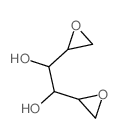
|
~%
1,6-DIBROMO-1,6... CAS#:488-41-5 |
| Literature: Institoris; Horvath; Csanyi Arzneimittel-Forschung, 1967 , vol. 17, # 2 p. 145 - 149 Title/Abstract Full Text View citing articles Show Details Samoilova,O.I. et al. J. Gen. Chem. USSR (Engl. Transl.), 1973 , vol. 43, p. 365 - 369,363 - 366 |
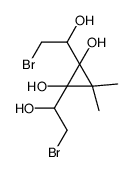
|
~%
1,6-DIBROMO-1,6... CAS#:488-41-5 |
| Literature: Overend et al. Journal of the Chemical Society, 1948 , p. 2201 |
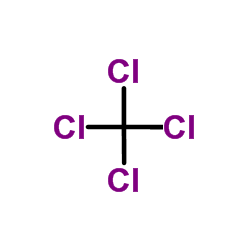
|
~%
1,6-DIBROMO-1,6... CAS#:488-41-5 |
| Literature: Fidalgo, Daniela M.; Kolender, Adriana A.; Varela, Oscar Journal of Polymer Science, Part A: Polymer Chemistry, 2013 , vol. 51, # 2 p. 463 - 470 |
|
~%
1,6-DIBROMO-1,6... CAS#:488-41-5 |
| Literature: Jarman,M.; Ross,W.C.J. Carbohydrate Research, 1969 , vol. 9, p. 139 - 147 |
|
~%
1,6-DIBROMO-1,6... CAS#:488-41-5
Detail
Learn More
|
| Literature: Kuszmann, Janos Carbohydrate Research, 1985 , vol. 142, p. 71 - 84 |
|
~%
1,6-DIBROMO-1,6... CAS#:488-41-5 |
| Literature: Overend et al. Journal of the Chemical Society, 1948 , p. 2201 |
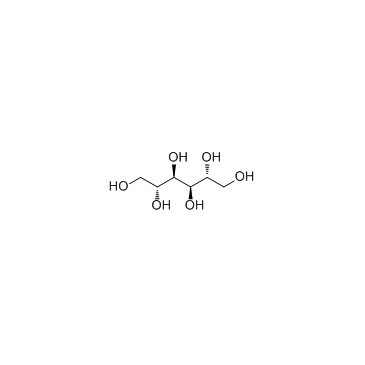
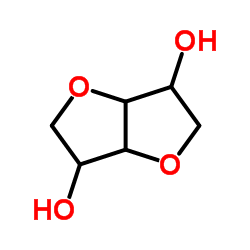
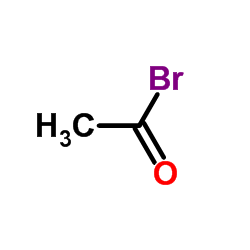

This table shows customs‑related data including HS‑code, tariff and regulatory conditions for import and export.
| HS Code | 2905590090 |
|---|---|
| Summary | 2905590090 other halogenated, sulphonated, nitrated or nitrosated derivatives of acyclic alcohols。Supervision conditions:None。VAT:17.0%。Tax rebate rate:9.0%。MFN tariff:5.5%。General tariff:30.0% |
This table contains target information, in‑vitro & in‑vivo assay data for this compound.
|
Name: Luminescence-based cell-based primary high throughput screening assay to identify ago...
Source: The Scripps Research Institute Molecular Screening Center
Target: mu-type opioid receptor isoform MOR-1 [Homo sapiens]
External Id: OPRM1-OPRD1_AG_LUMI_1536_1X%ACT PRUN
|
|
Name: Fluorescence-based cell-based primary high throughput screening assay to identify ago...
Source: The Scripps Research Institute Molecular Screening Center
Target: muscarinic acetylcholine receptor M1 [Homo sapiens]
External Id: CHRM1_AG_FLUO8_1536_1X%ACT PRUN
|
|
Name: Cytochrome P450 Family 1 Subfamily A Member 2 (CYP1A2) small molecule antagonists: lu...
Source: 824
External Id: CYP273
|
|
Name: Fluorescence-based cell-based primary high throughput screening assay to identify pos...
Source: The Scripps Research Institute Molecular Screening Center
Target: muscarinic acetylcholine receptor M1 [Homo sapiens]
External Id: CHRM1_PAM_FLUO8_1536_1X%ACT PRUN
|
|
Name: Fluorescence polarization-based biochemical high throughput primary assay to identify...
Source: The Scripps Research Institute Molecular Screening Center
Target: RecName: Full=Sialate O-acetylesterase; AltName: Full=H-Lse; AltName: Full=Sialic acid-specific 9-O-acetylesterase; Flags: Precursor [Homo sapiens]
External Id: SIAE_INH_FP_1536_1X%INH PRUN
|
|
Name: p53 small molecule agonists, cell-based qHTS assay: qHTS cell viability counter scree...
Source: 824
Target: N/A
External Id: P53600
|
|
Name: p53 small molecule agonists, cell-based qHTS assay with rat liver microsomes: qHTS ce...
Source: 824
Target: N/A
External Id: P53MS958
|
|
Name: p53 small molecule agonists, cell-based qHTS assay with rat liver microsomes: Summary
Source: 824
External Id: P53MS482
|
|
Name: p53 small molecule agonists, cell-based qHTS assay with human liver microsomes
Source: 824
Target: tumor suppressor p53 [Homo sapiens]
External Id: P53MS233
|
This table collects all English aliases, systematic names and CAS‑related synonyms of the compound.
| r54 |
| 1.6-dibromo-1.6-dideoxy-D-mannitol |
| 1,6-dibromo-D-1,6-dideoxy-mannitol |
| 1.6-Dibrom-1.6-didesoxy-D-mannit |
| dibromannit |
| dibromomannitol |
| EINECS 207-676-8 |
| Mielobromol |
| mieobromol |
| myelobromol |
| mitobronitol |
| myebrol |
This section contains frequently‑asked‑questions about this compound, including basic parameters, properties, storage conditions and corresponding answers.
| Q: What is the molecular weight of 1,6-dibromo-1,6-dideoxy-d-mannitol? |
| A: Molecular weight of 1,6-dibromo-1,6-dideoxy-d-mannitol is 307.96500. |
| Q: What is the molecular formula of 1,6-dibromo-1,6-dideoxy-d-mannitol? |
| A: Molecular formula of 1,6-dibromo-1,6-dideoxy-d-mannitol is C6H12Br2O4. |
| Q: What is the safety information for 1,6-dibromo-1,6-dideoxy-d-mannitol? |
| A: Safety information for 1,6-dibromo-1,6-dideoxy-d-mannitol: S22;S45;S53;S36/S37/S39. |
| Q: What are the storage conditions for 1,6-dibromo-1,6-dideoxy-d-mannitol? |
| A: Storage conditions for 1,6-dibromo-1,6-dideoxy-d-mannitol: −20°C. |
| Q: What is the melting point of 1,6-dibromo-1,6-dideoxy-d-mannitol? |
| A: Melting point of 1,6-dibromo-1,6-dideoxy-d-mannitol is 176-178°. |
| Q: What is the CAS number of 1,6-dibromo-1,6-dideoxy-d-mannitol? |
| A: CAS number of 1,6-dibromo-1,6-dideoxy-d-mannitol is 488-41-5. |
| Q: What is the boiling point of 1,6-dibromo-1,6-dideoxy-d-mannitol? |
| A: Boiling point of 1,6-dibromo-1,6-dideoxy-d-mannitol is 511.2ºC at 760mmHg. |
| Q: What is the SMILES notation of 1,6-dibromo-1,6-dideoxy-d-mannitol? |
| A: SMILES notation of 1,6-dibromo-1,6-dideoxy-d-mannitol is OC(CBr)C(O)C(O)C(O)CBr. |
| Q: What is the polar surface area (PSA) of 1,6-dibromo-1,6-dideoxy-d-mannitol? |
| A: Polar surface area (PSA) of 1,6-dibromo-1,6-dideoxy-d-mannitol is 80.92000. |
| Q: What English synonyms does 1,6-dibromo-1,6-dideoxy-d-mannitol have? |
| A: English synonyms of 1,6-dibromo-1,6-dideoxy-d-mannitol: r54, 1.6-dibromo-1.6-dideoxy-D-mannitol, 1,6-dibromo-D-1,6-dideoxy-mannitol, 1.6-Dibrom-1.6-didesoxy-D-mannit, dibromannit, dibromomannitol, EINECS 207-676-8, Mielobromol, mieobromol, myelobromol, mitobronitol, myebrol. |
This table lists manufacturers and suppliers of this compound, including vendor names and product supply reference information.
| Shanghai Nianxing Industrial Co., Ltd |
| Dayang Chem (Hangzhou) Co., Ltd. |