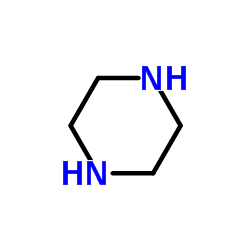
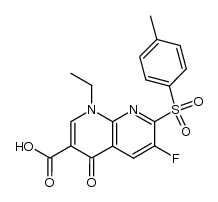
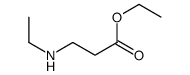
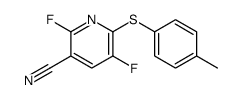
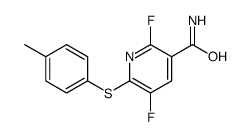
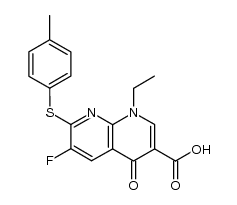
Enoxacin

Modify Date: 2026-06-30 19:17:39

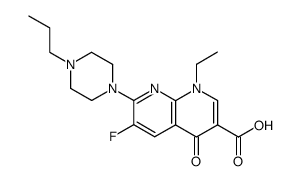
Enoxacin Structure
Enoxacin structure
Common Name Enoxacin
CAS Number 74011-58-8 Molecular Weight 320.319
Density 1.4±0.1 g/cm3 Boiling Point 569.9±50.0 °C at 760 mmHg
Molecular Formula C15H17FN4O3 Melting Point 220-224ºC
MSDS N/A Flash Point 298.4±30.1 °C

 Use of Enoxacin


Enoxacin is a broad-spectrum 6-fluoronaphthyridinone antibacterial agent.Target: antibacterialEnoxacin is a new quinolone carboxylic acid compound. Its activity against 740 bacterial isolates was determined. It inhibited 90% Escherichia coli, Klebsiella sp., Aeromonas sp., Enterobacter spp., Serratia spp., Proteus mirabilis, and Morganella morganii at less than or equal to 0.8 micrograms/ml [1]. Daily plasma theophylline concentrations were measured in 14 patients. The mean +/- s.d. theophylline concentrations increased from 8.5 +/- 2.8 micrograms ml-1 prior to enoxacin to a maximum of 21.7 +/- 7.8 micrograms ml-1 during coadministration [2].

 Names

This table lists Chinese names, IUPAC names and various aliases of this chemical substance.

Name enoxacin
Synonym More Synonyms

 Enoxacin Biological Activity

This table contains bioactivity, target information and biological‑assay experimental data of this compound.

Description Enoxacin is a broad-spectrum 6-fluoronaphthyridinone antibacterial agent.Target: antibacterialEnoxacin is a new quinolone carboxylic acid compound. Its activity against 740 bacterial isolates was determined. It inhibited 90% Escherichia coli, Klebsiella sp., Aeromonas sp., Enterobacter spp., Serratia spp., Proteus mirabilis, and Morganella morganii at less than or equal to 0.8 micrograms/ml [1]. Daily plasma theophylline concentrations were measured in 14 patients. The mean +/- s.d. theophylline concentrations increased from 8.5 +/- 2.8 micrograms ml-1 prior to enoxacin to a maximum of 21.7 +/- 7.8 micrograms ml-1 during coadministration [2].
Related Catalog
References

[1]. Chin, N.-X. and H.C. Neu, In vitro activity of enoxacin, a quinolone carboxylic acid, compared with those of norfloxacin, new beta-lactams, aminoglycosides, and trimethoprim. Antimicrobial agents and chemotherapy, 1983. 24(5): p. 754-763.

[2]. Wijnands, W., T. Vree, and C. Herwaarden, Enoxacin decreases the clearance of theophylline in man. British journal of clinical pharmacology, 1985. 20(6): p. 583-588.

 Chemical & Physical Properties

This table shows physicochemical parameters including melting point, boiling point, density, solubility and optical rotation. Missing data is marked as N/A.

Density 1.4±0.1 g/cm3
Boiling Point 569.9±50.0 °C at 760 mmHg
Melting Point 220-224ºC
Molecular Formula C15H17FN4O3
Molecular Weight 320.319
Flash Point 298.4±30.1 °C
Exact Mass 320.128479
PSA 87.46000
LogP 0.55
Vapour Pressure 0.0±1.6 mmHg at 25°C
Index of Refraction 1.599
InChIKey IDYZIJYBMGIQMJ-UHFFFAOYSA-N
SMILES CCn1cc(C(=O)O)c(=O)c2cc(F)c(N3CCNCC3)nc21
Storage condition 2-8°C

 Toxicological Information

This table summarizes toxicological test data, acute & chronic toxicity and ecological hazard parameters for this chemical.

CHEMICAL IDENTIFICATION

RTECS NUMBER :
QN2800000
CHEMICAL NAME :
1,8-Naphthyridine-3-carboxylic acid, 1,4-dihydro-1-ethyl-6-fluoro-4-oxo-7-(1-piperazinyl)-
CAS REGISTRY NUMBER :
74011-58-8
LAST UPDATED :
199806
DATA ITEMS CITED :
15
MOLECULAR FORMULA :
C15-H17-F-N4-O3
MOLECULAR WEIGHT :
320.36
WISWESSER LINE NOTATION :
T66 BV EN GNJ CVQ E2 IF H- DT6M DNTJ

HEALTH HAZARD DATA

ACUTE TOXICITY DATA

TYPE OF TEST :
LD50 - Lethal dose, 50 percent kill
ROUTE OF EXPOSURE :
Oral
SPECIES OBSERVED :
Rodent - rat
DOSE/DURATION :
>5 gm/kg
TOXIC EFFECTS :
Details of toxic effects not reported other than lethal dose value
TYPE OF TEST :
LD50 - Lethal dose, 50 percent kill
ROUTE OF EXPOSURE :
Subcutaneous
SPECIES OBSERVED :
Rodent - rat
DOSE/DURATION :
>2 gm/kg
TOXIC EFFECTS :
Behavioral - altered sleep time (including change in righting reflex) Behavioral - ataxia Skin and Appendages - hair
TYPE OF TEST :
LD50 - Lethal dose, 50 percent kill
ROUTE OF EXPOSURE :
Intravenous
SPECIES OBSERVED :
Rodent - rat
DOSE/DURATION :
236 mg/kg
TOXIC EFFECTS :
Behavioral - somnolence (general depressed activity) Behavioral - convulsions or effect on seizure threshold Behavioral - ataxia
TYPE OF TEST :
LD50 - Lethal dose, 50 percent kill
ROUTE OF EXPOSURE :
Oral
SPECIES OBSERVED :
Rodent - mouse
DOSE/DURATION :
>4 gm/kg
TOXIC EFFECTS :
Details of toxic effects not reported other than lethal dose value
TYPE OF TEST :
LD50 - Lethal dose, 50 percent kill
ROUTE OF EXPOSURE :
Intraperitoneal
SPECIES OBSERVED :
Rodent - mouse
DOSE/DURATION :
3600 mg/kg
TOXIC EFFECTS :
Details of toxic effects not reported other than lethal dose value
TYPE OF TEST :
LD50 - Lethal dose, 50 percent kill
ROUTE OF EXPOSURE :
Subcutaneous
SPECIES OBSERVED :
Rodent - mouse
DOSE/DURATION :
1100 mg/kg
TOXIC EFFECTS :
Details of toxic effects not reported other than lethal dose value
TYPE OF TEST :
LD50 - Lethal dose, 50 percent kill
ROUTE OF EXPOSURE :
Intravenous
SPECIES OBSERVED :
Rodent - mouse
DOSE/DURATION :
327 mg/kg
TOXIC EFFECTS :
Behavioral - somnolence (general depressed activity) Behavioral - convulsions or effect on seizure threshold Behavioral - ataxia
TYPE OF TEST :
LD50 - Lethal dose, 50 percent kill
ROUTE OF EXPOSURE :
Oral
SPECIES OBSERVED :
Mammal - dog
DOSE/DURATION :
>1600 mg/kg
TOXIC EFFECTS :
Behavioral - food intake (animal) Gastrointestinal - hypermotility, diarrhea
TYPE OF TEST :
LD50 - Lethal dose, 50 percent kill
ROUTE OF EXPOSURE :
Oral
SPECIES OBSERVED :
Primate - monkey
DOSE/DURATION :
>1600 mg/kg
TOXIC EFFECTS :
Behavioral - food intake (animal) Gastrointestinal - hypermotility, diarrhea
TYPE OF TEST :
TDLo - Lowest published toxic dose
ROUTE OF EXPOSURE :
Oral
SPECIES OBSERVED :
Rodent - rat
DOSE/DURATION :
90 gm/kg/30D-I
TOXIC EFFECTS :
Kidney, Ureter, Bladder - changes in bladder weight Blood - changes in leukocyte (WBC) count Nutritional and Gross Metabolic - changes in calcium
TYPE OF TEST :
TDLo - Lowest published toxic dose
ROUTE OF EXPOSURE :
Oral
SPECIES OBSERVED :
Rodent - rat
DOSE/DURATION :
273 gm/kg/26W-I
TOXIC EFFECTS :
Blood - changes in serum composition (e.g. TP, bilirubin, cholesterol) Nutritional and Gross Metabolic - weight loss or decreased weight gain Related to Chronic Data - changes in testicular weight
TYPE OF TEST :
TDLo - Lowest published toxic dose
ROUTE OF EXPOSURE :
Intravenous
SPECIES OBSERVED :
Rodent - rat
DOSE/DURATION :
1680 mg/kg/4W-I
TOXIC EFFECTS :
Skin and Appendages - dermatitis, other (after systemic exposure) Nutritional and Gross Metabolic - weight loss or decreased weight gain
TYPE OF TEST :
TDLo - Lowest published toxic dose
ROUTE OF EXPOSURE :
Oral
DOSE :
91 gm/kg
SEX/DURATION :
male 13 week(s) pre-mating
TOXIC EFFECTS :
Reproductive - Fertility - male fertility index (e.g. # males impregnating females per # males exposed to fertile nonpregnant females) Reproductive - Fertility - pre-implantation mortality (e.g. reduction in number of implants per female; total number of implants per corpora lutea) Reproductive - Fertility - post-implantation mortality (e.g. dead and/or resorbed implants per total number of implants)
TYPE OF TEST :
TDLo - Lowest published toxic dose
ROUTE OF EXPOSURE :
Oral
DOSE :
11 gm/kg
SEX/DURATION :
female 7-17 day(s) after conception
TOXIC EFFECTS :
Reproductive - Effects on Embryo or Fetus - fetotoxicity (except death, e.g., stunted fetus) Reproductive - Specific Developmental Abnormalities - musculoskeletal system

MUTATION DATA

TYPE OF TEST :
Mutation in microorganisms
TEST SYSTEM :
Bacteria - Salmonella typhimurium
DOSE/DURATION :
200 ng/plate
REFERENCE :
MUREAV Mutation Research. (Elsevier Science Pub. B.V., POB 211, 1000 AE Amsterdam, Netherlands) V.1- 1964- Volume(issue)/page/year: 281,207,1992

 Safety Information

This table covers safety warnings, protective measures, incompatible substances and disposal guidelines for this compound.

Hazard Codes Xi
Risk Phrases 36/37/38
Safety Phrases 26-36/37
WGK Germany 2
RTECS QN2800000
HS Code 29335995

 Synthetic Route

This table presents publicly reported synthetic routes, reaction conditions, reactants and product information of the compound.

 Customs

This table shows customs‑related data including HS‑code, tariff and regulatory conditions for import and export.

HS Code 29335995

 EnoxacinBioassay

View more

This table contains target information, in‑vitro & in‑vivo assay data for this compound.

Name: Primary qHTS assay for inhibitors of alpha-synuclein gene (SNCA) expression
Source: NCGC
External Id: SNCA-p-activity-luciferase
Name: Antibacterial activity against Staphylococcus aureus 209PJC-1
Source: ChEMBL
Target: Staphylococcus aureus
External Id: CHEMBL807340
Name: Quantitative High-Throughput drug screen in 47 multiple myeloma cell lines against th...
Source: NCGC
Target: N/A
External Id: s-my-keats_OPM1-m4-1
Name: Quantitative High-Throughput drug screen in 47 multiple myeloma cell lines against th...
Source: NCGC
Target: N/A
External Id: s-my-OC1MY5-m4-1
Name: Effective permeability of the compound in pH 7.4 buffer after 18 hrs by PAMPA-BBB ass...
Source: ChEMBL
Target: N/A
External Id: CHEMBL4188381
Name: Effective permeability of the compound in PBS/EtOH at 100 ug/ml after 18 hrs by PAMPA...
Source: ChEMBL
Target: N/A
External Id: CHEMBL4188382
Name: Increase the activity of the Burkholderia fixLJ 2-component system
Source: ICCB-Longwood/NSRB Screening Facility, Harvard Medical School
Target: Burkholderia multivorans
External Id: HMS1625
Name: Quantitative High-Throughput drug screen in 47 multiple myeloma cell lines against th...
Source: NCGC
Target: N/A
External Id: s-my-KMS_34-m4-1
Name: Quantitative High-Throughput drug screen in 47 multiple myeloma cell lines against th...
Source: NCGC
Target: N/A
External Id: s-my-keats_L363-m4-1
Total 1103, Current Page 1 of 111
1
2
3
4
5

 Synonyms

This table collects all English aliases, systematic names and CAS‑related synonyms of the compound.

1-ethyl-6-fluoro-4-oxo-7-piperazin-1-yl-1,4-dihydro-1,8-naphthyridine-3-carboxylic acid
MFCD00133308
1-Ethyl-6-fluoro-4-oxo-7-(piperazin-1-yl)-1,4-dihydro-1,8-naphthyridine-3-carboxylic acid
enoram
1-Ethyl-6-fluoro-4-oxo-7-(1-piperazinyl)-1,4-dihydro-1,8-naphthyridine-3-carboxylic acid
Enoxacin
FLUMARK
Abenox
ENX
Gyramid
Enoxor
ci919
at-2266
Humark
Enoxen

 Enoxacin | FAQ

This section contains frequently‑asked‑questions about this compound, including basic parameters, properties, storage conditions and corresponding answers.

Q: What is the LogP of enoxacin?
A: LogP of enoxacin is 0.55.
Q: What is the boiling point of enoxacin?
A: Boiling point of enoxacin is 569.9±50.0 °C at 760 mmHg.
Q: What are the downstream products of enoxacin?
A: Related downstream products(CAS) of enoxacin: 87939-13-7;74274-68-3.
Q: What is the polar surface area (PSA) of enoxacin?
A: Polar surface area (PSA) of enoxacin is 87.46000.
Q: What English synonyms does enoxacin have?
A: English synonyms of enoxacin: 1-ethyl-6-fluoro-4-oxo-7-piperazin-1-yl-1,4-dihydro-1,8-naphthyridine-3-carboxylic acid, MFCD00133308, 1-Ethyl-6-fluoro-4-oxo-7-(piperazin-1-yl)-1,4-dihydro-1,8-naphthyridine-3-carboxylic acid, enoram, 1-Ethyl-6-fluoro-4-oxo-7-(1-piperazinyl)-1,4-dihydro-1,8-naphthyridine-3-carboxylic acid, Enoxacin, FLUMARK, Abenox, ENX, Gyramid, Enoxor, ci919, at-2266, Humark, Enoxen.
Q: What is the molecular formula of enoxacin?
A: Molecular formula of enoxacin is C15H17FN4O3.
Q: What is the safety information for enoxacin?
A: Safety information for enoxacin: 26-36/37.
Q: What is the English name of enoxacin?
A: The English name of enoxacin is enoxacin.
Q: What is the melting point of enoxacin?
A: Melting point of enoxacin is 220-224ºC.
Q: What are the storage conditions for enoxacin?
A: Storage conditions for enoxacin: 2-8°C.

 Enoxacinfactory

This table lists manufacturers and suppliers of this compound, including vendor names and product supply reference information.

Shanghai Nianxing Industrial Co., Ltd
Henan Tianfu Chemical Co., Ltd.
The content on this webpage is sourced from various professional data sources. If you have any questions or concerns regarding the content, please feel free to contact service1@chemsrc.com.