Nature Communications 2015-01-01

PGD2 deficiency exacerbates food antigen-induced mast cell hyperplasia.

Tatsuro Nakamura, Shingo Maeda, Kazuhide Horiguchi, Toko Maehara, Kosuke Aritake, Byung-il Choi, Yoichiro Iwakura, Yoshihiro Urade, Takahisa Murata

Index: Nat. Commun. 6 , 7514, (2015)

Full Text: HTML

Abstract

Prostaglandin D2 (PGD2) is a major prostanoid secreted mainly by mast cells. Although PGD2 has been identified as a modulator of allergic inflammation, its precise role remains unclear. Here we investigate the role of PGD2 in food allergy. Oral administration of ovalbumin induces allergic responses in sensitized wild-type (WT) mice. Systemic gene deficiency of haematopoietic PGD synthase (H-PGDS(-/-)) exacerbates all of the manifestations accompanying severe mast cell hyperplasia in the intestine. Morphological studies show that c-kit/FcɛRI-positive WT mast cells strongly express H-PGDS. Transplantation of H-PGDS(-/-) mast cells also aggravates ovalbumin-induced mast cell hyperplasia and allergic symptoms in mast cell null mice. H-PGDS deficiency accelerates the production of SDF-1α and the activity of MMP-9 in the antigen-stimulated intestine. SDF-1α receptor blockade or MMP-9 inhibition relieves the exacerbated mast cell hyperplasia and manifestations observed in H-PGDS(-/-). Thus, PGD2 deficiency results in food antigen-induced mast cell hyperplasia.

Related Compounds

Structure Name/CAS No. Articles
acetic acid Structure acetic acid
CAS:1173022-32-6
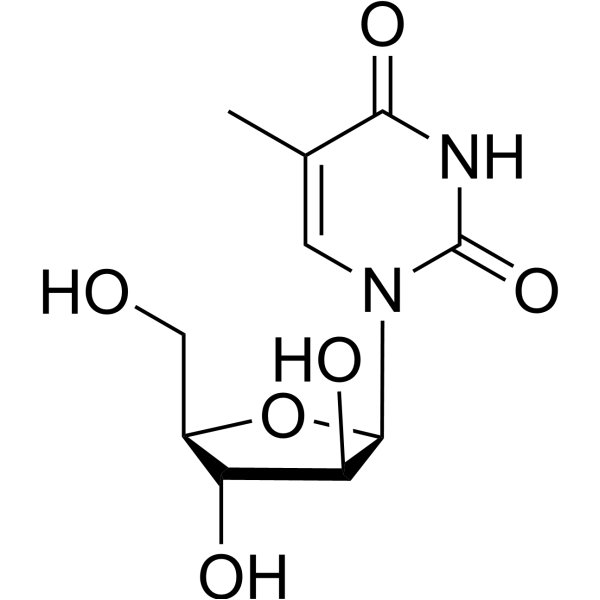
Thymine-beta-D-arabinofuranoside Structure Thymine-beta-D-arabinofuranoside
CAS:605-23-2
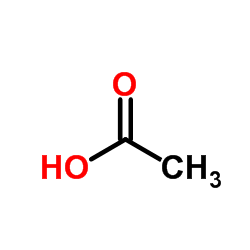
acetic acid Structure acetic acid
CAS:64-19-7
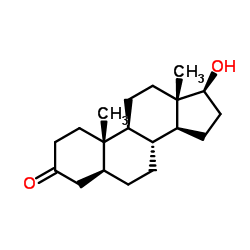
Stanolone Structure Stanolone
CAS:521-18-6