Clinical Science 2012-02-01

Hypoxia and reoxygenation modulate the arrhythmogenic activity of the pulmonary vein and atrium.

Yung-Kuo Lin, Mei-Shou Lai, Yao-Chang Chen, Chen-Chuan Cheng, Jen-Hung Huang, Shih-Ann Chen, Yi-Jen Chen, Cheng-I Lin

Index: Clin. Sci. 122(3) , 121-32, (2012)

Full Text: HTML

Abstract

Ischaemia and reperfusion contribute to the genesis of AF (atrial fibrillation). PVs (pulmonary veins) and the atria are important foci for AF initiation and maintenance. However, the effect of ischaemia and reperfusion on PVs and the atria has not yet been fully elucidated. In the present study, conventional microelectrodes were used to record the APs (action potentials) in isolated rabbit PV, LA (left atrium) and RA (right atrium) specimens during hypoxia and reoxygenation, and pharmacological interventions. Hypoxia reduced the PV beating rates from 1.8±0.1 to 1.3±0.2 and 0.8±0.1 Hz at 30 and 60 min respectively (n=8, P<0.005), and induced EAD (early after depolarization) in three (37.5%) of the PVs and DAD (delayed after depolarization) in one (12.5%) of the PVs. Reoxygenation increased the PV spontaneous rate to 1.4±0.2 Hz (P<0.05) and induced PV burst firings (3.5±0.1 Hz, P<0.001) in six (75%) of the PVs. Hypoxia shortened the AP duration in the LA and PVs, but not in the RA. Pretreatment with glibenclamide attenuated hypoxia-induced decreases in the PV spontaneous activity and the shortening of the LA and PV AP duration. Similar to those in hypoxia, the K(ATP) (ATP-sensitive potassium) channel opener pinacidil (30 μM) decreased PV spontaneous activity and shortened the AP duration. Pretreatment with 5 mM N-MPG [N-(mercaptopropionyl)glycine; a hydroxyl (•OH) free-radical scavenger] or 300 μM chloramphenicol [a cytochrome P450 inhibitor that reduces ROS (reactive oxygen species)] attenuated the rate changes induced by hypoxia and reoxygenation, and also decreased the burst firing incidence. In conclusion, hypoxia and reoxygenation significantly increased PV arrhythmogenesis and induced different electrophysiological responses in the RA and LA, which may play a role in the pathophysiology of AF.

Related Compounds

Structure Name/CAS No. Articles
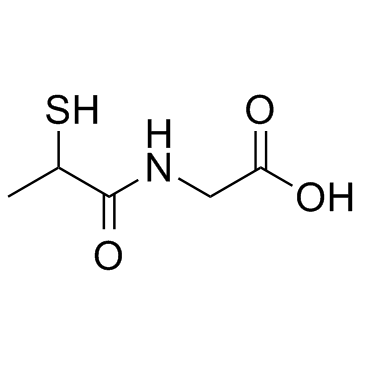
Tiopronin Structure Tiopronin
CAS:1953-02-2
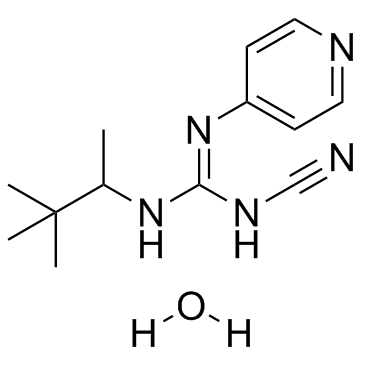
Pinacidil hydrate Structure Pinacidil hydrate
CAS:85371-64-8