Oncology Reports 2014-11-01

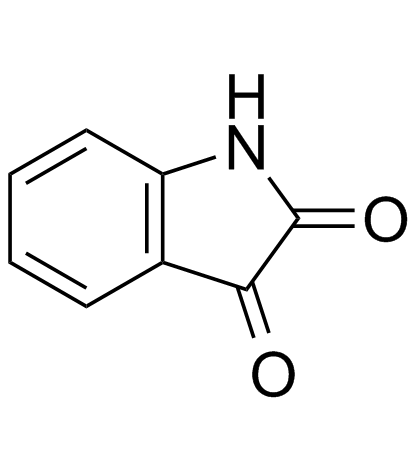
The endogenous oxindole isatin induces apoptosis of MCF‑7 breast cancer cells through a mitochondrial pathway.

Zhongliang Ma, Lin Hou, Yuhong Jiang, Yanpin Chen, Jinlian Song

Index: Oncol. Rep. 32(5) , 2111-7, (2014)

Full Text: HTML

Abstract

Isatin is an endogenous indole in mammalian tissues and fluids that is expected to have antitumor effects in human breast cancer cells. Human breast cancer cells (MCF-7) were exposed to isatin at various concentrations (0, 50, 100, 200 µmol/l) for 48 h. Apoptotic features were demonstrated by nuclei staining with Hoechst 33258 and flow cytometry. Bcl-2 and Bax mRNA were analyzed via reverse transcription-polymerase chain reaction. Bcl-2, Bax, the inhibitor of caspase-activated DNase (ICAD), and cytochrome c protein were analyzed by western blot analysis. Apoptosis, caspase-9 and -3 activation and mitochondrial depolarization were assayed by flow cytometry. The results showed that isatin induced apoptosis of MCF-7 cells. Furthermore, Bcl-2 expression was decreased and the ratio of Bcl-2 to Bax was significantly decreased by isatin. The mitochondrial transmembrane potential was markedly decreased and the release of cytochrome c into the cytosol was elevated following treatment with isatin. At the same time, caspase-9 and -3 were stimulated, followed by the degradation of ICAD, a caspase-3 substrate.

Related Compounds

Structure Name/CAS No. Articles
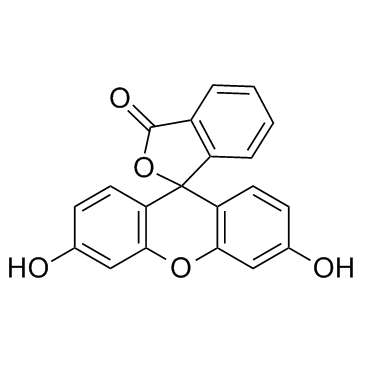
Fluorescein Structure Fluorescein
CAS:2321-07-5
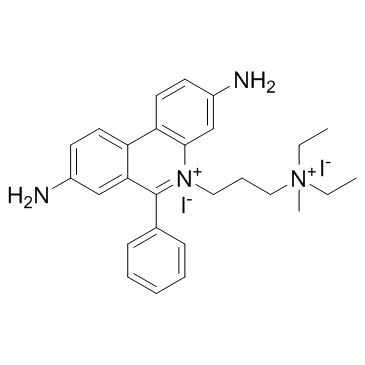
Propidium Iodide Structure Propidium Iodide
CAS:25535-16-4
isatin Structure isatin
CAS:91-56-5