Toxicology and Applied Pharmacology 2015-06-01

Glutathione S-transferase P protects against cyclophosphamide-induced cardiotoxicity in mice.

Daniel J Conklin, Petra Haberzettl, Ganapathy Jagatheesan, Shahid Baba, Michael L Merchant, Russell A Prough, Jessica D Williams, Sumanth D Prabhu, Aruni Bhatnagar

Index: Toxicol. Appl. Pharmacol. 285 , 136-48, (2015)

Full Text: HTML

Abstract

High-dose chemotherapy regimens using cyclophosphamide (CY) are frequently associated with cardiotoxicity that could lead to myocyte damage and congestive heart failure. However, the mechanisms regulating the cardiotoxic effects of CY remain unclear. Because CY is converted to an unsaturated aldehyde acrolein, a toxic, reactive CY metabolite that induces extensive protein modification and myocardial injury, we examined the role of glutathione S-transferase P (GSTP), an acrolein-metabolizing enzyme, in CY cardiotoxicity in wild-type (WT) and GSTP-null mice. Treatment with CY (100-300 mg/kg) increased plasma levels of creatine kinase-MB isoform (CK · MB) and heart-to-body weight ratio to a significantly greater extent in GSTP-null than WT mice. In addition to modest yet significant echocardiographic changes following acute CY-treatment, GSTP insufficiency was associated with greater phosphorylation of c-Jun and p38 as well as greater accumulation of albumin and protein-acrolein adducts in the heart. Mass spectrometric analysis revealed likely prominent modification of albumin, kallikrein-1-related peptidase, myoglobin and transgelin-2 by acrolein in the hearts of CY-treated mice. Treatment with acrolein (low dose, 1-5 mg/kg) also led to increased heart-to-body weight ratio and myocardial contractility changes. Acrolein induced similar hypotension in GSTP-null and WT mice. GSTP-null mice also were more susceptible than WT mice to mortality associated with high-dose acrolein (10-20 mg/kg). Collectively, these results suggest that CY cardiotoxicity is regulated, in part, by GSTP, which prevents CY toxicity by detoxifying acrolein. Thus, humans with low cardiac GSTP levels or polymorphic forms of GSTP with low acrolein-metabolizing capacity may be more sensitive to CY toxicity.Copyright © 2015 Elsevier Inc. All rights reserved.

Related Compounds

Structure Name/CAS No. Articles
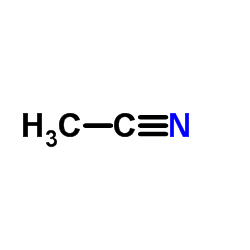
Acetonitrile Structure Acetonitrile
CAS:75-05-8
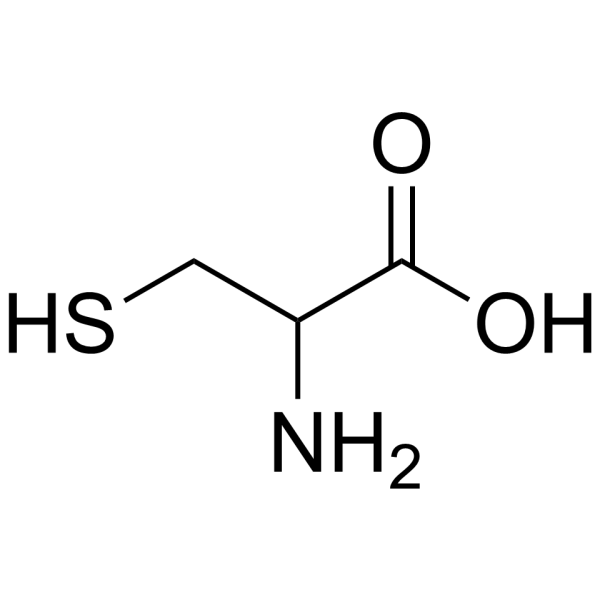
DL-CYSTEINE (1-13C) Structure DL-CYSTEINE (1-13C)
CAS:3374-22-9
Formic Acid Structure Formic Acid
CAS:64-18-6
H-Dab.HCl Structure H-Dab.HCl
CAS:1482-98-0
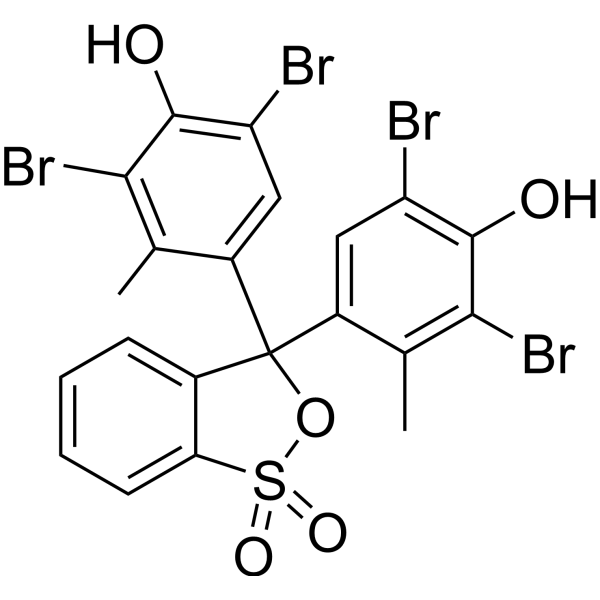
Bromocresol Green Structure Bromocresol Green
CAS:76-60-8
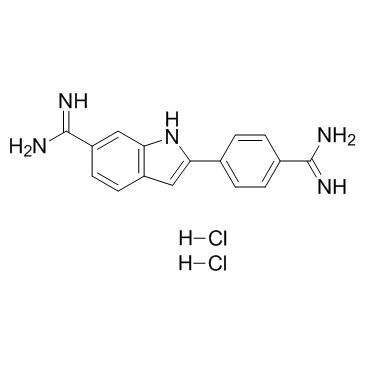
4',6-Diamidino-2-phenylindole dihydrochloride Structure 4',6-Diamidino-2-phenylindole dihydrochloride
CAS:28718-90-3
DL-Methionine Structure DL-Methionine
CAS:59-51-8