Talanta 2015-08-15

Independent components analysis to increase efficiency of discriminant analysis methods (FDA and LDA): Application to NMR fingerprinting of wine.

Yulia B Monakhova, Rolf Godelmann, Thomas Kuballa, Svetlana P Mushtakova, Douglas N Rutledge

Index: Talanta 141 , 60-5, (2015)

Full Text: HTML

Abstract

Discriminant analysis (DA) methods, such as linear discriminant analysis (LDA) or factorial discriminant analysis (FDA), are well-known chemometric approaches for solving classification problems in chemistry. In most applications, principle components analysis (PCA) is used as the first step to generate orthogonal eigenvectors and the corresponding sample scores are utilized to generate discriminant features for the discrimination. Independent components analysis (ICA) based on the minimization of mutual information can be used as an alternative to PCA as a preprocessing tool for LDA and FDA classification. To illustrate the performance of this ICA/DA methodology, four representative nuclear magnetic resonance (NMR) data sets of wine samples were used. The classification was performed regarding grape variety, year of vintage and geographical origin. The average increase for ICA/DA in comparison with PCA/DA in the percentage of correct classification varied between 6±1% and 8±2%. The maximum increase in classification efficiency of 11±2% was observed for discrimination of the year of vintage (ICA/FDA) and geographical origin (ICA/LDA). The procedure to determine the number of extracted features (PCs, ICs) for the optimum DA models was discussed. The use of independent components (ICs) instead of principle components (PCs) resulted in improved classification performance of DA methods. The ICA/LDA method is preferable to ICA/FDA for recognition tasks based on NMR spectroscopic measurements. Copyright © 2015 Elsevier B.V. All rights reserved.

Related Compounds

Structure Name/CAS No. Articles
Ethanol Structure Ethanol
CAS:64-17-5
Lithium diisopropylamide Structure Lithium diisopropylamide
CAS:4111-54-0
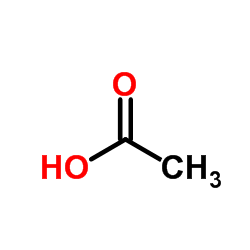
acetic acid Structure acetic acid
CAS:1173022-32-6
acetic acid Structure acetic acid
CAS:64-19-7
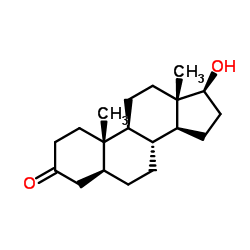
Stanolone Structure Stanolone
CAS:521-18-6