Journal of Gene Medicine 2014-01-01

Galactosylated 2-hydroxypropyl methacrylamide-s-3-guanidinopropyl methacrylamide copolymer as a small hairpin RNA carrier for inhibiting human telomerase reverse transcriptase expression.

Yang Wu, Jingkai Ji, Ran Yang, Xiaoqiang Zhang, Yuanhui Li, Yuepu Pu, Xinsong Li

Index: J. Gene Med. 16(5-6) , 109-21, (2014)

Full Text: HTML

Abstract

In the present study, a well-defined glucose and guanidine based copolymer, galactosylated 2-hydroxypropyl methacrylamide-s-3-guanidinopropyl methacrylamide (HPMA-s-GPMA) abbreviated as GGH was prepared and self-assembled with small hairpin RNA (shRNA) to inhibit human telomerase reverse transcriptase (hTERT) gene expression in vitro to develop a shRNA carrier.First, HPMA-s-APMA copolymers were synthesized by aqueous reversible addition-fragmentation chain transfer polymerization, followed by galactosylation and guanidinylation. Then, three target shRNAs containing green fluorescent protein gene as a reporter were combined with GGH to form shRNA/GGH polyplexes.GGH copolymers could condense shRNA to form shRNA/GGH polyplex particles with a diameter in the range 122.8-331.6 nm in phosphate-buffered saline, and zeta potential values ranging from +3.7 to +16.5 mV at various charge ratios (N/P). That the cytotoxicity of GGH copolymers was significantly lower than that of PEI in human hepatocellular liver carcinoma cells (HepG2) and human cervix epithelial carcinoma cells. The transfection efficiency of shRNA/GGH polyplexes was higher than that of PEI at a charge ratio of 12 in the HepG2 cell line. Furthermore, shRNA/GGH polyplexes could effectively silence hTERT mRNA expression in serum-free medium (p < 0.01) and decrease the aggregation of protein in the medium with the presence of 10% serum. In addition, hTERT mRNA expression in HepG2 cells demosntrate a significant difference between siRNA/GGH polyplexes and blank samples (p < 0.05).GGH copolymers could integrate advantages relating to galactose content for hepatocyte targeting, guanidino groups for cell penetration and HPMA component for shielding, showing great potential for effective hepatocyte targeting gene delivery.Copyright © 2014 John Wiley & Sons, Ltd.

Related Compounds

Structure Name/CAS No. Articles
sodium carbonate Structure sodium carbonate
CAS:497-19-8
Acetone Structure Acetone
CAS:67-64-1
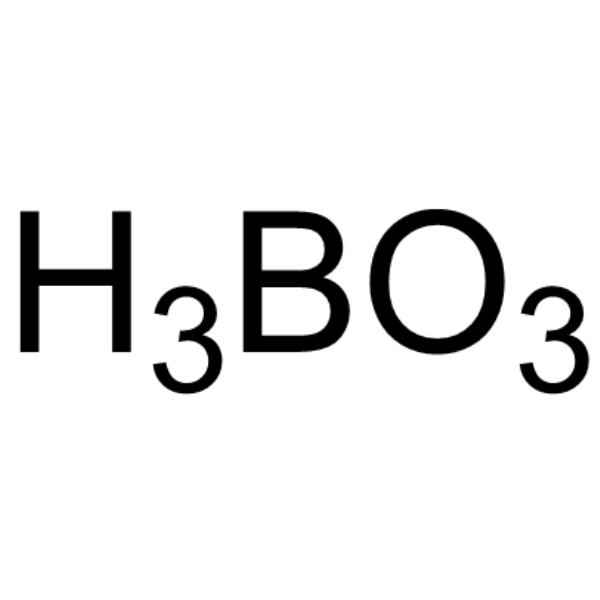
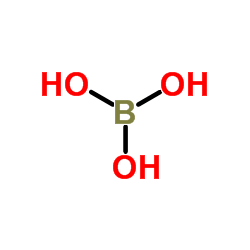
Orthoboric acid Structure Orthoboric acid
CAS:10043-35-3
Boric acid-11B Structure Boric acid-11B
CAS:13813-78-0
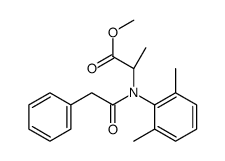
Benalaxyl-M Structure Benalaxyl-M
CAS:98243-83-5
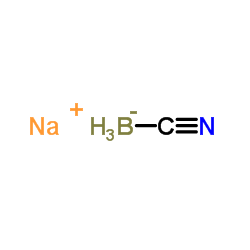
Sodium cyanoborohydride Structure Sodium cyanoborohydride
CAS:25895-60-7
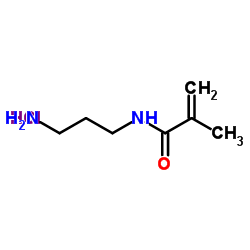
N-(3-Aminopropyl)methacrylamide hydrochloride Structure N-(3-Aminopropyl)methacrylamide hydrochloride
CAS:72607-53-5