Jun Li, Casey Harp, Job C Tharappel, Brett T Spear, Howard P Glauert
文献索引:Food Chem. Toxicol. 49 , 2706-2709, (2011)
全文:HTML全文
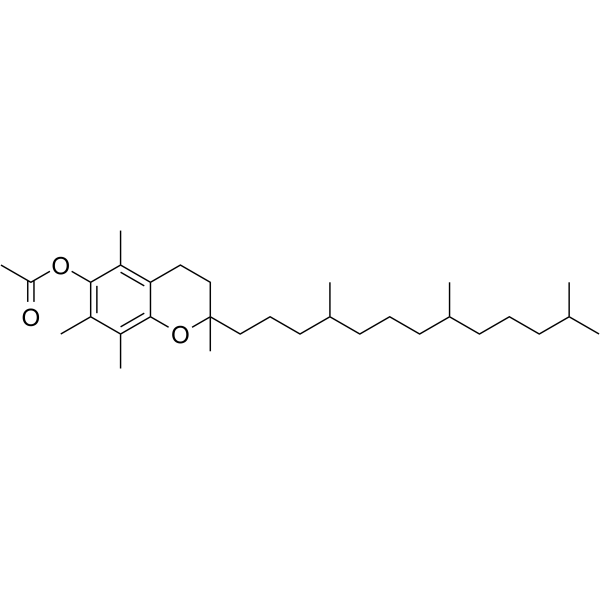
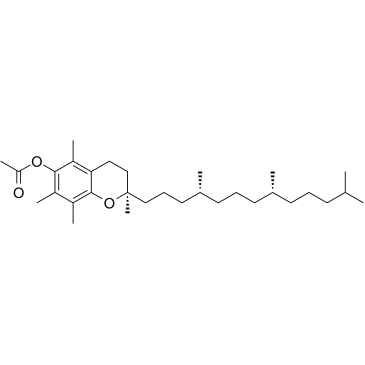
Phenobarbital (PB) is an efficacious and well-studied hepatic tumor promoting agent. Nuclear factor-κB (NF-κB) is a transcription factor activated by reactive oxygen and is involved in cell proliferation and apoptosis. We previously found that PB activates NF-κB and that dietary vitamin E is effective in decreasing PB-induced NF-κB DNA binding. We therefore hypothesized that dietary vitamin E influences PB-induced changes in cell proliferation and apoptosis through its action on NF-κB. NF-κB1 deficient mice (p50-/-) and wild-type B6129 mice were fed a purified diet containing 10 or 250ppm vitamin E (α-tocopherol acetate) for 28days. At that time, half of the wild-type and half of the p50-/- mice were placed on the same diet with 0.05% PB for 10days. Compared to wild-type mice, the p50-/- mice had higher levels of cell proliferation and apoptosis. Cell proliferation was significantly increased by PB, but vitamin E did not affect hepatic cell proliferation. Apoptosis was not changed in mice fed PB, and there was no significant difference in apoptosis between control and high vitamin E treated mice. Thus, vitamin E does not appear to influence cell growth parameters in either wild-type or p50-/- mice.Copyright © 2011 Elsevier Ltd. All rights reserved.