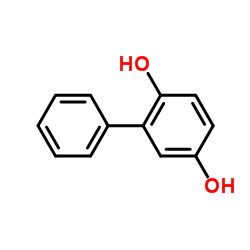
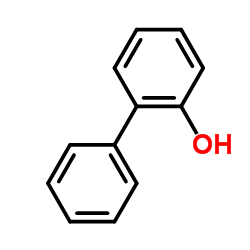
Ortho-phenyl phenol and its hepatic derivative, phenyl hydroquinone, do not generate base-substitution-type mutations, but cause bladder cancer in rats and mice. The mechanism of their carcinogenic effect is unknown. We have previously shown that o-phenyl phenol and phenyl hydroquinone induce mitotic arrest and aneuploidy in Saccharomyces cerevisiae. To further delineate the mechanism of action of phenyl hydroquinone, we examined its effect on human cells. Treatment of the colon cancer cell line HCT116 with 0 to 150 microM phenyl hydroquinone caused a concentration-dependent inhibition of growth, accumulation of cells having G2/M DNA content, and an increase in the mitotic index. Moreover, a dose-dependent increase in apoptotic cells was observed. Finally, a high frequency of aneuploid cells was found. On the other hand, no increase in gamma-H2AX foci was observed. The results show that phenyl hydroquinone does induce mitotic arrest, apoptosis and aneuploidy in the absence of DNA damage. Our results may be useful to understand the mechanisms of action of chemical substances that are Ames test-negative carcinogens.