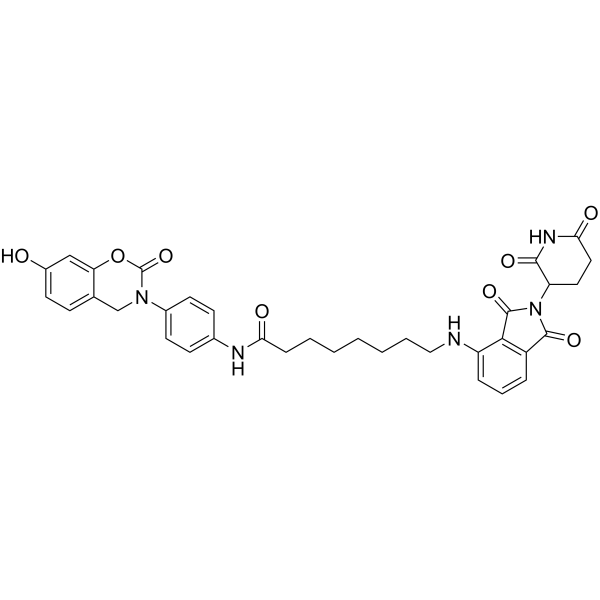
MD13

Modify Date: 2023-05-12 14:16:50

MD13 Structure
MD13 structure
Common Name MD13
CAS Number 2758431-97-7 Molecular Weight 653.68
Density N/A Boiling Point N/A
Molecular Formula C35H35N5O8 Melting Point N/A
MSDS N/A Flash Point N/A

 Use of MD13


MD13 is a macrophage migration inhibitory factor (MIF)-directed PROTAC with a Ki of 71 nM. MD13 can be used for cancer research[1].

 Names

Name MD13

 MD13 Biological Activity

Description MD13 is a macrophage migration inhibitory factor (MIF)-directed PROTAC with a Ki of 71 nM. MD13 can be used for cancer research[1].
Related Catalog
Target

Ki: 71 nM (MIF)[1]

In Vitro MD13 degrades 91±5% and 71±7% MIF at 2 μM and 0.2 μM, respectively. MD13 induces MIF degradation through binding to E3 ligase cereblon[1]. MD13 (0-20 μM; 72 h) inhibits cell proliferation of A549 cancer cells[1]. MD13 (1-5 μM; 48 h) arrests cell cycle at G2/M phase in A549 cells[1]. MD13 (2 μM; 6-48 h) inhibits ERK signaling[1]. Western Blot Analysis[1] Cell Line: A549 cells Concentration: 0-20 μM Incubation Time: 12 h Result: Caused depletion of MIF protein. Western Blot Analysis[1] Cell Line: A549 cells Concentration: 2 μM Incubation Time: 6, 24 or 48 h Result: Inhibited ERK phosphorylation. Cell Proliferation Assay[1] Cell Line: A549 cells Concentration: 0-20 μM Incubation Time: 72 h Result: Inhibited the growth of A549 cells in a dose-dependent manner. The inhibitory effect reached about 50% inhibition of cell proliferation at a concentration of 20 µM. Cell Cycle Analysis[1] Cell Line: A549 cells Concentration: 1, 2, or 5 μM Incubation Time: 48 h Result: Dose-dependently induced cell cycle arrest at the G2/M phase.
References

[1]. Xiao Z, et al. Proteolysis Targeting Chimera (PROTAC) for Macrophage Migration Inhibitory Factor (MIF) Has Anti-Proliferative Activity in Lung Cancer Cells. Angew Chem Int Ed Engl. 2021 Aug 2;60(32):17514-17521.

 Chemical & Physical Properties

Molecular Formula C35H35N5O8
Molecular Weight 653.68
InChIKey HAHDZDUOFHMMEA-UHFFFAOYSA-N
SMILES O=C1CCC(N2C(=O)c3cccc(NCCCCCCCC(=O)Nc4ccc(N5Cc6ccc(O)cc6OC5=O)cc4)c3C2=O)C(=O)N1
The content on this webpage is sourced from various professional data sources. If you have any questions or concerns regarding the content, please feel free to contact service1@chemsrc.com.