3-(2-AMINOETHYL)-5-HYDROXYINDOLE ADIPATE SALT
Modify Date: 2025-08-26 11:19:41
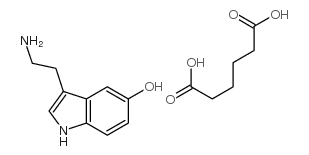
3-(2-AMINOETHYL)-5-HYDROXYINDOLE ADIPATE SALT structure
|
Common Name | 3-(2-AMINOETHYL)-5-HYDROXYINDOLE ADIPATE SALT | ||
|---|---|---|---|---|
| CAS Number | 16031-83-7 | Molecular Weight | 322.35600 | |
| Density | N/A | Boiling Point | 416.1ºC at 760mmHg | |
| Molecular Formula | C16H22N2O5 | Melting Point | N/A | |
| MSDS | N/A | Flash Point | 205.4ºC | |
| Name | 2-(5-hydroxy-1H-indol-3-yl)ethylazanium,6-hydroxy-6-oxohexanoate |
|---|---|
| Synonym | More Synonyms |
| Boiling Point | 416.1ºC at 760mmHg |
|---|---|
| Molecular Formula | C16H22N2O5 |
| Molecular Weight | 322.35600 |
| Flash Point | 205.4ºC |
| Exact Mass | 322.15300 |
| PSA | 136.64000 |
| LogP | 2.79100 |
| Vapour Pressure | 1.63E-07mmHg at 25°C |
Synonym:Serotonin adipat Section 2 - COMPOSITION, INFORMATION ON INGREDIENTS
Risk Phrases: 36/37/38 Section 3 - HAZARDS IDENTIFICATION EMERGENCY OVERVIEW
Irritating to eyes, respiratory system and skin.Air sensitive.Light sensitive. Potential Health Effects Eye: Causes eye irritation. Skin: Causes skin irritation. May be harmful if absorbed through the skin. Ingestion: May cause irritation of the digestive tract. May be harmful if swallowed. Inhalation: Causes respiratory tract irritation. May be harmful if inhaled. Chronic: Not available. Section 4 - FIRST AID MEASURES Eyes: Flush eyes with plenty of water for at least 15 minutes, occasionally lifting the upper and lower eyelids. Get medical aid. Skin: Get medical aid. Flush skin with plenty of water for at least 15 minutes while removing contaminated clothing and shoes. Ingestion: Get medical aid. Wash mouth out with water. Inhalation: Remove from exposure and move to fresh air immediately. Notes to Physician: Treat symptomatically and supportively. Section 5 - FIRE FIGHTING MEASURES General Information: As in any fire, wear a self-contained breathing apparatus in pressure-demand, MSHA/NIOSH (approved or equivalent), and full protective gear. Extinguishing Media: Use water spray, dry chemical, carbon dioxide, or chemical foam. Section 6 - ACCIDENTAL RELEASE MEASURES General Information: Use proper personal protective equipment as indicated in Section 8. Spills/Leaks: Vacuum or sweep up material and place into a suitable disposal container. Section 7 - HANDLING and STORAGE Handling: Avoid breathing dust, vapor, mist, or gas. Avoid contact with skin and eyes. Use only in a chemical fume hood. Storage: Store in a cool, dry place. Do not store in direct sunlight. Store in a tightly closed container. Store protected from light and air. Store under an inert atmosphere. Section 8 - EXPOSURE CONTROLS, PERSONAL PROTECTION Engineering Controls: Facilities storing or utilizing this material should be equipped with an eyewash facility and a safety shower. Use adequate ventilation to keep airborne concentrations low. Exposure Limits CAS# 16031-83-7: Personal Protective Equipment Eyes: Not available. Skin: Wear appropriate protective gloves to prevent skin exposure. Clothing: Wear appropriate protective clothing to prevent skin exposure. Respirators: Follow the OSHA respirator regulations found in 29 CFR 1910.134 or European Standard EN 149. Use a NIOSH/MSHA or European Standard EN 149 approved respirator if exposure limits are exceeded or if irritation or other symptoms are experienced. Section 9 - PHYSICAL AND CHEMICAL PROPERTIES Physical State: Crystalline powder Color: white Odor: Not available. pH: Not available. Vapor Pressure: Not available. Viscosity: Not available. Boiling Point: Not available. Freezing/Melting Point: 175 - 180 deg C Autoignition Temperature: Not available. Flash Point: Not available. Explosion Limits, lower: Not available. Explosion Limits, upper: Not available. Decomposition Temperature: Solubility in water: Soluble. Specific Gravity/Density: Molecular Formula: C16H22N2O5 Molecular Weight: 322.4 Section 10 - STABILITY AND REACTIVITY Chemical Stability: Not available. Conditions to Avoid: Incompatible materials, light, exposure to air. Incompatibilities with Other Materials: Strong oxidizing agents. Hazardous Decomposition Products: Nitrogen oxides, carbon monoxide, carbon dioxide. Hazardous Polymerization: Has not been reported Section 11 - TOXICOLOGICAL INFORMATION RTECS#: CAS# 16031-83-7: NM2460000 LD50/LC50: Not available. Carcinogenicity: 5-Hydroxytryptamine adipate - Not listed by ACGIH, IARC, or NTP. Other: See actual entry in RTECS for complete information. Section 12 - ECOLOGICAL INFORMATION Section 13 - DISPOSAL CONSIDERATIONS Dispose of in a manner consistent with federal, state, and local regulations. Section 14 - TRANSPORT INFORMATION IATA Shipping Name: Not regulated. Hazard Class: UN Number: Packing Group: IMO Shipping Name: Not regulated. Hazard Class: UN Number: Packing Group: RID/ADR Shipping Name: Not regulated. Hazard Class: UN Number: Packing group: Section 15 - REGULATORY INFORMATION European/International Regulations European Labeling in Accordance with EC Directives Hazard Symbols: XI Risk Phrases: R 36/37/38 Irritating to eyes, respiratory system and skin. Safety Phrases: S 26 In case of contact with eyes, rinse immediately with plenty of water and seek medical advice. S 37/39 Wear suitable gloves and eye/face protection. WGK (Water Danger/Protection) CAS# 16031-83-7: No information available. Canada None of the chemicals in this product are listed on the DSL/NDSL list. CAS# 16031-83-7 is not listed on Canada's Ingredient Disclosure List. US FEDERAL TSCA CAS# 16031-83-7 is not listed on the TSCA inventory. It is for research and development use only. SECTION 16 - ADDITIONAL INFORMATION N/A |
CHEMICAL IDENTIFICATION
HEALTH HAZARD DATAACUTE TOXICITY DATA
|
| HS Code | 2933990090 |
|---|
| Precursor 0 | |
|---|---|
| DownStream 1 | |
![1H-Pyrido[3,4-b]indol-6-ol,2,3,4,9-tetrahydro-1-methyl- structure](https://image.chemsrc.com/caspic/158/3000-36-0.png) CAS#:3000-36-0
CAS#:3000-36-0| HS Code | 2933990090 |
|---|---|
| Summary | 2933990090. heterocyclic compounds with nitrogen hetero-atom(s) only. VAT:17.0%. Tax rebate rate:13.0%. . MFN tariff:6.5%. General tariff:20.0% |
| Serotonin adipate |
| C10H12N2O.C6H10O4 |