TPEN
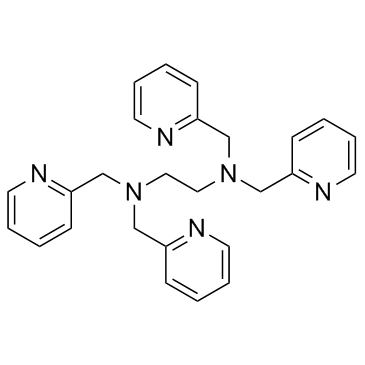
TPEN structure
|
Common Name | TPEN | ||
|---|---|---|---|---|
| CAS Number | 16858-02-9 | Molecular Weight | 424.541 | |
| Density | 1.2±0.1 g/cm3 | Boiling Point | 542.1±45.0 °C at 760 mmHg | |
| Molecular Formula | C26H28N6 | Melting Point | 110-112 °C | |
| MSDS | Chinese USA | Flash Point | 281.7±28.7 °C | |
| Symbol |

GHS07 |
Signal Word | Warning | |
Use of TPENTPEN is a specific cell-permeable heavy metal chelator. |
This table lists Chinese names, IUPAC names and various aliases of this chemical substance.
| Name | N,N,N′,N′-Tetrakis(2-pyridylmethyl)ethylenediamine |
|---|---|
| Synonym | More Synonyms |
This table contains bioactivity, target information and biological‑assay experimental data of this compound.
| Description | TPEN is a specific cell-permeable heavy metal chelator. |
|---|---|
| Related Catalog | |
| In Vitro | Heavy metal chelator TPEN attenuates fura-2 fluorescence changes induced by cadmium, mercury and methylmercury. TPEN, a cell-permeable chelator for heavy metal cations with a low affinity for Ca2+. In cells stimulated with 10 or 30 μM cadmium chloride, the addition of TPEN at 3 hr after exposure significantly decreases the elevated fura-2 fluorescence ratio to the basal levels within 10 min (119.6±2.4% or 109±1.5% decrease in ΔRatio (F340/F380) induced by 10 or 30 μM cadmium chloride, respectively), suggesting that a cadmium chloride-induced increase in the fura-2 fluorescence ratio is dependent on an increase in intracellular heavy metal cations but not intracellular Ca2+[1]. TPEN is a metal chelator, which targets colon cancer cells through redox cycling of copper. TPEN reduces cell viability in a dose- and time-dependent manner. TPEN-induced cell death is also dependent on the redox cycling of copper since the copper chelator neocuproine inhibited DNA damage and reduced pChk1, γ-H2AX, and ATM protein expression. Cell death by low TPEN concentrations, involved ATM/ATR signaling in all 3 cell lines, since pre-incubation with specific inhibitors of ATM and DNA-PK led to the recovery of cells from TPEN-induced DNA damage[2]. |
| Cell Assay | Human neuroblastoma cell line SH-SY5Y, are grown in Dulbecco’s Modified Eagle’s Medium (DMEM) mixed 1:1 with Ham’s F-12 nutrient mixture containing 10% fetal bovine serum, 100 unit/mL penicillin and 100 μg/mL streptomycin at 37°C in a humidified 5% CO2 atmosphere. Two days before experimentation, cells are seeded at a density of 7×10⁴ cells/cm2 in a 96-well plate. Cells in a 96-well plate are serum-starved for 4 hr; calcium indicator fura-2 is then loaded into the cells by using Calcium kit II fura-2. In brief, SH-SY5Ycells are incubated with 5 μM fura-2/AM in the presence of 0.04% Pluronic F-127, a dispersing agent to improve the efficiency of loading with fura-2, and 1.25 mM probenecid, a blocker of organic anion transport to prevent leakage of fura-2 from cells. After 1 hr incubation at 37°C, fura-2 fluorescence is measured at 500 nm emission after excitation at 340 nm (F340) or 380 nm (F380) using an Infinite M200 plate reader at 37°C.The change in [Ca2+]i is reflected by the ratio of F340 and F380. To determine the changes in fura-2 fluorescence ratio induced by heavy metal compounds, cells are treated with manganese chloride, lead acetate, cadmium chloride , mercuric chloride and MeHg chloride dissolved in distilled water. We confirmed that the cells adhered to the bottom of the plate after 6 hr exposure to heavy metal compounds. The cells are also treated with three Ca2+ channel blockers, lanthanum chloride dissolved in distilled water, verapamil and 2-APB dissolved in DMSO, 30 min before heavy metal exposure. The heavy metal chelator TPEN is dissolved in DMSO and added 3 hr after the stimulation with heavy metals to determine the contribution of endogenous and exogenous heavy metals on fura-2 fluorescence changes. We measured the effect of TPEN (20 μM) on the fura-2 fluorescence ratio after a 10 min treatment with TPEN, since our preliminary experiments showed that the effect of TPEN on fura-2 fluorescence reached maximum and stabilized within 10 min of the treatment[1]. |
| References |
This table shows physicochemical parameters including melting point, boiling point, density, solubility and optical rotation. Missing data is marked as N/A.
| Density | 1.2±0.1 g/cm3 |
|---|---|
| Boiling Point | 542.1±45.0 °C at 760 mmHg |
| Melting Point | 110-112 °C |
| Molecular Formula | C26H28N6 |
| Molecular Weight | 424.541 |
| Flash Point | 281.7±28.7 °C |
| Exact Mass | 424.237549 |
| PSA | 58.04000 |
| LogP | 2.68 |
| Vapour Pressure | 0.0±1.4 mmHg at 25°C |
| Index of Refraction | 1.632 |
| InChIKey | CVRXLMUYFMERMJ-UHFFFAOYSA-N |
| SMILES | c1ccc(CN(CCN(Cc2ccccn2)Cc2ccccn2)Cc2ccccn2)nc1 |
| Storage condition | Refrigerator |
This table provides MSDS information including hazard classification, first‑aid, fire‑fighting, spill handling, operation and storage instructions.
This table covers safety warnings, protective measures, incompatible substances and disposal guidelines for this compound.
| Symbol |
GHS07 |
|---|---|
| Signal Word | Warning |
| Hazard Statements | H315-H319-H335 |
| Precautionary Statements | P261-P305 + P351 + P338 |
| Personal Protective Equipment | dust mask type N95 (US);Eyeshields;Gloves |
| Hazard Codes | Xi: Irritant; |
| Risk Phrases | R36/37/38 |
| Safety Phrases | S26-S36 |
| RIDADR | NONH for all modes of transport |
| WGK Germany | 3 |
| HS Code | 2933399090 |
This table presents publicly reported synthetic routes, reaction conditions, reactants and product information of the compound.
|
~66%
TPEN CAS#:16858-02-9 |
| Literature: Synthesis, , # 6 p. 539 - 540 |
|
~75%
TPEN CAS#:16858-02-9 |
| Literature: Synthesis, , # 6 p. 539 - 540 |
|
~%
TPEN CAS#:16858-02-9 |
| Literature: Acta Chemica Scandinavica, , vol. 53, # 12 p. 1083 - 1092 |
|
~%
TPEN CAS#:16858-02-9 |
| Literature: Acta Chemica Scandinavica, , vol. 53, # 12 p. 1083 - 1092 |
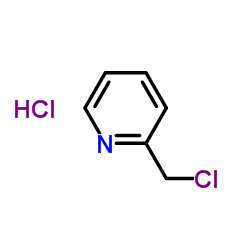
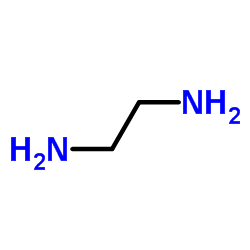
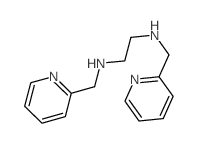
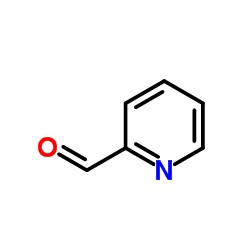
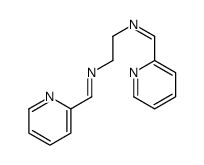
This table lists upstream starting materials and downstream derivative products related to this chemical.
| Precursor 5 | |
|---|---|
| DownStream 0 | |
This table shows customs‑related data including HS‑code, tariff and regulatory conditions for import and export.
| HS Code | 2933399090 |
|---|---|
| Summary | 2933399090. other compounds containing an unfused pyridine ring (whether or not hydrogenated) in the structure. VAT:17.0%. Tax rebate rate:13.0%. . MFN tariff:6.5%. General tariff:20.0% |
This table lists relevant public references with title, journal and publication metadata for this compound.
|
Redistribution of subcellular calcium and its effect on apoptosis in primary cultures of rat proximal tubular cells exposed to lead.
Toxicology 333 , 137-46, (2015) Previous studies have shown that cytosolic Ca(2+) ([Ca(2+)]c) overload was involved in Pb-induced apoptosis in primary cultures of rat proximal tubular (rPT) cells, but the source of elevated Ca(2+) a... |
|
|
Rat pancreatitis produced by 13-week administration of zinc oxide nanoparticles: biopersistence of nanoparticles and possible solutions.
J. Appl. Toxicol. 33(10) , 1089-96, (2013) Zinc oxide (ZnO) nanoparticles (NPs) are used in diverse applications ranging from paints and cosmetics to biomedicine and food. Although micron-sized ZnO is a traditional food supplement, ZnO NPs are... |
|
|
Zinc is released by cultured astrocytes as a gliotransmitter under hypoosmotic stress-loaded conditions and regulates microglial activity.
Life Sci. 94(2) , 137-44, (2014) Astrocytes contribute to the maintenance of brain homeostasis via the release of gliotransmitters such as ATP and glutamate. Here we examined whether zinc was released from astrocytes under stress-loa... |
This table contains target information, in‑vitro & in‑vivo assay data for this compound.
This table collects all English aliases, systematic names and CAS‑related synonyms of the compound.
| n,n,n',n'-tetrakis(2-pyridylmethyl)ethane-1,2-diamine |
| N,N,N',N'-Tetrakis(2-pyridinylmethyl)-1,2-ethanediamine |
| N,N,N',N'-Tetrakis(2-pyridylmethyl)ethylenediamine |
| MFCD00036918 |
| N,N,N',N'-Tetrakis(pyridin-2-ylmethyl)ethane-1,2-diamine |
| N,N,N′,N′-Tetrakis(2-pyridylmethyl)ethylenediamine |
| N,N,N',N'-tetrakis-(2-Pyridylmethyl)ethylenediamine |
| N1,N1,N2,N2-Tetrakis(pyridin-2-ylmethyl)ethane-1,2-diamine |
| N,N,N′,N′-tetrakis(2-pyridylmethyl)ethane-1,2-diamine |
| TPEN |
This section contains frequently‑asked‑questions about this compound, including basic parameters, properties, storage conditions and corresponding answers.
| Q: What are the uses of N,N,N′,N′-Tetrakis(2-pyridylmethyl)ethylenediamine? |
| A: Main uses of N,N,N′,N′-Tetrakis(2-pyridylmethyl)ethylenediamine: TPEN is a specific cell-permeable heavy metal chelator. |
| Q: What is the safety information for N,N,N′,N′-Tetrakis(2-pyridylmethyl)ethylenediamine? |
| A: Safety information for N,N,N′,N′-Tetrakis(2-pyridylmethyl)ethylenediamine: S26-S36. |
| Q: What is the SMILES notation of N,N,N′,N′-Tetrakis(2-pyridylmethyl)ethylenediamine? |
| A: SMILES notation of N,N,N′,N′-Tetrakis(2-pyridylmethyl)ethylenediamine is c1ccc(CN(CCN(Cc2ccccn2)Cc2ccccn2)Cc2ccccn2)nc1. |
| Q: What are the upstream materials of N,N,N′,N′-Tetrakis(2-pyridylmethyl)ethylenediamine? |
| A: Related upstream materials(CAS) of N,N,N′,N′-Tetrakis(2-pyridylmethyl)ethylenediamine: 6959-47-3;107-15-3;4608-34-8;1121-60-4;2847-14-5. |
| Q: What is the molecular formula of N,N,N′,N′-Tetrakis(2-pyridylmethyl)ethylenediamine? |
| A: Molecular formula of N,N,N′,N′-Tetrakis(2-pyridylmethyl)ethylenediamine is C26H28N6. |
| Q: What are the storage conditions for N,N,N′,N′-Tetrakis(2-pyridylmethyl)ethylenediamine? |
| A: Storage conditions for N,N,N′,N′-Tetrakis(2-pyridylmethyl)ethylenediamine: Refrigerator. |
| Q: What is the polar surface area (PSA) of N,N,N′,N′-Tetrakis(2-pyridylmethyl)ethylenediamine? |
| A: Polar surface area (PSA) of N,N,N′,N′-Tetrakis(2-pyridylmethyl)ethylenediamine is 58.04000. |
| Q: What is the LogP of N,N,N′,N′-Tetrakis(2-pyridylmethyl)ethylenediamine? |
| A: LogP of N,N,N′,N′-Tetrakis(2-pyridylmethyl)ethylenediamine is 2.68. |
| Q: What is the molecular weight of N,N,N′,N′-Tetrakis(2-pyridylmethyl)ethylenediamine? |
| A: Molecular weight of N,N,N′,N′-Tetrakis(2-pyridylmethyl)ethylenediamine is 424.541. |
| Q: What is the boiling point of N,N,N′,N′-Tetrakis(2-pyridylmethyl)ethylenediamine? |
| A: Boiling point of N,N,N′,N′-Tetrakis(2-pyridylmethyl)ethylenediamine is 542.1±45.0 °C at 760 mmHg. |
This table lists manufacturers and suppliers of this compound, including vendor names and product supply reference information.
| Shanghai Nianxing Industrial Co., Ltd |
| Dayang Chem (Hangzhou) Co., Ltd. |