Poly-D-lysine hydrobromide (MW 30000-70000)
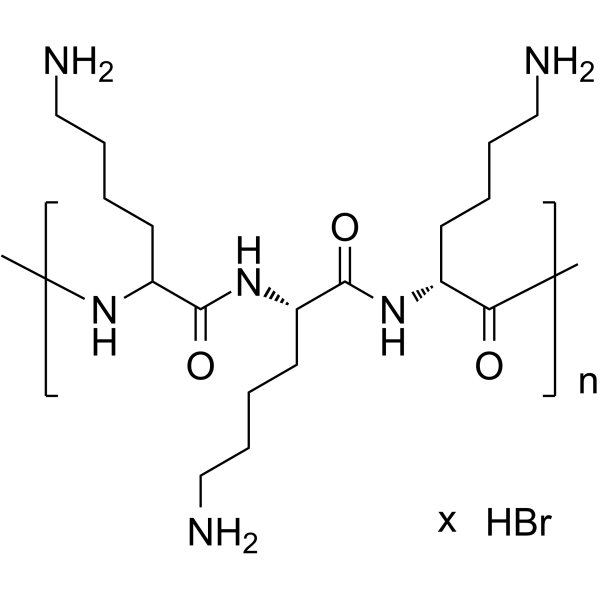
Poly-D-lysine hydrobromide (MW 30000-70000) structure
|
Common Name | Poly-D-lysine hydrobromide (MW 30000-70000) | ||
|---|---|---|---|---|
| CAS Number | 27964-99-4 | Molecular Weight | 227.10 | |
| Density | N/A | Boiling Point | 343.7±0.0 °C at 760 mmHg | |
| Molecular Formula | C6H15BrN2O2 | Melting Point | N/A | |
| MSDS | USA | Flash Point | 161.7±0.0 °C | |
Use of Poly-D-lysine hydrobromide (MW 30000-70000)Poly-D-lysine hydrobromide (MW 30000-70000) is a synthetic polymeric substrate and is one of the most widely used substrate in neural cell culture. Poly-D-lysine hydrobromide (MW 30000-70000) removes proteinase K-resistant PrP from prion-infected SN56 neuroblastoma cells without affecting PrPC[1][2]. |
This table lists Chinese names, IUPAC names and various aliases of this chemical substance.
| Name | Lysine hydrobromide (1:1) |
|---|---|
| Synonym | More Synonyms |
This table contains bioactivity, target information and biological‑assay experimental data of this compound.
| Description | Poly-D-lysine hydrobromide (MW 30000-70000) is a synthetic polymeric substrate and is one of the most widely used substrate in neural cell culture. Poly-D-lysine hydrobromide (MW 30000-70000) removes proteinase K-resistant PrP from prion-infected SN56 neuroblastoma cells without affecting PrPC[1][2]. |
|---|---|
| Related Catalog | |
| In Vitro | Poly-D-lysine is immunogenic in rabbits only when injected at low doses[1]. The approximate concentration of Poly-D-lysine (PDL) needed to lower the amount of PrPres by 50% corresponds to ~0.8 μg/mL or 50 nM[2]. |
| References |
This table shows physicochemical parameters including melting point, boiling point, density, solubility and optical rotation. Missing data is marked as N/A.
| Boiling Point | 343.7±0.0 °C at 760 mmHg |
|---|---|
| Molecular Formula | C6H15BrN2O2 |
| Molecular Weight | 227.10 |
| Flash Point | 161.7±0.0 °C |
| Exact Mass | 226.03169 |
| Appearance of Characters | lyophilized powder |
| Vapour Pressure | 0.0±0.0 mmHg at 25°C |
| InChIKey | MEXAGTSTSPYCEP-NUBCRITNSA-N |
| SMILES | C(CCN)C[C@H](C(=O)O)N.Br |
| Storage condition | −20°C |
| Water Solubility | Soluble in water. |
This table covers safety warnings, protective measures, incompatible substances and disposal guidelines for this compound.
| Personal Protective Equipment | Eyeshields;Gloves;type N95 (US);type P1 (EN143) respirator filter |
|---|---|
| RIDADR | NONH for all modes of transport |
| WGK Germany | 3 |
This table lists relevant public references with title, journal and publication metadata for this compound.
|
Preclinical evaluation of cyclin dependent kinase 11 and casein kinase 2 survival kinases as RNA interference targets for triple negative breast cancer therapy.
Breast Cancer Res. 17 , 19, (2015) Targeted therapies for aggressive breast cancers like triple negative breast cancer (TNBC) are needed. The use of small interfering RNAs (siRNAs) to disable expression of survival genes provides a too... |
|
|
Stochastic Micro-Pattern for Automated Correlative Fluorescence - Scanning Electron Microscopy.
Sci. Rep. 5 , 17973, (2015) Studies of cellular surface features gain from correlative approaches, where live cell information acquired by fluorescence light microscopy is complemented by ultrastructural information from scannin... |
|
|
Dynamic SUMO modification regulates mitotic chromosome assembly and cell cycle progression in Caenorhabditis elegans.
Nat. Commun. 5 , 5485, (2014) The small ubiquitin-like modifier (SUMO), initially characterized as a suppressor of a mutation in the gene encoding the centromeric protein MIF2, is involved in many aspects of cell cycle regulation.... |
This table contains target information, in‑vitro & in‑vivo assay data for this compound.
This table collects all English aliases, systematic names and CAS‑related synonyms of the compound.
| MFCD00131934 |
| Lysine hydrobromide (1:1) |
| Lysine, hydrobromide (1:1) |
This section contains frequently‑asked‑questions about this compound, including basic parameters, properties, storage conditions and corresponding answers.
| Q: What is the molecular weight of Lysine hydrobromide (1:1)? |
| A: Molecular weight of Lysine hydrobromide (1:1) is 227.10. |
| Q: What is the boiling point of Lysine hydrobromide (1:1)? |
| A: Boiling point of Lysine hydrobromide (1:1) is 343.7±0.0 °C at 760 mmHg. |
| Q: What is the CAS number of Lysine hydrobromide (1:1)? |
| A: CAS number of Lysine hydrobromide (1:1) is 27964-99-4. |
| Q: What is the physical appearance of Lysine hydrobromide (1:1)? |
| A: Lysine hydrobromide (1:1) appears as lyophilized powder. |
| Q: What are the uses of Lysine hydrobromide (1:1)? |
| A: Main uses of Lysine hydrobromide (1:1): Poly-D-lysine hydrobromide (MW 30000-70000) is a synthetic polymeric substrate and is one of the most widely used substrate in neural cell culture. Poly-D-lysine hydrobromide (MW 30000-70000) removes proteinase K-resistant PrP from prion-infected SN56 neuroblastoma cells without affecting PrPC[1][2]. |
| Q: How is the water solubility of Lysine hydrobromide (1:1)? |
| A: Water solubility of Lysine hydrobromide (1:1): Soluble in water. |
| Q: What is the English name of Lysine hydrobromide (1:1)? |
| A: The English name of Lysine hydrobromide (1:1) is Lysine hydrobromide (1:1). |
| Q: What is the SMILES notation of Lysine hydrobromide (1:1)? |
| A: SMILES notation of Lysine hydrobromide (1:1) is C(CCN)C[C@H](C(=O)O)N.Br. |
| Q: What are the storage conditions for Lysine hydrobromide (1:1)? |
| A: Storage conditions for Lysine hydrobromide (1:1): −20°C. |
| Q: What is the InChIKey of Lysine hydrobromide (1:1)? |
| A: InChIKey of Lysine hydrobromide (1:1) is MEXAGTSTSPYCEP-NUBCRITNSA-N. |
This table lists manufacturers and suppliers of this compound, including vendor names and product supply reference information.
| Shanghai Nianxing Industrial Co., Ltd |