Tris(2,4-di-tert-butylphenyl)phosphate

Tris(2,4-di-tert-butylphenyl)phosphate structure
|
Common Name | Tris(2,4-di-tert-butylphenyl)phosphate | ||
|---|---|---|---|---|
| CAS Number | 95906-11-9 | Molecular Weight | 662.92100 | |
| Density | N/A | Boiling Point | N/A | |
| Molecular Formula | C42H63O4P | Melting Point | 99-101 °C(lit.) | |
| MSDS | N/A | Flash Point | N/A | |
Use of Tris(2,4-di-tert-butylphenyl)phosphateTris(2,4-di-tert-butylphenyl)phosphate is an active compound from the leaves of Vitex negundo L. shows anti-inflammatory activity with evidence of inhibition for secretory Phospholipase A2 (sPLA2) through molecular docking[1]. |
This table lists Chinese names, IUPAC names and various aliases of this chemical substance.
| Name | tris(2,4-ditert-butylphenyl) phosphate |
|---|---|
| Synonym | More Synonyms |
This table contains bioactivity, target information and biological‑assay experimental data of this compound.
| Description | Tris(2,4-di-tert-butylphenyl)phosphate is an active compound from the leaves of Vitex negundo L. shows anti-inflammatory activity with evidence of inhibition for secretory Phospholipase A2 (sPLA2) through molecular docking[1]. |
|---|---|
| Related Catalog | |
| Target |
sPLA2[1] |
| In Vivo | Tris(2,4-di-tert-butylphenyl)phosphate (TDTBPP; 50 mg/kg and 70 mg/kg) exhibits significant anti-inflammatory activity in carrageenan induced paw odema model[1]. Tris(2,4-di-tert-butylphenyl)phosphate (50 mg/kg and 70 mg/kg) reduces the raw paw odema volume significantly[1]. |
| References |
This table shows physicochemical parameters including melting point, boiling point, density, solubility and optical rotation. Missing data is marked as N/A.
| Melting Point | 99-101 °C(lit.) |
|---|---|
| Molecular Formula | C42H63O4P |
| Molecular Weight | 662.92100 |
| Exact Mass | 662.44600 |
| PSA | 54.57000 |
| LogP | 13.11650 |
| InChIKey | AZSKHRTUXHLAHS-UHFFFAOYSA-N |
| SMILES | CC(C)(C)c1ccc(OP(=O)(Oc2ccc(C(C)(C)C)cc2C(C)(C)C)Oc2ccc(C(C)(C)C)cc2C(C)(C)C)c(C(C)(C)C)c1 |
This table covers safety warnings, protective measures, incompatible substances and disposal guidelines for this compound.
| Hazard Codes | Xi |
|---|
This table presents publicly reported synthetic routes, reaction conditions, reactants and product information of the compound.
|
~%
Tris(2,4-di-ter... CAS#:95906-11-9 |
| Literature: Armstrong, Kenneth M.; Kilian, Petr European Journal of Inorganic Chemistry, 2011 , # 13 p. 2138 - 2147 |
|
~63%
Tris(2,4-di-ter... CAS#:95906-11-9 |
| Literature: Sano, Takahiro; Senzaki, Hirohiko; Sugaya, Toru; Kasai, Masaji Organic Process Research and Development, 2000 , vol. 4, # 5 p. 349 - 352 |
|
~%
Tris(2,4-di-ter... CAS#:95906-11-9 |
| Literature: Koenig, T.; Habicher, W. D.; Schwetlick, K. Journal fuer Praktische Chemie (Leipzig), 1989 , vol. 331, # 6 p. 913 - 922 |
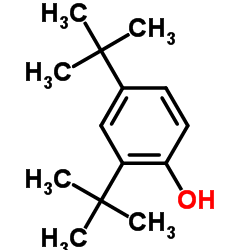
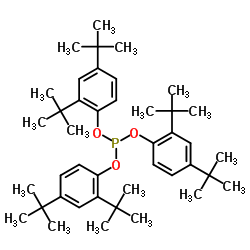

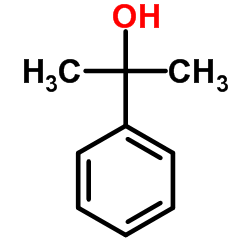
This table lists upstream starting materials and downstream derivative products related to this chemical.
| Precursor 3 | |
|---|---|
| DownStream 0 | |
This table collects all English aliases, systematic names and CAS‑related synonyms of the compound.
| MFCD29918884 |
This section contains frequently‑asked‑questions about this compound, including basic parameters, properties, storage conditions and corresponding answers.
| Q: What is the molecular weight of tris(2,4-ditert-butylphenyl) phosphate? |
| A: Molecular weight of tris(2,4-ditert-butylphenyl) phosphate is 662.92100. |
| Q: What is the polar surface area (PSA) of tris(2,4-ditert-butylphenyl) phosphate? |
| A: Polar surface area (PSA) of tris(2,4-ditert-butylphenyl) phosphate is 54.57000. |
| Q: What is the LogP of tris(2,4-ditert-butylphenyl) phosphate? |
| A: LogP of tris(2,4-ditert-butylphenyl) phosphate is 13.11650. |
| Q: What are the upstream materials of tris(2,4-ditert-butylphenyl) phosphate? |
| A: Related upstream materials(CAS) of tris(2,4-ditert-butylphenyl) phosphate: 96-76-4;31570-04-4;80-15-9. |
| Q: What English synonyms does tris(2,4-ditert-butylphenyl) phosphate have? |
| A: English synonyms of tris(2,4-ditert-butylphenyl) phosphate: MFCD29918884. |
| Q: What are the uses of tris(2,4-ditert-butylphenyl) phosphate? |
| A: Main uses of tris(2,4-ditert-butylphenyl) phosphate: Tris(2,4-di-tert-butylphenyl)phosphate is an active compound from the leaves of Vitex negundo L. shows anti-inflammatory activity with evidence of inhibition for secretory Phospholipase A2 (sPLA2) through molecular docking[1]. |
| Q: What is the English name of tris(2,4-ditert-butylphenyl) phosphate? |
| A: The English name of tris(2,4-ditert-butylphenyl) phosphate is tris(2,4-ditert-butylphenyl) phosphate. |
| Q: What is the SMILES notation of tris(2,4-ditert-butylphenyl) phosphate? |
| A: SMILES notation of tris(2,4-ditert-butylphenyl) phosphate is CC(C)(C)c1ccc(OP(=O)(Oc2ccc(C(C)(C)C)cc2C(C)(C)C)Oc2ccc(C(C)(C)C)cc2C(C)(C)C)c(C(C)(C)C)c1. |
| Q: What is the InChIKey of tris(2,4-ditert-butylphenyl) phosphate? |
| A: InChIKey of tris(2,4-ditert-butylphenyl) phosphate is AZSKHRTUXHLAHS-UHFFFAOYSA-N. |
| Q: What is the CAS number of tris(2,4-ditert-butylphenyl) phosphate? |
| A: CAS number of tris(2,4-ditert-butylphenyl) phosphate is 95906-11-9. |
This table lists manufacturers and suppliers of this compound, including vendor names and product supply reference information.
| Shanghai Nianxing Industrial Co., Ltd |
| Dayang Chem (Hangzhou) Co., Ltd. |