Phytoalexin synthesis by the sorghum mesocotyl in response to infection by pathogenic and nonpathogenic fungi.
R L Nicholson, S S Kollipara, J R Vincent, P C Lyons, G Cadena-Gomez
Index: Proc. Natl. Acad. Sci. U. S. A. 84(16) , 5520-4, (1987)
Full Text: HTML
Abstract
Infection of the sorghum mesocotyl by Helminthosporium maydis (a nonpathogen) and Colletotrichum graminicola (a pathogen) resulted in the rapid accumulation of a pigment complex by two sorghum cultivars. The components of the complex were fungitoxic. The principal compounds have been identified as the 3-deoxyanthocyanidins apigeninidin and luteolinidin. Apigeninidin accumulated in both sorghum cultivars in response to infection and was the predominant pigment. Luteolinidin accumulated in only one of the cultivars. Because of the speed of synthesis, occurrence only in response to inoculation, and fungitoxicity of the individual components, we propose that synthesis of the pigment complex constitutes a defense response and that the compounds apigeninidin and luteolinidin should be considered as phytoalexins.
Related Compounds
| Structure | Name/CAS No. | Molecular Formula | Articles |
|---|---|---|---|
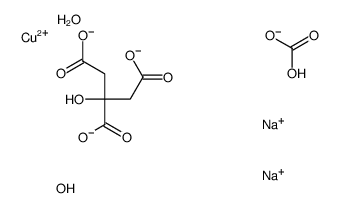 |
benedict's reagent for the qualitative
CAS:63126-89-6 |
C7H10CuNa2O15S |
|
Home monitoring of diabetes mellitus--a quiet revolution.
1986-06-01 [Clin. Lab. Med. 6(2) , 215-39, (1986)] |
|
Fatal accidental ingestion of Clinitest in adult.
1984-11-01 [J. R. Soc. Med. 77(11) , 963-5, (1984)] |
|
Dry chemistry: its expanded role in doctor's office testing.
1986-06-01 [Clin. Lab. Med. 6(2) , 267-71, (1986)] |
|
Problems in hemodialysis.
1982-06-24 [N. Engl. J. Med. 306(25) , 1550, (1982)] |
|
Dangers of Clinitest ingestion.
1985-03-01 [J. R. Soc. Med. 78(3) , 271, (1985)] |