Macromolecular Bioscience 2016-01-01

Efficient pDNA Delivery Using Cationic 2-Hydroxypropyl-β-Cyclodextrin Pluronic-Based Polyrotaxanes.

Vivek Badwaik, Yawo Mondjinou, Aditya Kulkarni, Linjia Liu, Asher Demoret, David H Thompson

Index: Macromol. Biosci. 16 , 63-73, (2016)

Full Text: HTML

Abstract

A family of cationic Pluronic-based polyrotaxanes (PR(+)), threaded with 2-hydroxypropyl-β-cyclodextrin (HPCD), was synthesized for pDNA delivery into multiple cell lines. All PR(+) formed highly stable, positively charged pDNA complexes that were < 250 nm in diameter. The cellular uptake and pDNA transfection efficiencies of the PR(+):pDNA complexes was enhanced relative to the commercial transfection standards L2K and bPEI, while displaying similar or lower toxicity profiles. Charge density and threading efficiency of the PR(+) agent significantly influenced the colloidal stability and physical properties of the complexes, which impacted their intracellular transfection efficiencies. Taken together, our results suggest that HPCD: Pluronic PR(+) can be used as potent vectors for pDNA-based therapeutics.© 2015 WILEY-VCH Verlag GmbH & Co. KGaA, Weinheim.

Related Compounds

Structure Name/CAS No. Articles
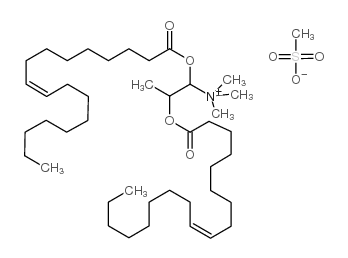
DOTAP Transfection Reagent Structure DOTAP Transfection Reagent
CAS:144189-73-1
Cholesterol Chloroformate Structure Cholesterol Chloroformate
CAS:7144-08-3