Nature Communications 2015-01-01

Label-free in vivo molecular imaging of underglycosylated mucin-1 expression in tumour cells.

Xiaolei Song, Raag D Airan, Dian R Arifin, Amnon Bar-Shir, Deepak K Kadayakkara, Guanshu Liu, Assaf A Gilad, Peter C M van Zijl, Michael T McMahon, Jeff W M Bulte

Index: Nat. Commun. 6 , 6719, (2015)

Full Text: HTML

Abstract

Alterations in mucin expression and glycosylation are associated with cancer development. Underglycosylated mucin-1 (uMUC1) is overexpressed in most malignant adenocarcinomas of epithelial origin (for example, colon, breast and ovarian cancer). Its counterpart MUC1 is a large polymer rich in glycans containing multiple exchangeable OH protons, which is readily detectable by chemical exchange saturation transfer (CEST) MRI. We show here that deglycosylation of MUC1 results in >75% reduction in CEST signal. Three uMUC1(+) human malignant cancer cell lines overexpressing uMUC1 (BT20, HT29 and LS174T) show a significantly lower CEST signal compared with the benign human epithelial cell line MCF10A and the uMUC1(-) tumour cell line U87. Furthermore, we demonstrate that in vivo CEST MRI is able to make a distinction between LS174T and U87 tumour cells implanted in the mouse brain. These results suggest that the mucCEST MRI signal can be used as a label-free surrogate marker to non-invasively assess mucin glycosylation and tumour malignancy.

Related Compounds

Structure Name/CAS No. Articles
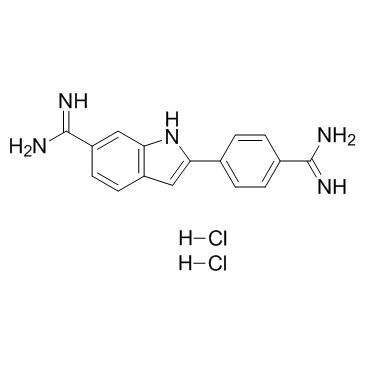
4',6-Diamidino-2-phenylindole dihydrochloride Structure 4',6-Diamidino-2-phenylindole dihydrochloride
CAS:28718-90-3
Gastric mucin Structure Gastric mucin
CAS:84082-64-4