Principles and applications of steric exclusion chromatography.
Jeremy Lee, Hui Theng Gan, Sarah Maria Abdul Latiff, Cindy Chuah, Wan Yee Lee, Yuan-Sheng Yang, Bernard Loo, Say Kong Ng, Pete Gagnon
Index: J. Chromatogr. A. 1270 , 162-70, (2012)
Full Text: HTML
Abstract
We introduce a chromatography method for purification of large proteins and viruses that works by capturing them at a non-reactive hydrophilic surface by their mutual steric exclusion of polyethylene glycol (PEG). No direct chemical interaction between the surface and the target species is required. We refer to the technique as steric exclusion chromatography. Hydroxyl-substituted polymethacrylate monoliths provide a hydrophilic surface and support convective mass transport that is unaffected by the viscosity of the PEG. Elution is achieved by reducing PEG concentration. Selectivity correlates with molecular size, with larger species retained more strongly than smaller species. Retention increases with PEG size and concentration. Salts weaken retention in proportion to their concentration and Hofmeister ranking. Retention is enhanced near the isoelectric point of the target species. Virus binding capacity was measured at 9.9×10(12) plaque forming units per mL of monolith. 99.8% of host cell proteins and 93% of DNA were eliminated. Mass recovery exceeded 90%. IgM capacity was greater than 60 mg/mL. 95% of host cell proteins were eliminated from IgM produced in protein-free media, and mass recovery was up to 90%. Bioactivity was fully conserved by both viruses and antibodies. Process time ranged from less than 30 min to 2 h depending on the product concentration in the feed stream.Copyright © 2012 Elsevier B.V. All rights reserved.
Related Compounds
| Structure | Name/CAS No. | Molecular Formula | Articles |
|---|---|---|---|
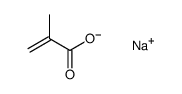 |
Sodium polymethacrylate
CAS:54193-36-1 |
C4H5NaO2 |
|
A novel pH-dependant and double crosslinked polymethacrylate...
2013-01-01 [Pharm. Dev. Technol. 18(5) , 1066-77, (2013)] |
|
Poly(methacrylic acid)-grafted chitosan microspheres via sur...
2013-09-01 [J. Colloid. Interface Sci. 405 , 171-82, (2013)] |
|
Strain screening, fermentation, separation, and encapsulatio...
2012-12-01 [Appl. Biochem. Biotechnol. 168(7) , 1753-64, (2012)] |
|
pH-dependent control of particle motion through surface inte...
2012-09-11 [Langmuir 28(36) , 12955-61, (2012)] |
|
Design of sustained release fine particles using two-step me...
2013-09-10 [Int. J. Pharm. 453(2) , 523-32, (2013)] |