Noneluting enzymatic antibiofilm coatings.
Svetlana V Pavlukhina, Jeffrey B Kaplan, Li Xu, Wei Chang, Xiaojun Yu, Srinivasa Madhyastha, Nandadeva Yakandawala, Almagul Mentbayeva, Babar Khan, Svetlana A Sukhishvili
Index: ACS Appl. Mater. Interfaces 4(9) , 4708-16, (2012)
Full Text: HTML
Abstract
We developed a highly efficient, biocompatible surface coating that disperses bacterial biofilms through enzymatic cleavage of the extracellular biofilm matrix. The coating was fabricated by binding the naturally existing enzyme dispersin B (DspB) to surface-attached polymer matrices constructed via a layer-by-layer (LbL) deposition technique. LbL matrices were assembled through electrostatic interactions of poly(allylamine hydrochloride) (PAH) and poly(methacrylic acid) (PMAA), followed by chemical cross-linking with glutaraldehyde and pH-triggered removal of PMAA, producing a stable PAH hydrogel matrix used for DspB loading. The amount of DspB loaded increased linearly with the number of PAH layers in surface hydrogels. DspB was retained within these coatings in the pH range from 4 to 7.5. DspB-loaded coatings inhibited biofilm formation by two clinical strains of Staphylococcus epidermidis. Biofilm inhibition was ≥98% compared to mock-loaded coatings as determined by CFU enumeration. In addition, DspB-loaded coatings did not inhibit attachment or growth of cultured human osteoblast cells. We suggest that the use of DspB-loaded multilayer coatings presents a promising method for creating biocompatible surfaces with high antibiofilm efficiency, especially when combined with conventional antimicrobial treatment of dispersed bacteria.
Related Compounds
| Structure | Name/CAS No. | Molecular Formula | Articles |
|---|---|---|---|
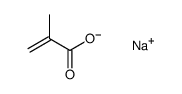 |
Sodium polymethacrylate
CAS:54193-36-1 |
C4H5NaO2 |
|
A novel pH-dependant and double crosslinked polymethacrylate...
2013-01-01 [Pharm. Dev. Technol. 18(5) , 1066-77, (2013)] |
|
Poly(methacrylic acid)-grafted chitosan microspheres via sur...
2013-09-01 [J. Colloid. Interface Sci. 405 , 171-82, (2013)] |
|
Strain screening, fermentation, separation, and encapsulatio...
2012-12-01 [Appl. Biochem. Biotechnol. 168(7) , 1753-64, (2012)] |
|
pH-dependent control of particle motion through surface inte...
2012-09-11 [Langmuir 28(36) , 12955-61, (2012)] |
|
Design of sustained release fine particles using two-step me...
2013-09-10 [Int. J. Pharm. 453(2) , 523-32, (2013)] |