Habituation to thaxtomin A in hybrid poplar cell suspensions provides enhanced and durable resistance to inhibitors of cellulose synthesis.
Viviane Brochu, Marie Girard-Martel, Isabelle Duval, Sylvain Lerat, Gilles Grondin, Olivier Domingue, Carole Beaulieu, Nathalie Beaudoin
Index: BMC Plant Biol. 10 , 272, (2010)
Full Text: HTML
Abstract
Thaxtomin A (TA), a phytotoxin produced by the phytopathogen Streptomyces scabies, is essential for the development of potato common scab disease. TA inhibits cellulose synthesis but its actual mode of action is unknown. Addition of TA to hybrid poplar (Populus trichocarpa x Populus deltoides) cell suspensions can activate a cellular program leading to cell death. In contrast, it is possible to habituate hybrid poplar cell cultures to grow in the presence of TA levels that would normally induce cell death. The purpose of this study is to characterize TA-habituated cells and the mechanisms that may be involved in enhancing resistance to TA.Habituation to TA was performed by adding increasing levels of TA to cell cultures at the time of subculture over a period of 12 months. TA-habituated cells were then cultured in the absence of TA for more than three years. These cells displayed a reduced size and growth compared to control cells and had fragmented vacuoles filled with electron-dense material. Habituation to TA was associated with changes in the cell wall composition, with a reduction in cellulose and an increase in pectin levels. Remarkably, high level of resistance to TA was maintained in TA-habituated cells even after being cultured in the absence of TA. Moreover, these cells exhibited enhanced resistance to two other inhibitors of cellulose biosynthesis, dichlobenil and isoxaben. Analysis of gene expression in TA-habituated cells using an Affymetrix GeneChip Poplar Genome Array revealed that durable resistance to TA is associated with a major and complex reprogramming of gene expression implicating processes such as cell wall synthesis and modification, lignin and flavonoid synthesis, as well as DNA and chromatin modifications.We have shown that habituation to TA induced durable resistance to the bacterial toxin in poplar cells. TA-habituation also enhanced resistance to two other structurally different inhibitors of cellulose synthesis that were found to target different proteins. Enhanced resistance was associated with major changes in the expression of numerous genes, including some genes that are involved in DNA and chromatin modifications, suggesting that epigenetic changes might be involved in this process.
Related Compounds
| Structure | Name/CAS No. | Molecular Formula | Articles |
|---|---|---|---|
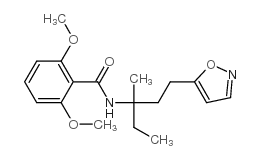 |
isoxaben
CAS:82558-50-7 |
C18H24N2O4 | |
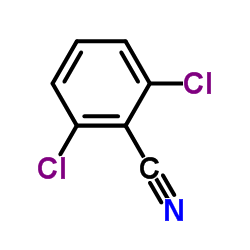 |
2,6-Dichlorobenzonitrile
CAS:1194-65-6 |
C7H3Cl2N |
|
Coupling passive sampling and time of flight mass spectromet...
2015-03-27 [J. Chromatogr. A. 1387 , 75-85, (2015)] |
|
A fluorescent hormone biosensor reveals the dynamics of jasm...
2015-01-01 [Nat. Commun. 6 , 6043, (2015)] |
|
Toxicity of herbicides in highway runoff.
2005-09-01 [Environ. Toxicol. Chem. 24(9) , 2336-40, (2005)] |
|
Alignment between PIN1 polarity and microtubule orientation ...
2010-01-01 [PLoS Biol. 8(10) , e1000516, (2010)] |
|
Is cell polarity under mechanical control in plants?
2011-05-01 [Plant Signal Behav. 6(1) , 137-9, (2011)] |