Nucleic Acids Research 2014-12-16

A bottom-up characterization of transfer functions for synthetic biology designs: lessons from enzymology.

Max Carbonell-Ballestero, Salva Duran-Nebreda, Raúl Montañez, Ricard Solé, Javier Macía, Carlos Rodríguez-Caso

Index: Nucleic Acids Res. 42(22) , 14060-9, (2014)

Full Text: HTML

Abstract

Within the field of synthetic biology, a rational design of genetic parts should include a causal understanding of their input-output responses-the so-called transfer function-and how to tune them. However, a commonly adopted strategy is to fit data to Hill-shaped curves without considering the underlying molecular mechanisms. Here we provide a novel mathematical formalization that allows prediction of the global behavior of a synthetic device by considering the actual information from the involved biological parts. This is achieved by adopting an enzymology-like framework, where transfer functions are described in terms of their input affinity constant and maximal response. As a proof of concept, we characterize a set of Lux homoserine-lactone-inducible genetic devices with different levels of Lux receptor and signal molecule. Our model fits the experimental results and predicts the impact of the receptor's ribosome-binding site strength, as a tunable parameter that affects gene expression. The evolutionary implications are outlined. © The Author(s) 2014. Published by Oxford University Press on behalf of Nucleic Acids Research.

Related Compounds

Structure Name/CAS No. Articles
Chloramphenicol Structure Chloramphenicol
CAS:56-75-7
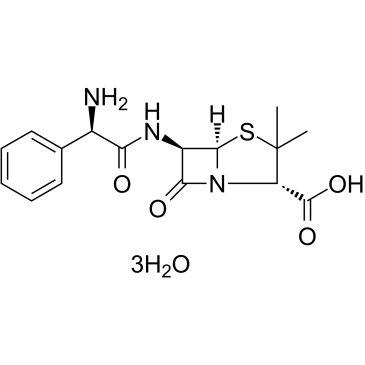
Ampicillin Trihydrate Structure Ampicillin Trihydrate
CAS:7177-48-2
2(3H)-Furanone,3-aminodihydro-(8CI,9CI) Structure 2(3H)-Furanone,3-aminodihydro-(8CI,9CI)
CAS:1192-20-7
Ampicillin Structure Ampicillin
CAS:69-53-4