Faraday Discussions 2015-01-01

Magnetic field-induced self-assembly of iron oxide nanocubes.

Gurvinder Singh, Henry Chan, T Udayabhaskararao, Elijah Gelman, Davide Peddis, Artem Baskin, Gregory Leitus, Petr Král, Rafal Klajn

Index: Faraday Discuss. 181 , 403-21, (2015)

Full Text: HTML

Abstract

Self-assembly of inorganic nanoparticles has been studied extensively for particles having different sizes and compositions. However, relatively little attention has been devoted to how the shape and surface chemistry of magnetic nanoparticles affects their self-assembly properties. Here, we undertook a combined experiment-theory study aimed at better understanding of the self-assembly of cubic magnetite (Fe3O4) particles. We demonstrated that, depending on the experimental parameters, such as the direction of the magnetic field and nanoparticle density, a variety of superstructures can be obtained, including one-dimensional filaments and helices, as well as C-shaped assemblies described here for the first time. Furthermore, we functionalized the surfaces of the magnetic nanocubes with light-sensitive ligands. Using these modified nanoparticles, we were able to achieve orthogonal control of self-assembly using a magnetic field and light.

Related Compounds

Structure Name/CAS No. Articles
L-(+)-Lysine monohydrochloride Structure L-(+)-Lysine monohydrochloride
CAS:657-27-2
Sodium Oleate Structure Sodium Oleate
CAS:143-19-1
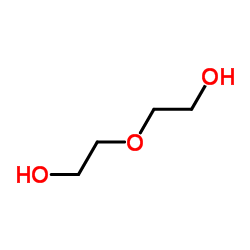
Diethylene glycol Structure Diethylene glycol
CAS:111-46-6
N-DOCOSANE Structure N-DOCOSANE
CAS:629-97-0
Octadec-1-ene Structure Octadec-1-ene
CAS:112-88-9