A randomized trial on the optimization of 18F-FDG myocardial uptake suppression: implications for vulnerable coronary plaque imaging.
Fabian Demeure, François-Xavier Hanin, Anne Bol, Marie-Françoise Vincent, Anne-Catherine Pouleur, Bernhard Gerber, Agnès Pasquet, François Jamar, Jean-Louis J Vanoverschelde, David Vancraeynest
Index: J. Nucl. Med. 55(10) , 1629-35, (2014)
Full Text: HTML
Abstract
(18)F-FDG PET/CT can be used to detect arterial atherosclerotic plaque inflammation. However, avid myocardial glucose uptake may preclude its use for visualizing coronary plaques. Fatty acid loading or calcium channel blockers could decrease myocardial (18)F-FDG uptake, thus assisting coronary plaque inflammation identification. The present prospective randomized trial compared the efficacies of different interventions for suppressing myocardial (18)F-FDG uptake. We also investigated whether circulating free fatty acid (cFFA) levels predicted the magnitude of myocardial (18)F-FDG uptake.Thirty-six volunteers ate a high-fat low-carbohydrate meal, followed by a 12-h fasting period. They were then randomized to 1 of 4 intervention groups. Group 1 received no additional preparation and served as a reference. Groups 2 and 3, respectively, received a commercial high-fat solution containing 43.8 g of lipids or 50 mL of olive oil 1 h before (18)F-FDG injection to evaluate the impact of fatty acid loading on myocardial (18)F-FDG uptake. Group 4 received verapamil to evaluate the effect of calcium channel blockers. Cardiac PET/CT was performed after administration of 370 MBq of (18)F-FDG. Myocardial uptake suppression was assessed using a qualitative visual scale and by measuring the myocardial maximum standardized uptake value (SUV(max)). Insulin, glucose, and cFFA were serially measured.The qualitative visual scale showed good myocardial (18)F-FDG uptake suppression in 8 of 9, 5 of 9, 4 of 9, and 8 of 9 subjects of groups 1, 2, 3, and 4, respectively (P = 0.09). SUV(max) did not significantly differ between groups (P = 0.17). Interestingly, cFFA levels were higher in volunteers with good suppression (0.80 ± 0.31 mmol/L) than in those with poor suppression (0.53 ± 0.15 mmol/L; P = 0.011). We found an inverse correlation between cFFA level (measured at (18)F-FDG injection) and the SUV(max) (R = 0.61). Receiver-operating-characteristic curve analysis identified 0.65 mmol/L cFFA as the best cutoff value to predict adequate (18)F-FDG uptake suppression (positive predictive value, 89%).A high-fat low-carbohydrate meal followed by a 12-h fasting period effectively suppressed myocardial (18)F-FDG uptake in most subjects. Neither complementary fatty acid loading nor verapamil administered 1 h before (18)F-FDG injection conferred any additional benefit. Myocardial (18)F-FDG uptake was inversely correlated with cFFA level, representing an interesting way to predict myocardial (18)F-FDG uptake suppression.© 2014 by the Society of Nuclear Medicine and Molecular Imaging, Inc.
Related Compounds
| Structure | Name/CAS No. | Molecular Formula | Articles |
|---|---|---|---|
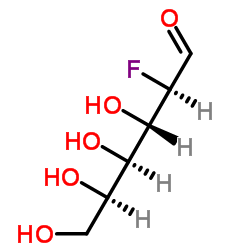 |
2-Deoxy-2-fluoro-D-glucose
CAS:29702-43-0 |
C6H11FO5 | |
 |
Cropure OL
CAS:8001-25-0 |
N/A |
|
18F-fluoride positron emission tomography for identification...
2014-02-22 [Lancet 383(9918) , 705-13, (2014)] |
|
11C-acetate PET/CT for metabolic characterization of multipl...
2014-05-01 [J. Nucl. Med. 55(5) , 749-52, (2014)] |
|
PET/CT with 18F-FDG- and 18F-FBEM-labeled leukocytes for met...
2015-01-01 [J. Nucl. Med. 56(1) , 127-32, (2015)] |
|
The [18F]FDG μPET readout of a brain activation model to eva...
2014-08-01 [J. Pharmacol. Exp. Ther. 350(2) , 375-86, (2014)] |
|
FDG-PET scan in assessing lymphomas and the application of D...
2013-06-01 [J. Pak. Med. Assoc. 63(6) , 725-30, (2013)] |