ACS Applied Materials & Interfaces 2015-07-22

The influence of structure and processing on the behavior of TiO2 protective layers for stabilization of n-Si/TiO2/Ni photoanodes for water oxidation.

Matthew T McDowell, Michael F Lichterman, Azhar I Carim, Rui Liu, Shu Hu, Bruce S Brunschwig, Nathan S Lewis

Index: ACS Appl. Mater. Interfaces 7 , 15189-99, (2015)

Full Text: HTML

Abstract

Light absorbers with moderate band gaps (1-2 eV) are required for high-efficiency solar fuels devices, but most semiconducting photoanodes undergo photocorrosion or passivation in aqueous solution. Amorphous TiO2 deposited by atomic-layer deposition (ALD) onto various n-type semiconductors (Si, GaAs, GaP, and CdTe) and coated with thin films or islands of Ni produces efficient, stable photoanodes for water oxidation, with the TiO2 films protecting the underlying semiconductor from photocorrosion in pH = 14 KOH(aq). The links between the electronic properties of the TiO2 in these electrodes and the structure and energetic defect states of the material are not yet well-elucidated. We show herein that TiO2 films with a variety of crystal structures and midgap defect state distributions, deposited using both ALD and sputtering, form rectifying junctions with n-Si and are highly conductive toward photogenerated carriers in n-Si/TiO2/Ni photoanodes. Moreover, the photovoltage of these electrodes can be modified by annealing the TiO2 in reducing or oxidizing environments. All of the polycrystalline TiO2 films with compact grain boundaries investigated herein protected the n-Si photoanodes against photocorrosion in pH = 14 KOH(aq). Hence, in these devices, conduction through the TiO2 layer is neither specific to a particular amorphous or crystalline structure nor determined wholly by a particular extrinsic dopant impurity. The coupled structural and energetic properties of TiO2, and potentially other protective oxides, can therefore be controlled to yield optimized photoelectrode performance.

Related Compounds

Structure Name/CAS No. Articles
Titanium(IV) dimethylamide Structure Titanium(IV) dimethylamide
CAS:3275-24-9
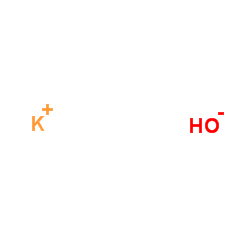
Potassium hydroxide Structure Potassium hydroxide
CAS:1310-58-3
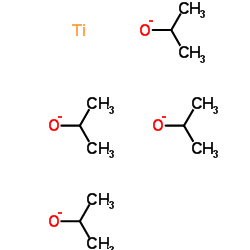
Titanium(4+) tetrapropan-2-olate Structure Titanium(4+) tetrapropan-2-olate
CAS:546-68-9