Virology 2014-05-01

The crucial role of bile acids in the entry of porcine enteric calicivirus.

Vinay Shivanna, Yunjeong Kim, Kyeong-Ok Chang

Index: Virology 456-457 , 268-78, (2014)

Full Text: HTML

Abstract

Replication of porcine enteric calicivirus (PEC) in LLC-PK cells is dependent on the presence of bile acids in the medium. However, the mechanism of bile acid-dependent PEC replication is unknown. Understanding of bile acid-mediated PEC replication may provide insight into cultivating related human noroviruses, currently uncultivable, which are the major cause of viral gastroenteritis outbreaks in humans. Our results demonstrated that while uptake of PEC into the endosomes does not require bile acids, the presence of bile acids is critical for viral escape from the endosomes into cell cytoplasm to initiate viral replication. We also demonstrated that bile acid transporters including the sodium-taurocholate co-transporting polypeptide and the apical sodium-dependent bile acid transporter are important in exerting the effects of bile acids in PEC replication in cells. In summary, our results suggest that bile acids play a critical role in virus entry for successful replication. Copyright © 2014 Elsevier Inc. All rights reserved.

Related Compounds

Structure Name/CAS No. Articles
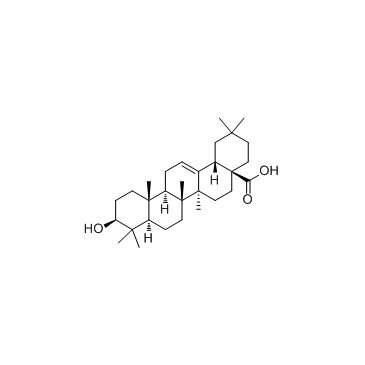
Oleanic acid Structure Oleanic acid
CAS:508-02-1
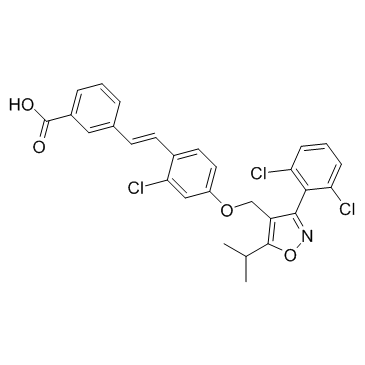
GW4064 Structure GW4064
CAS:278779-30-9