PNAS 2014-04-15

Combined hydrogels that switch human pluripotent stem cells from self-renewal to differentiation.

James E Dixon, Disheet A Shah, Catherine Rogers, Stephen Hall, Nicola Weston, Christopher D J Parmenter, Donal McNally, Chris Denning, Kevin M Shakesheff

Index: Proc. Natl. Acad. Sci. U. S. A. 111(15) , 5580-5, (2014)

Full Text: HTML

Abstract

The ability of materials to define the architecture and microenvironment experienced by cells provides new opportunities to direct the fate of human pluripotent stem cells (HPSCs) [Robinton DA, Daley GQ (2012) Nature 481(7381):295-305]. However, the conditions required for self-renewal vs. differentiation of HPSCs are different, and a single system that efficiently achieves both outcomes is not available [Giobbe GG, et al. (2012) Biotechnol Bioeng 109(12):3119-3132]. We have addressed this dual need by developing a hydrogel-based material that uses ionic de-cross-linking to remove a self-renewal permissive hydrogel (alginate) and switch to a differentiation-permissive microenvironment (collagen). Adjusting the timing of this switch can preferentially steer the HPSC differentiation to mimic lineage commitment during gastrulation to ectoderm (early switch) or mesoderm/endoderm (late switch). As an exemplar differentiated cell type, we showed that directing early lineage specification using this single system can promote cardiogenesis with increased gene expression in high-density cell populations. This work will facilitate regenerative medicine by allowing in situ HPSC expansion to be coupled with early lineage specification within defined tissue geometries.

Related Compounds

Structure Name/CAS No. Articles
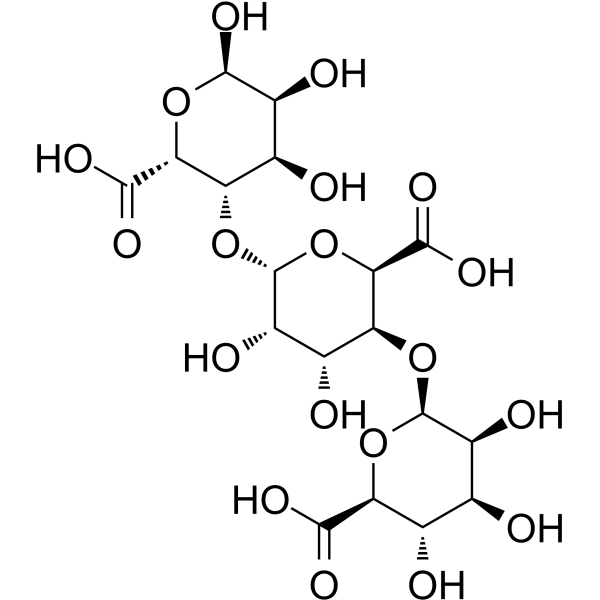
Sodium alginate Structure Sodium alginate
CAS:9005-38-3
Collagen Structure Collagen
CAS:9007-34-5
β-D-Mannopyranuronic acid Structure β-D-Mannopyranuronic acid
CAS:9005-32-7
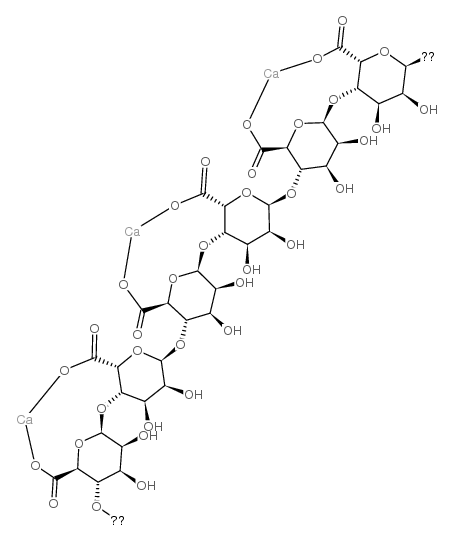
Calcium alginate Structure Calcium alginate
CAS:9005-35-0