Physical Chemistry Chemical Physics 2014-06-28

Improved efficiency of bulk heterojunction hybrid solar cells by utilizing CdSe quantum dot-graphene nanocomposites.

Michael Eck, Chuyen Van Pham, Simon Züfle, Martin Neukom, Martin Sessler, Dorothea Scheunemann, Emre Erdem, Stefan Weber, Holger Borchert, Beat Ruhstaller, Michael Krüger

Index: Phys. Chem. Chem. Phys. 16(24) , 12251-60, (2014)

Full Text: HTML

Abstract

We present a significant efficiency enhancement of hybrid bulk heterojunction solar cells by utilizing CdSe quantum dots attached to reduced graphene oxide (rGO) as the electron accepting phase, blended with the PCPDTBT polymer. The quantum dot attachment to rGO was achieved following a self-assembly approach, recently developed, using thiolated reduced graphene oxide (TrGO) to form a TrGO-CdSe nanocomposite. Therefore, we are able to obtain TrGO-CdSe quantum dot/PCPDTBT bulk-heterojunction hybrid solar cells with power conversion efficiencies of up to 4.2%, compared with up to 3% for CdSe quantum dot/PCPDTBT devices. The improvement is mainly due to an increase of the open-circuit voltage from 0.55 V to 0.72 V. We found evidence for a significant change in the heterojunction donor-acceptor blend nanomorphology, observable by a more vertical alignment of the TrGO-quantum dot nanocomposites in the z-direction and a different nanophase separation in the x-y direction compared to the quantum dot only containing device. Moreover, an improved charge extraction and trap state reduction were observed for TrGO containing hybrid solar cells.

Related Compounds

Structure Name/CAS No. Articles
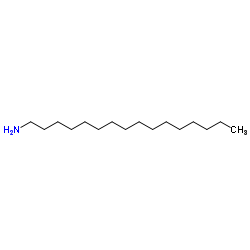
Hexadecylamine Structure Hexadecylamine
CAS:143-27-1
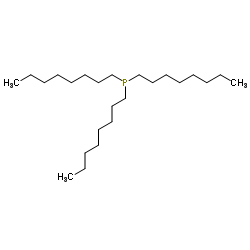
Trioctylphosphine Structure Trioctylphosphine
CAS:4731-53-7
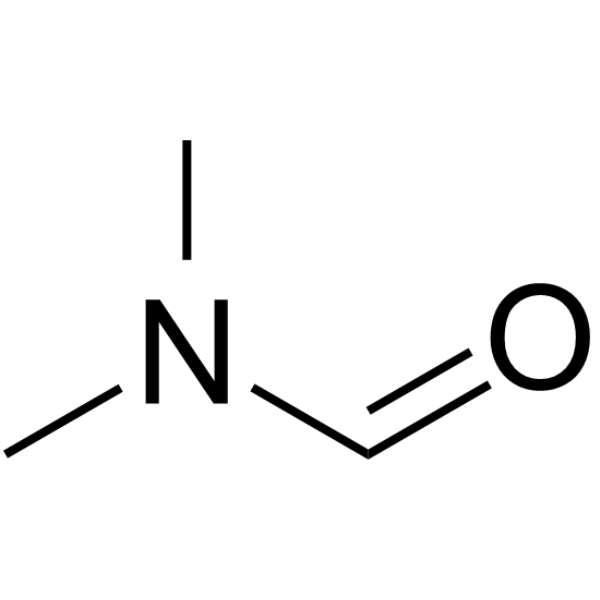
N,N-Dimethylformamide Structure N,N-Dimethylformamide
CAS:68-12-2
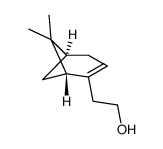
(-)-NOPOL Structure (-)-NOPOL
CAS:35836-73-8
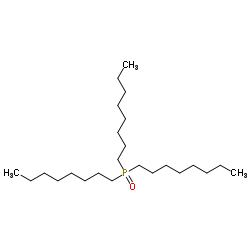
trioctylphosphane oxide Structure trioctylphosphane oxide
CAS:78-50-2