Induction of human fetal hemoglobin expression by adenosine-2',3'-dialdehyde.
Yinghong He, Gerhard Rank, Miaomiao Zhang, Junyi Ju, Ronghua Liu, Zhen Xu, Fiona Brown, Loretta Cerruti, Chi Ma, Renxiang Tan, Stephen M Jane, Quan Zhao
文献索引:J. Transl. Med. 11 , 14, (2013)
全文:HTML全文
摘要
Pharmacologic reactivation of fetal hemoglobin expression is a promising strategy for treatment of sickle cell disease and β-thalassemia. The objective of this study was to investigate the effect of the methyl transferase inhibitor adenosine-2',3'-dialdehyde (Adox) on induction of human fetal hemoglobin (HbF) in K562 cells and human hematopoietic progenitor cells.Expression levels of human fetal hemoglobin were assessed by northern blot analysis and Real-time PCR. HbF and adult hemoglobin (HbA) content were analyzed using high-performance liquid chromatography (HPLC). DNA methylation levels on human gamma-globin gene promoters were determined using Bisulfite sequence analysis. Enrichment of histone marks on genes was assessed by chromosome immunoprecipitation (ChIP).Adox induced γ-globin gene expression in both K562 cells and in human bone marrow erythroid progenitor cells through a mechanism potentially involving inhibition of protein arginine methyltransferase 5 (PRMT5).The ability of methyl transferase inhibitors such as Adox to efficiently reactivate fetal hemoglobin expression suggests that these agents may provide a means of reactivating fetal globin expression as a therapeutic option for treating sickle cell disease and β-thalassemia.
相关化合物
| 结构式 | 名称/CAS号 | 分子式 | 全部文献 |
|---|---|---|---|
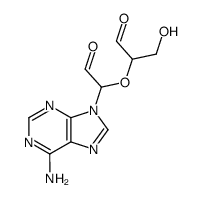 |
腺苷.高碘酸氧化
CAS:34240-05-6 |
C10H11N5O4 |
|
Elasticity assessment of electrospun nanofibrous vascular gr...
2014-12-01 [Mater. Sci. Eng. C. Mater. Biol. Appl. 45 , 446-54, (2014)] |
|
Efflux of glutathione and glutathione complexes from human e...
2013-01-01 [Blood Cells Mol. Dis. 50(1) , 1-7, (2013)] |
|
Involvement of Src and the actin cytoskeleton in the antitum...
2013-04-15 [Biochem. Pharmacol. 85(8) , 1042-56, (2013)] |
|
Increased plasma S-adenosylhomocysteine-accelerated atherosc...
2015-01-01 [Arterioscler. Thromb. Vasc. Biol. 35(1) , 60-70, (2015)] |
|
Adenosine dialdehyde suppresses MMP-9-mediated invasion of c...
2013-11-01 [Biochem. Pharmacol. 86(9) , 1285-300, (2013)] |