Ana B Cerezo, Mark S Winterbone, Christina W A Moyle, Paul W Needs, Paul A Kroon
文献索引:Mol. Nutr. Food. Res. 59 , 2119-31, (2016)
全文:HTML全文
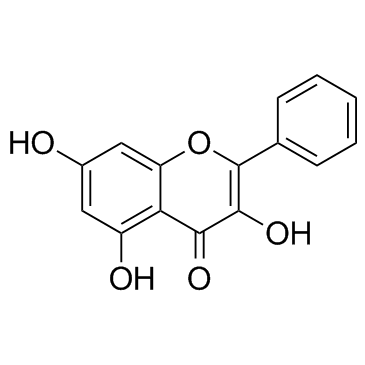
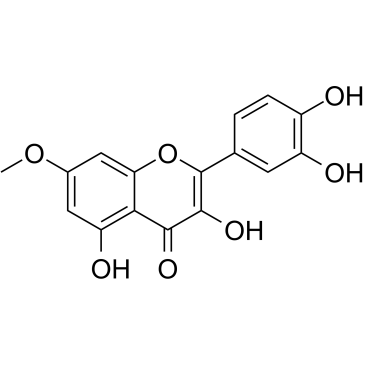
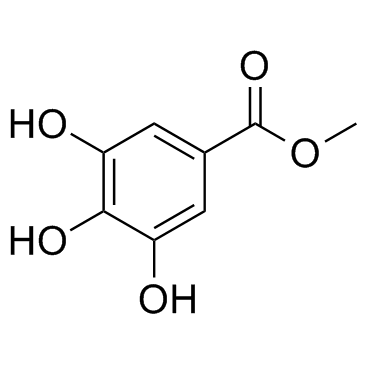
We recently reported potent inhibition of VEGF signalling by two flavanols at sub-micromolar concentrations, mediated by direct binding of the flavanols to VEGF. The aim of this study was to quantify the inhibitory potency and binding affinity of a wide range of dietary polyphenols and determine the structural requirements for VEGF inhibition.The concentration of polyphenol required to cause 50% inhibition (IC50 ) of VEGF-dependent VEGFR-2 activation in HUVECS was determined after pretreating VEGF with polyphenols at various concentations. Binding affinities and binding sites on VEGF were predicted using in-silico modelling. Ellagic acid and 15 flavonoids had IC50 values ≤10 μM while 28 other polyhenols were weak/non-inhibitors. Structural features associated with potent inhibition included 3-galloylation, C-ring C2=C3, total OH, B-ring catechol, C-ring 3-OH of flavonoids. Potency was not associated with polyphenol hydrophobicity. There was a strong correlation between potency of inhibition and binding affinities, and all polyphenols were predicted to bind to a region on VEGF involved in VEGFR-2 binding.Specific polyphenols bind directly to a discrete region of VEGF and inhibit VEGF signalling, and this potentially explains the associations between consumption of these polyphenols and CVD risk.© 2015 The Authors. Molecular Nutrition & Food Research published by Wiley-VCH Verlag GmbH & Co. KGaA, Weinheim.