Dong Chan Kim, Dae Won Jun, Young Il Kwon, Kang Nyeong Lee, Hang Lak Lee, Oh Young Lee, Byung Chul Yoon, Ho Soon Choi, Eun Kyung Kim
文献索引:Liver Int. 33(4) , 535-43, (2013)
全文:HTML全文
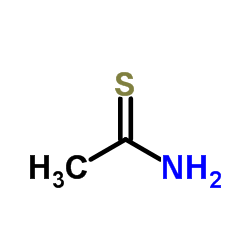
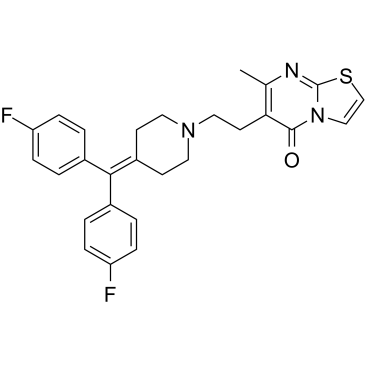
5-hydroxytryptamine (5-HT) receptors are upregulated in activated hepatic stellate cells (HSCs), and are therefore thought to play an important role in their activation.The aim of this study was to determine whether 5-HT2A receptor antagonists affect the activation or apoptosis of HSCs in vitro and/or in vivo.For the in vitro experiments, the viability, apoptosis and wound healing ability of LX-2 cells were examined after treatment with various 5-HT2A receptor antagonists. Levels of HSC activation markers (procollagen type I, α-SMA, TGF-β and Smad 2/3) were measured. For in vivo experiments, rats were divided into three groups: (i) a control group, (ii) a disease group, in which cirrhosis was induced by thioacetamide (iii) a treatment group, in which cirrhosis was induced and a 5-HT2A receptor antagonist (sarpogrelate, 30 mg/kg) was administered.5-HT2A , but not 5-HT2B receptor mRNA increased with time upon HSC activation. 5-HT2A receptor antagonists (ketanserin and sarpogrelate) inhibited viability and wound healing in LX-2 cells and induced apoptosis. Expression of α-SMA and procollagen type I was also inhibited. In the in vivo study, lobular inflammation was reduced in the sarpogrelate-treated group, but there was only slight and statistically insignificant attenuation of periportal fibrosis. Expression of α-SMA, TGF-β and Smad 2/3 was also reduced in the treatment group.5-HT2A receptor antagonists can reduce inflammation and the activation of HSCs in this cirrhotic model.© 2013 John Wiley & Sons A/S.