前往化源商城

Journal of Organic Chemistry 2011-10-07

Reduction of amine N-oxides by diboron reagents.

Hari Prasad Kokatla, Paul F Thomson, Suyeal Bae, Venkata Ramana Doddi, Mahesh K Lakshman

文献索引:J. Org. Chem. 76 , 7842-7848, (2011)

全文:HTML全文

摘要

Facile reduction of alkylamino-, anilino-, and pyridyl-N-oxides can be achieved via the use of diboron reagents, predominantly bis(pinacolato)- and in some cases bis(catecholato)diboron [(pinB)(2) and (catB)(2), respectively]. Reductions occur upon simply mixing the amine N-oxide and the diboron reagent in a suitable solvent, at a suitable temperature. Extremely fast reductions of alkylamino- and anilino-N-oxides occur, whereas pyridyl-N-oxides undergo slower reduction. The reaction is tolerant of a variety of functionalities such as hydroxyl, thiol, and cyano groups, as well as halogens. Notably, a sensitive nucleoside N-oxide has also been reduced efficiently. The different rates with which alkylamino- and pyridyl-N-oxides are reduced has been used to perform stepwise reduction of the N,N'-dioxide of (S)-(-)-nicotine. Because it was observed that (pinB)(2) was unaffected by the water of hydration in amine oxides, the feasibility of using water as solvent was evaluated. These reactions also proceeded exceptionally well, giving high product yields. In constrast to the reactions with (pinB)(2), triethylborane reduced alkylamino-N-oxides, but pyridine N-oxide did not undergo efficient reduction even at elevated temperature. Finally, the mechanism of the reductive process by (pinB)(2) has been probed by (1)H and (11)B NMR.

相关化合物

结构式 名称/CAS号 全部文献
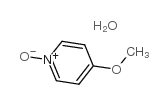
4-甲氧基吡啶-N-氧化物 结构式 4-甲氧基吡啶-N-氧化物
CAS:207511-18-0