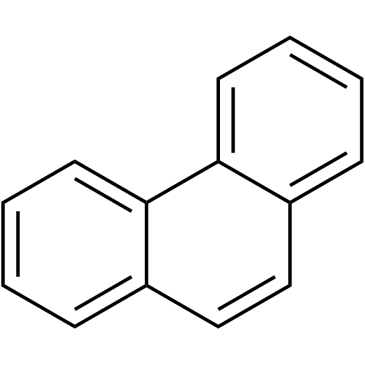
Polyaromatic hydrocarbons (PAHs) with high molecular weight (more than three benzene rings) were difficult to degrade in saline environment. The present study details about the bacterial consortium enriched from industrial sludge from salt manufacturing company, Tuticorin, Tamilnadu (India), which was capable of degrading 1, 4 dioxane (Emerging micropollutant) and also phenanthrene as sole carbon source under saline condition. The halophilic bacterial consortium was able to degrade low molecular weight (LMW) phenanthrene, but unable to degrade high molecular weight (HMW) benzo(e)pyrene. To overcome this problem, phenanthrene was added as co-substrate along with benzo(e)pyrene which enhanced the biodegradation process by co-metabolism under saline conditions. The consortium potentially degraded 80% and 99% of benzo(e)pyrene in 7 days and phenanthrene in 5 days at 30 g l⁻¹ of NaCl concentration. When the saline concentration increased to 60 g l⁻¹, degradation of phenanthrene (97% in 8 days) and benzo(e)pyrene (65% in 10 days) was observed. Further increase in saline concentration to 90 g I⁻¹ of NaCI showed reduction in the percent degradation of phenanthrene and benzo(e)pyrene leads to 30.3% and 9% respectively in 6 days. Potential bacterial strains, present in PAHs degrading bacterial consortium were identified as Achromobacter sp. AYS3 (JQ419751), Marinobacter sp. AYS4 (JQ419752) and Rhodanobacter sp. AYS5 (JQ419753). The present study details about the effect of salinity on PAHs degradation and vital role of co-metabolism on biodegradation of benzo(e)pyrene with phenanthrene under saline conditions.
![苯并[e]芘 结构式](https://image.chemsrc.com/caspic/142/192-97-2.png)