Early systemic granulocyte-colony stimulating factor treatment attenuates neuropathic pain after peripheral nerve injury.
Po-Kuan Chao, Kwok-Tung Lu, Yun-Lin Lee, Jin-Chung Chen, Hung-Li Wang, Yi-Ling Yang, Mei-Yun Cheng, Ming-Feng Liao, Long-Sun Ro
文献索引:PLoS ONE 7 , e43680, (2012)
全文:HTML全文
摘要
Recent studies have shown that opioid treatment can reduce pro-inflammatory cytokine production and counteract various neuropathic pain syndromes. Granulocyte colony-stimulating factor (G-CSF) can promote immune cell differentiation by increasing leukocytes (mainly opioid-containing polymorphonuclear (PMN) cells), suggesting a potential beneficial role in treating chronic pain. This study shows the effectiveness of exogenous G-CSF treatment (200 µg/kg) for alleviating thermal hyperalgesia and mechanical allodynia in rats with chronic constriction injury (CCI), during post-operative days 1-25, compared to that of vehicle treatment. G-CSF also increases the recruitment of opioid-containing PMN cells into the injured nerve. After CCI, single administration of G-CSF on days 0, 1, and 2, but not on day 3, relieved thermal hyperalgesia, which indicated that its effect on neuropathic pain had a therapeutic window of 0-48 h after nerve injury. CCI led to an increase in the levels of interleukin-6 (IL-6) mRNA and tumor necrosis factor-α (TNF-α) protein in the dorsal root ganglia (DRG). These high levels of IL-6 mRNA and TNF-α were suppressed by a single administration of G-CSF 48-144 h and 72-144 h after CCI, respectively. Furthermore, G-CSF administered 72-144 h after CCI suppressed the CCI-induced upregulation of microglial activation in the ipsilateral spinal dorsal horn, which is essential for sensing neuropathic pain. Moreover, the opioid receptor antagonist naloxone methiodide (NLXM) reversed G-CSF-induced antinociception 3 days after CCI, suggesting that G-CSF alleviates hyperalgesia via opioid/opioid receptor interactions. These results suggest that an early single systemic injection of G-CSF alleviates neuropathic pain via activation of PMN cell-derived endogenous opioid secretion to activate opioid receptors in the injured nerve, downregulate IL-6 and TNF-α inflammatory cytokines, and attenuate microglial activation in the spinal dorsal horn. This indicates that G-CSF treatment can suppress early inflammation and prevent the subsequent development of neuropathic pain.
相关化合物
| 结构式 | 名称/CAS号 | 分子式 | 全部文献 |
|---|---|---|---|
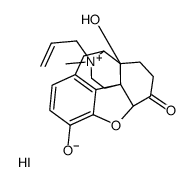 |
纳硫酮甲硫醚
CAS:93302-47-7 |
C20H24INO4 |
|
Pronociceptive and Antinociceptive Effects of Buprenorphine ...
2015-07-01 [J. Neurosci. 35 , 9580-94, (2015)] |
|
Mu opioid receptors on primary afferent nav1.8 neurons contr...
2013-01-01 [PLoS ONE 8 , e74706, (2013)] |
|
Involvement of central opioid systems in human interferon-al...
2000-07-01 [Br. J. Pharmacol. 130 , 1269-1274, (2000)] |
|
Quaternary naloxone blocks morphine analgesia in spinal but ...
1990-07-13 [Neurosci. Lett. 114 , 259-264, (1990)] |
|
Naloxone blockade of myocardial ischemic preconditioning doe...
1999-04-01 [Basic Res. Cardiol. 94 , 136-143, (1999)] |