Metabolic engineering by plastid transformation as a strategy to modulate isoprenoid yield in plants.
Tomohisa Hasunuma, Akihiko Kondo, Chikahiro Miyake
文献索引:Methods Mol. Biol. 643 , 213-27, (2010)
全文:HTML全文
摘要
Plants synthesize a large number of isoprenoid compounds that have diverse structures and functions. All isoprenoids are synthesized through consecutive condensation of five-carbon precursors, isopentenyl diphosphate (IPP) and its allyl isomer dimethylallyl diphosphate (DMAPP). With recent success in the cloning of genes that encode the enzymes of isoprenoid biosynthesis, genetic engineering strategies for the improvement of plant isoprenoid metabolism have emerged. Plastid transformation technology offers attractive features in plant genetic engineering. It has many advantages over nuclear genome transformation: high-level foreign protein expression, no need for a transit peptide, absence of gene silencing, and convenient transgene stacking in operons. We demonstrated that this technology is a remarkable tool for the production of isoprenoids in plants through metabolic engineering. The expression of bacterial genes encoding CrtW (beta-carotene ketolase) and CrtZ (beta-carotene hydroxylase) or cyanobacterial genes encoding DXR (1-deoxy-D-xylulose-5-phosphate reductoisomerase) in the plastid genome leads to alteration in isoprenoid content of tobacco leaves.
相关化合物
| 结构式 | 名称/CAS号 | 分子式 | 全部文献 |
|---|---|---|---|
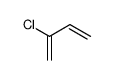 |
氯丁橡胶
CAS:9010-98-4 |
C4H5Cl |
|
Cytotoxic tetraprenylated alkaloids from the South China Sea...
2012-10-01 [Chem. Biodivers. 9(10) , 2218-24, (2012)] |
|
Anatomy of the foot venous pump: physiology and influence on...
2012-08-01 [Phlebology 27(5) , 219-30, (2012)] |
|
Experiments on the mechanism of underwater hearing.
2011-12-01 [Acta Otolaryngol. 131(12) , 1279-85, (2011)] |
|
Disproportionated rosin dehydroabietic acid in neoprene surg...
2010-01-01 [Dermatitis 21(3) , 157-9, (2010)] |
|
Permeation of gasoline, diesel, bioethanol (E85), and biodie...
2010-07-01 [J. Occup. Environ. Hyg. 7(7) , 417-28, (2010)] |