前往化源商城

Journal of Colloid and Interface Science 2015-05-01

Influence of supporting polyelectrolyte layers on the coverage and stability of silver nanoparticle coatings.

Magdalena Oćwieja, Zbigniew Adamczyk, Maria Morga, Katarzyna Kubiak

文献索引:J. Colloid. Interface Sci. 445 , 205-12, (2015)

全文:HTML全文

摘要

Deposition mechanisms of citrate-stabilized silver nanoparticles 15 nm in diameter on cationic polyelectrolyte supporting layers were evaluated. Initially, the bulk and the electrokinetic properties of cationic polyelectrolytes and their monolayers on mica were determined using in situ streaming potential measurements. Analogously, the size distribution, stability and electrokinetic properties of silver particles were studied using transmission electron microscopy (TEM) and microelectrophoretic measurements. Afterward, the kinetics of silver particle deposition was quantitatively evaluated by a direct enumeration procedure exploiting the atomic force microscopy (AFM) and scanning electron microscopy (SEM) micrographs. Using this method the kinetics of particle adsorption was determined for various polyelectrolyte supporting layers as a function of ionic strength. These experiments were interpreted in terms of the random sequential adsorption (RSA) model. It was found that the highest coverage of 0.35 was obtained for silver monolayers deposited on poly(allylamine hydrochloride) (PAH)-modified mica in the case of higher ionic strength. The release kinetics of nanoparticles was also studied using the SEM and AFM imaging method. Using these experimental data the equilibrium adsorption constant and the binding energy of nanoparticles were calculated by exploiting the RSA approach. The investigations showed that the most stable silver monolayers are obtained for the poly-L-lysine (PLL) supporting layers where the 50% of particle is released after 441h, whereas in the case of PEI the release time was only 9h. These results are consistent with the model of discrete electrostatic interactions among ion pairs. Additionally, the obtained results have practical implication indicating that it is feasible to regulate the rate of silver nanoparticle release by a proper choice of the polyelectrolyte forming the supporting layer.Copyright © 2015 Elsevier Inc. All rights reserved.

相关化合物

结构式 名称/CAS号 全部文献
硼氢化钠 结构式 硼氢化钠
CAS:16940-66-2
盐酸 结构式 盐酸
CAS:7647-01-0
氢氧化钠 结构式 氢氧化钠
CAS:1310-73-2
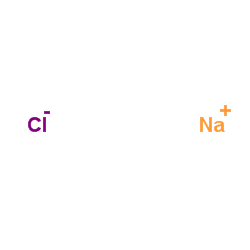
氯化钠 结构式 氯化钠
CAS:7647-14-5
3-乙基-2,4-戊烷二酮 结构式 3-乙基-2,4-戊烷二酮
CAS:1540-34-7
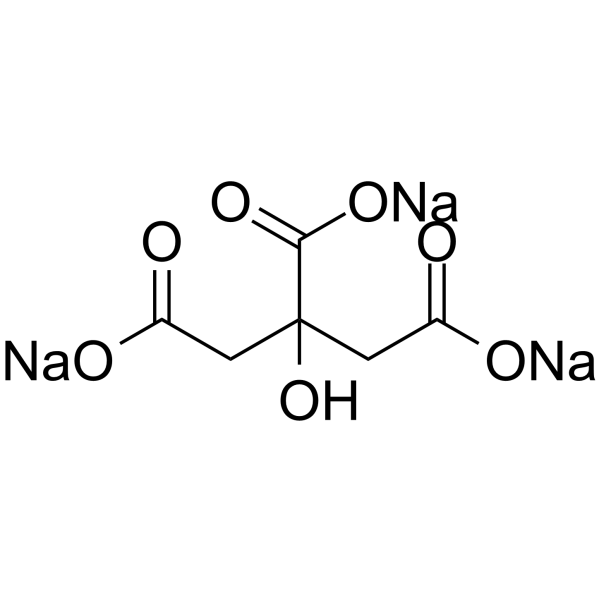
柠檬酸钠 结构式 柠檬酸钠
CAS:68-04-2
氯化钠-35cl 结构式 氯化钠-35cl
CAS:20510-55-8
氯化氢甲醇溶液 结构式 氯化氢甲醇溶液
CAS:132228-87-6
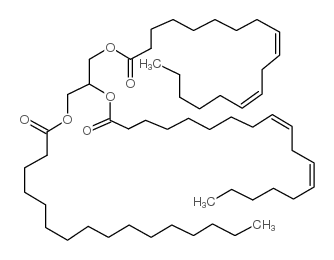
1,2亚油酸-3-棕榈酸甘油酯 结构式 1,2亚油酸-3-棕榈酸甘油酯
CAS:2190-15-0