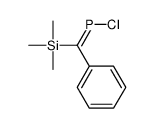
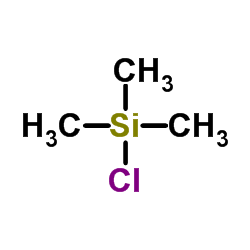
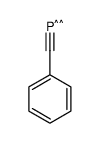
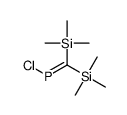
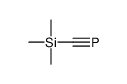
Abstract Die PE-spektroskopische Optimierung thermischer Zersetzungsreaktionen in der Gasphase wird auf die Chlor [(trimethylsilyl) methylen] phosphan-Derivate ((H 3 C) 3 Si) RC= PCl mit R= C 6 H 5, Si (CH 3) 3 angewendet. In einer Kurzweg-Pyrolyse spaltet sich bei 1300 K quantitativ (H 3 C) 3 SiCl ab. Die gebildeten Methylidinphosphane (H 3 C) 3 Si [BOND] C [TRIPLE BOND] P und C 6 H 5 [BOND] C [TRIPLE BOND] P lassen sich durch ...