Study of 'co-solvent effect' on production of biodiesel from Schleichera Oleosa oil using a mixed metal oxide as a potential catalyst
Shalini Sahani, Sushmita Banerjee, Yogesh C. Sharma
文献索引:10.1016/j.jtice.2018.01.029
全文:HTML全文
摘要
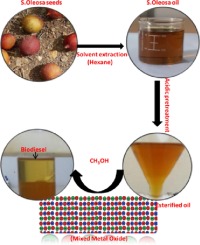
In this study, biodiesel was prepared from a non edible feedstock using two step process followed by heterogeneous base catalyzed transesterification reaction. A novel solid heterogeneous base catalyst (strontium lanthanum mixed metal oxide) was synthesized via co- precipitation route and was characterized by XRD, FT-IR, SEM, and EDX. The free fatty acid content of the feedstock was assuaged by esterification process followed by transesterification for the synthesis of biodiesel. Effect of co-solvent on biodiesel yield was investigated in each subsequent experiment. Effect of various factors including calcination time, temperature, reaction time, molar ratio (methanol: oil), and catalyst concentration were also taken into account using OVAT (one variable at a time). High quality and pure biodiesel was synthesized at optimized conditions viz. Alcohol to oil molar ratio (14:1), catalyst dose (1.5%), temperature (60 °C), stirring speed (600 rpm) for 40 min in presence of DPE (co-solvent to alcohol molar ratio, 1:1) and was characterized by H1 NMR and FT-IR analysis. Properties of synthesized biodiesel were determined according to ASTM standards. Reusability of catalyst was checked and the catalyst was found stable up to six runs without any significant loss of catalytic activity.