Chloroxylenol
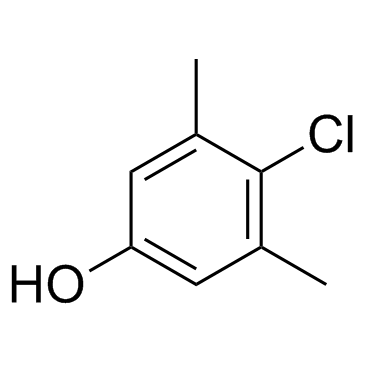
Chloroxylenol structure
|
Common Name | Chloroxylenol | ||
|---|---|---|---|---|
| CAS Number | 88-04-0 | Molecular Weight | 156.609 | |
| Density | 1.2±0.1 g/cm3 | Boiling Point | 246.0±0.0 °C at 760 mmHg | |
| Molecular Formula | C8H9ClO | Melting Point | 114-116 °C(lit.) | |
| MSDS | Chinese USA | Flash Point | 105.9±25.9 °C | |
| Symbol |

GHS07 |
Signal Word | Warning | |
Use of ChloroxylenolChloroxylenol is a broad spectrum antimicrobial chemical compound used to control bacteria, algae, fungi and virus.Target: AntibacterialChloroxylenol is used in hospitals and households for disinfection and sanitation. Chloroxylenol is also commonly used in antibacterial soaps, wound-cleansing applications and household antiseptics such as Dettol liquid, cream and ointments. |
| Name | 4-chloro-3,5-dimethylphenol |
|---|---|
| Synonym | More Synonyms |
| Description | Chloroxylenol is a broad spectrum antimicrobial chemical compound used to control bacteria, algae, fungi and virus.Target: AntibacterialChloroxylenol is used in hospitals and households for disinfection and sanitation. Chloroxylenol is also commonly used in antibacterial soaps, wound-cleansing applications and household antiseptics such as Dettol liquid, cream and ointments. |
|---|---|
| Related Catalog |
| Density | 1.2±0.1 g/cm3 |
|---|---|
| Boiling Point | 246.0±0.0 °C at 760 mmHg |
| Melting Point | 114-116 °C(lit.) |
| Molecular Formula | C8H9ClO |
| Molecular Weight | 156.609 |
| Flash Point | 105.9±25.9 °C |
| Exact Mass | 156.034195 |
| PSA | 20.23000 |
| LogP | 3.35 |
| Vapour Pressure | 0.0±0.5 mmHg at 25°C |
| Index of Refraction | 1.558 |
| InChIKey | OSDLLIBGSJNGJE-UHFFFAOYSA-N |
| SMILES | Cc1cc(O)cc(C)c1Cl |
| Storage condition | 2-8°C |
| Stability | Stable. Incompatible with strong oxidizing agents. |
| Water Solubility | 0.3 g/L (20 ºC) |
CHEMICAL IDENTIFICATION
HEALTH HAZARD DATAACUTE TOXICITY DATA
MUTATION DATA
|
| Symbol |
GHS07 |
|---|---|
| Signal Word | Warning |
| Hazard Statements | H302-H315-H317-H319 |
| Precautionary Statements | P280-P305 + P351 + P338 |
| Personal Protective Equipment | dust mask type N95 (US);Eyeshields;Faceshields;Gloves |
| Hazard Codes | Xn:Harmful |
| Risk Phrases | R22;R36/38;R43 |
| Safety Phrases | S24-S37 |
| RIDADR | UN 3077 9/PG 3 |
| WGK Germany | 1 |
| RTECS | ZE6850000 |
| Hazard Class | 9.0 |
| HS Code | 2908199090 |
|
~%
Chloroxylenol CAS#:88-04-0 |
| Literature: US2350677 , ; |
|
~%
Chloroxylenol CAS#:88-04-0 |
| Literature: Journal of the Chemical Society, Perkin Transactions 2: Physical Organic Chemistry (1972-1999), , p. 385 - 392 |
|
~%
Chloroxylenol CAS#:88-04-0 |
| Literature: Angewandte Chemie, , vol. 25, p. 1944 Chemische Berichte, , vol. 56, p. 968 |
|
~%
Chloroxylenol CAS#:88-04-0 |
| Literature: Biochemical Journal, , vol. 37, p. 592,593 |
|
~%
Chloroxylenol CAS#:88-04-0 |
| Literature: Biochemical Journal, , vol. 37, p. 592,593 |
|
~%
Chloroxylenol CAS#:88-04-0 |
| Literature: Biochemical Journal, , vol. 37, p. 592,593 |
|
~%
Chloroxylenol CAS#:88-04-0 |
| Literature: Journal of Applied Chemistry, , vol. 3, p. 266,273 Journal of Applied Chemistry, , vol. 4, p. 110,111 |
|
~%
Chloroxylenol CAS#:88-04-0 |
| Literature: Fortsch. Ch., Phys., , vol. 18, p. 39,51, 52 |
|
~%
Chloroxylenol CAS#:88-04-0 |
| Literature: Chemische Berichte, , vol. 56, p. 968 |
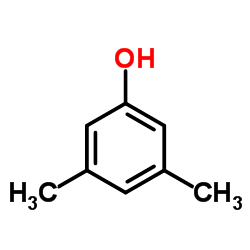
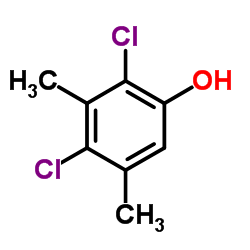
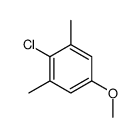

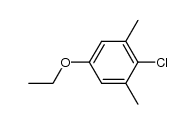

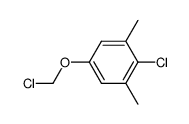
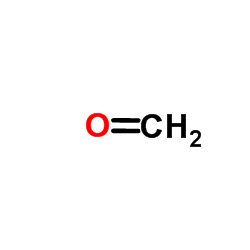

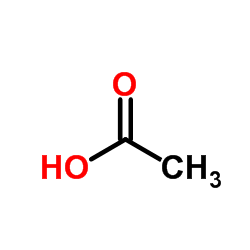
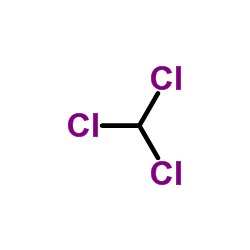
| Precursor 8 | |
|---|---|
| DownStream 10 | |
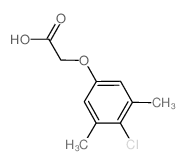 CAS#:19545-95-0
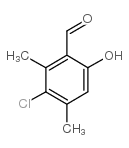 CAS#:81322-67-0
 CAS#:14994-16-2
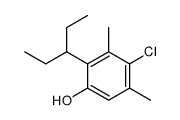 CAS#:18980-18-2
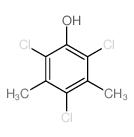 CAS#:6972-47-0
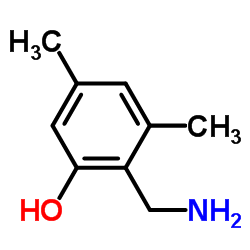 CAS#:769871-92-3
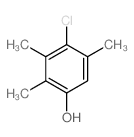 CAS#:6627-94-7
| HS Code | 2908199090 |
|---|---|
| Summary | HS: 2908199090. derivatives of polyphenols or phenol-alcohols containing only halogen substituents and their salts. VAT:17.0%. tax rebate rate:9.0%. supervision conditions:None. MFN tariff:5.5%. general tariff:30.0% |
|
Cheminformatics analysis of assertions mined from literature that describe drug-induced liver injury in different species.
Chem. Res. Toxicol. 23 , 171-83, (2010) Drug-induced liver injury is one of the main causes of drug attrition. The ability to predict the liver effects of drug candidates from their chemical structures is critical to help guide experimental... |
|
|
Transdermal penetration behaviour of drugs: CART-clustering, QSPR and selection of model compounds.
Bioorg. Med. Chem. 15 , 6943-55, (2007) A set of 116 structurally very diverse compounds, mainly drugs, was characterized by 1630 molecular descriptors. The biological property modelled in this study was the transdermal permeability coeffic... |
|
|
Determination of phenolic disinfectants in consumer products by capillary electrophoresis with amperometric detection.
J. Chromatogr. Sci. 48(7) , 584-8, (2010) Numerous disinfection products are widely used in daily life to kill pathogenic microorganisms. However, most disinfectants are organic compounds that might be hazardous to the environment and humans ... |
| Chloroxylenol |
| 4-chloro-3,5-dimethyl phenol |
| Benzytol |
| Espadol |
| 2,6-dimethyl-4-hydroxychlorobenzene |
| 4-Chloro-3,5-dimethylphenol |
| 4-Chloro-3,5-xylenol |
| 3,5-dimethyl-4-chlorophenol |
| Ottasept |
| EINECS 201-793-8 |
| Phenol, 4-chloro-3,5-dimethyl- |
| Rba 777 |
| p-Chloro-m-xylenol |
| Camel |
| Desson |
| Dettol |
| MFCD00002324 |
| PCMX |
| 3,5-Dimethyl-p-Chlorophenol |
| Ayrtol |
| parachlorometa xylenol |
The content on this webpage is sourced from various professional data sources. If you have any questions or concerns regarding the content, please feel free to contact service1@chemsrc.com.
- Shanghai Nianxing Industrial Co., Ltd
- China
- Product Name: Chloroxylenol
- Price: Check
- Purity: 98.0%
- Delivery: 10 Day
- Contact: Yang
- Email: sales@echemcloud.com
- Shanghai Jizhi Biochemical Technology Co., Ltd
- China
- Product Name: Chloroxylenol
- Price: ¥328.0/500g ¥98.0/100g
- Purity: 98.0%
- Delivery: Inquiry
- Contact: Liu jia


- Email: 2130147988@qq.com
- Dayang Chem (Hangzhou) Co., Ltd.
- China
- Product Name: 4-Chloro-3,5-dimethylphenol
- Price: $Inquiry/100g $Inquiry/1kg $Inquiry/100kg $Inquiry/1000kg
- Purity: 98.0%
- Delivery: Inquiry
- Contact: Ms Wang
- Email: enquiry@dycnchem.com
- Henan Tianfu Chemical Co., Ltd.
- China
- Product Name: 4-Chloro-3,5-dimethylphenol
- Price: $Inquiry/1kg $Inquiry/25kg $Inquiry/1000kg $Inquiry/10ton
- Purity: 99.0%
- Delivery: Inquiry
- Contact: Anson
- Email: info@tianfuchem.com
- Zhongshan Xingrui Chemical Co. , Ltd.
- China
- Product Name: Chloroxylenol
- Price: ¥Inquiry/25kg
- Purity: 99.0%
- Delivery: Inquiry
- Contact: Wang Jie
- Email: 3096638339@qq.com
Get all suppliers and price by the below link:
Reference only. check more Chloroxylenol price