(+)-JQ1
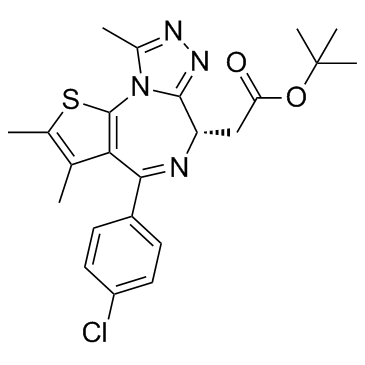
(+)-JQ1 structure
|
Common Name | (+)-JQ1 | ||
|---|---|---|---|---|
| CAS Number | 1268524-70-4 | Molecular Weight | 456.988 | |
| Density | 1.3±0.1 g/cm3 | Boiling Point | 610.4±65.0 °C at 760 mmHg | |
| Molecular Formula | C23H25ClN4O2S | Melting Point | N/A | |
| MSDS | USA | Flash Point | 322.9±34.3 °C | |
Use of (+)-JQ1(+)-JQ-1 is a BET bromodomain inhibitor, with IC50s of 77 and 33 nM for the first and second bromodomain (BRD4(1/2)). |
This table lists Chinese names, IUPAC names and various aliases of this chemical substance.
| Name | (S)-tert-butyl 2-(4-(4-chlorophenyl)-2,3,9-trimethyl-6H-thieno[3,2-f][1,2,4]triazolo[4,3-a][1,4]diazepin-6-yl)acetate |
|---|---|
| Synonym | More Synonyms |
This table contains bioactivity, target information and biological‑assay experimental data of this compound.
| Description | (+)-JQ-1 is a BET bromodomain inhibitor, with IC50s of 77 and 33 nM for the first and second bromodomain (BRD4(1/2)). |
|---|---|
| Related Catalog | |
| Target |
IC50: 77/33 nM (BRD4(1/2))[1] |
| In Vitro | (+)-JQ1 represents a potent, highly specific and Kac competitive inhibitor for the BET family of bromodomains. (+)-JQ1 (100 nM, 48 h) prompts squamous differentiation exhibited by cell spindling, flattening and increased expression of keratin. (+)-JQ1 (250 nM) induces rapid expression of keratin in treated NMC 797 cells compared to (-)-JQ1 (250 nM) and vehicle controls, as determined by quantitative immunohistochemistry.(+)-JQ1 (250 nM) elicits a time-dependent induction of strong (3+) keratin staining of treated NMC 797 cells, compared to (-)-JQ1 (250 nM)[1]. (+)-JQ1 is a potent thienodiazepine inhibitor (Kd=90 nM) of the BET family coactivator protein BRD4, which is implicated in the pathogenesis of cancer via transcriptional control of the MYC oncogene. Dose-ranging studies of (+)-JQ1 demonstrates potent inhibition of H4Kac4 binding with a IC50 value of 10 nM for murine BRDT(1) and 11 nM for human BRDT(1)[2]. |
| In Vivo | Matched cohorts of mice with established tumors are randomized to treatment with (+)-JQ1 (50 mg/kg) or vehicle, administered by daily intraperitoneal injection. Prior to randomization, and after four days of therapy, mice are evaluated by FDG-PET imaging. A marked reduction in FDG uptake is observed with (+)-JQ1 treatment. Tumor-volume measurements confirm a reduction in tumor growth with JQ1 treatment. Pharmacokinetic studies of (+)-JQ1 are performed in CD1 mice following intravenous and oral administration. Mean plasma concentration-time profiles of (+)-JQ1 after intravenous dosing (5 mg/kg). The pharmacokinetic parameters for intravenous (+)-JQ1 demonstrate excellent drug exposure (AUC=2090 hr*ng/mL) and an approximately one hour half-life (T1/2). Mean plasma concentration-time profiles of (+)-JQ1 after oral dosing (10 mg/kg). The pharmacokinetic parameters for oral (+)-JQ1 demonstrate excellent oral bioavailability (F=49%), peak plasma concentration (Cmax=1180 ng/mL) and drug exposure (AUC=2090 hr*ng/mL)[1]. |
| Cell Assay | NUT midline carcinoma patient cell lines (797 and 11060) are plated in T-25 flasks and grown in DMEM (797) or RPMI (11060) containing 10 % fetal bovine serum and 1 % Penicillin/Streptomycin. Cells are treated with either 250 nM (+)-JQ1, 250 nM (-)-JQ1 or the equivalent volume of DMSO (0.025%). At the desired time point, 2×10⁶ cells are spun at 500× g for 5 minutes at 4°C and washed with PBS. Pellets are resuspended in 1 mL of cold PBS and added dropwise while gently vortexing to 9 mL 70 % ethanol in a 15 mL polypropylene centrifuge tube. Fixed cells are then frozen at -20°C overnight. The next day, cells are centrifuged at 500× g for 10 minutes at 4°C and washed with 3 mL of cold PBS. Cells are resuspended in 500 μL of propidium iodide staining solution (0.2 mg/mL RNAse A, 0.02 mg/mL propidium iodide, 0.1 % Triton-X in PBS) and incubated for 20 minutes at 37°C. Samples are then transferred to ice and analyzed on a BD FACS Canto II. Histograms are generated and cell cycle analysis is performed using FlowJo flow cytometry analysis software[1]. |
| Animal Admin | Mice[1] Matched cohorts of mice with established tumors are randomized to treatment with (+)-JQ1 (50 mg/kg) or vehicle, administered by daily intraperitoneal injection. Male CD1 mice (24-29 g) are treated with a single dose of (+)-JQ1 at 5 mg/kg for intravenous tail vein injection studies and 10 mg/kg for oral gavage studies. Approximately 150 μL of blood are taken from animals by retro-orbital puncture under anesthesia with Isoflurane into EDTA tubes at pre-specified time intervals: 0.033, 0.083, 0.25, 0.5, 1, 2, 4, 5, 8 and 24 hours. Three animals are analyzed per time point. Blood samples are put on ice and centrifuged to obtain plasma samples (2000× g, 5 min under 4°C) within 15 minutes post-sampling. Plasma samples are stored at approximately -70°C until analysis is performed. Mice are provided free access to food and water throughout the study. Rats[2] Adult male Sprague-Dawley rats are treated with vehicle or (+)-JQ1 (10 mg/kg). Treatment is administered IP at 1/100 body mass. Rats are checked twice-daily for mortality and weighed on days 1, 3, 7, 14, and 21. The treatment regimen utilized 4 days of 50 mg/kg JQ1 administered daily which is decreased to 10 mg/kg twice daily for the remainder of the study due to the appearance of adverse effects in a subset of animals. For all animals completing 3 weeks of treatment, testis mass, sperm motility, and sperm counts are determined as described for mouse studies. In brief, testes are fixed in Bouin’s and prepared for histology. The other half is minced in warm M16 buffer and used for sperm counts and motility studies. |
| References |
This table shows physicochemical parameters including melting point, boiling point, density, solubility and optical rotation. Missing data is marked as N/A.
| Density | 1.3±0.1 g/cm3 |
|---|---|
| Boiling Point | 610.4±65.0 °C at 760 mmHg |
| Molecular Formula | C23H25ClN4O2S |
| Molecular Weight | 456.988 |
| Flash Point | 322.9±34.3 °C |
| Exact Mass | 456.138672 |
| PSA | 97.61000 |
| LogP | 4.49 |
| Appearance of Characters | white to beige |
| Vapour Pressure | 0.0±1.7 mmHg at 25°C |
| Index of Refraction | 1.657 |
| InChIKey | DNVXATUJJDPFDM-KRWDZBQOSA-N |
| SMILES | Cc1sc2c(c1C)C(c1ccc(Cl)cc1)=NC(CC(=O)OC(C)(C)C)c1nnc(C)n1-2 |
| Storage condition | 2-8°C |
| Water Solubility | DMSO: soluble20mg/mL, clear |
This table covers safety warnings, protective measures, incompatible substances and disposal guidelines for this compound.
| RIDADR | NONH for all modes of transport |
|---|
This table presents publicly reported synthetic routes, reaction conditions, reactants and product information of the compound.
|
~90%
(+)-JQ1 CAS#:1268524-70-4 |
| Literature: WO2011/143657 A1, ; Page/Page column 82-83 ; |
|
~%
(+)-JQ1 CAS#:1268524-70-4 |
| Literature: WO2011/143657 A1, ; |
|
~%
(+)-JQ1 CAS#:1268524-70-4 |
| Literature: WO2011/143657 A1, ; |
|
~%
(+)-JQ1 CAS#:1268524-70-4 |
| Literature: WO2011/143657 A1, ; |
|
~%
(+)-JQ1 CAS#:1268524-70-4 |
| Literature: WO2011/143657 A1, ; |
![1H-Thieno[2,3-e]-1,4-diazepine-3-acetic acid, 5-(4-chlorophenyl)-2,3-dihydro-6,7-dimethyl-2-oxo-, 1,1-dimethylethyl ester, (3S) structure](https://image.chemsrc.com/caspic/054/1268524-67-9.png)
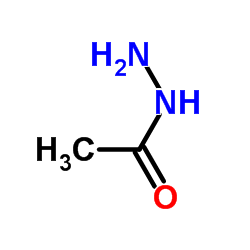

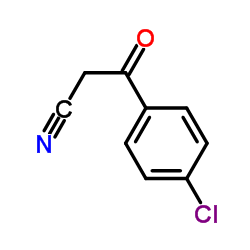
![2-Methyl-2-propanyl N-[3-(4-chlorobenzoyl)-4,5-dimethyl-2-thienyl]-N2-[(9H-fluoren-9-ylmethoxy)carbonyl]-L-α-asparaginate structure](https://image.chemsrc.com/caspic/130/1268524-65-7.png)
![Butanoic acid, 3-amino-4-[[3-(4-chlorobenzoyl)-4,5-dimethyl-2-thienyl]amino]-4-oxo-, 1,1-dimethylethyl ester, (3S) structure](https://image.chemsrc.com/caspic/092/1268524-66-8.png)
This table lists upstream starting materials and downstream derivative products related to this chemical.
| Precursor 4 | |
|---|---|
| DownStream 0 | |
This table lists relevant public references with title, journal and publication metadata for this compound.
|
Epigenetic chemical probes. Müller S and Brown PJ
Clin. Pharmacol. Ther. 92(6) , 689-93, (2012)
|
This table contains target information, in‑vitro & in‑vivo assay data for this compound.
|
Name: Primary qHTS assay for inhibitors of alpha-synuclein gene (SNCA) expression
Source: NCGC
External Id: SNCA-p-activity-luciferase
|
|
Name: Antiproliferative activity against human TY82 cells after 72 hrs by CCK8 assay
Source: ChEMBL
Target: N/A
External Id: CHEMBL4130834
|
|
Name: Thermal Shift Assay. Domain: start/stop: E122-S403
Source: ChEMBL
Target: Aurora kinase A
External Id: CHEMBL5067447
|
|
Name: Ratio of drug concentration in unbound HEK293 cell to media
Source: ChEMBL
Target: N/A
External Id: CHEMBL4312051
|
|
Name: Permeability of compound in 5% DMSO after 7 hrs by PAMPA
Source: ChEMBL
Target: N/A
External Id: CHEMBL4312050
|
|
Name: Inhibition of BRD4 in human H1229 cells transfected with HPV-E2 assessed as transrepr...
Source: ChEMBL
Target: Bromodomain-containing protein 4
External Id: CHEMBL4312049
|
|
Name: Inhibition of BRD4 in human MX1 cells assessed as decrease in cell proliferation afte...
Source: ChEMBL
Target: Bromodomain-containing protein 4
External Id: CHEMBL4312048
|
|
Name: Inhibition of BRD4 (unknown origin) by TR-FRET assay
Source: ChEMBL
Target: Bromodomain-containing protein 4
External Id: CHEMBL4312047
|
|
Name: Inhibition of BRD3 (unknown origin) by TR-FRET assay
Source: ChEMBL
Target: Bromodomain-containing protein 3
External Id: CHEMBL4312046
|
|
Name: Inhibition of BRD2 (unknown origin) by TR-FRET assay
Source: ChEMBL
Target: Bromodomain-containing protein 2
External Id: CHEMBL4312045
|
This table collects all English aliases, systematic names and CAS‑related synonyms of the compound.
| (6s)-6-(2-Tert-butoxy-2-oxoethyl)-4-(4-chlorophenyl)-2,3,9-trimethyl-6,7-dihydrothieno[3,2-F][1,2,4]triazolo[4,3-A][1,4]diazepin-10-ium |
| (+)-JQ1 |
| JQ1 |
| 2-Methyl-2-propanyl [(6S)-4-(4-chlorophenyl)-2,3,9-trimethyl-6H-thieno[3,2-f][1,2,4]triazolo[4,3-a][1,4]diazepin-6-yl]acetate |
| UNII-1MRH0IMX0W |
| (+)-JQ-1 |
This section contains frequently‑asked‑questions about this compound, including basic parameters, properties, storage conditions and corresponding answers.
| Q: What is the LogP of (S)-tert-butyl 2-(4-(4-chlorophenyl)-2,3,9-trimethyl-6H-thieno[3,2-f][1,2,4]triazolo[4,3-a][1,4]diazepin-6-yl)acetate? |
| A: LogP of (S)-tert-butyl 2-(4-(4-chlorophenyl)-2,3,9-trimethyl-6H-thieno[3,2-f][1,2,4]triazolo[4,3-a][1,4]diazepin-6-yl)acetate is 4.49. |
| Q: What is the boiling point of (S)-tert-butyl 2-(4-(4-chlorophenyl)-2,3,9-trimethyl-6H-thieno[3,2-f][1,2,4]triazolo[4,3-a][1,4]diazepin-6-yl)acetate? |
| A: Boiling point of (S)-tert-butyl 2-(4-(4-chlorophenyl)-2,3,9-trimethyl-6H-thieno[3,2-f][1,2,4]triazolo[4,3-a][1,4]diazepin-6-yl)acetate is 610.4±65.0 °C at 760 mmHg. |
| Q: What is the polar surface area (PSA) of (S)-tert-butyl 2-(4-(4-chlorophenyl)-2,3,9-trimethyl-6H-thieno[3,2-f][1,2,4]triazolo[4,3-a][1,4]diazepin-6-yl)acetate? |
| A: Polar surface area (PSA) of (S)-tert-butyl 2-(4-(4-chlorophenyl)-2,3,9-trimethyl-6H-thieno[3,2-f][1,2,4]triazolo[4,3-a][1,4]diazepin-6-yl)acetate is 97.61000. |
| Q: What is the molecular weight of (S)-tert-butyl 2-(4-(4-chlorophenyl)-2,3,9-trimethyl-6H-thieno[3,2-f][1,2,4]triazolo[4,3-a][1,4]diazepin-6-yl)acetate? |
| A: Molecular weight of (S)-tert-butyl 2-(4-(4-chlorophenyl)-2,3,9-trimethyl-6H-thieno[3,2-f][1,2,4]triazolo[4,3-a][1,4]diazepin-6-yl)acetate is 456.988. |
| Q: What is the molecular formula of (S)-tert-butyl 2-(4-(4-chlorophenyl)-2,3,9-trimethyl-6H-thieno[3,2-f][1,2,4]triazolo[4,3-a][1,4]diazepin-6-yl)acetate? |
| A: Molecular formula of (S)-tert-butyl 2-(4-(4-chlorophenyl)-2,3,9-trimethyl-6H-thieno[3,2-f][1,2,4]triazolo[4,3-a][1,4]diazepin-6-yl)acetate is C23H25ClN4O2S. |
| Q: What is the SMILES notation of (S)-tert-butyl 2-(4-(4-chlorophenyl)-2,3,9-trimethyl-6H-thieno[3,2-f][1,2,4]triazolo[4,3-a][1,4]diazepin-6-yl)acetate? |
| A: SMILES notation of (S)-tert-butyl 2-(4-(4-chlorophenyl)-2,3,9-trimethyl-6H-thieno[3,2-f][1,2,4]triazolo[4,3-a][1,4]diazepin-6-yl)acetate is Cc1sc2c(c1C)C(c1ccc(Cl)cc1)=NC(CC(=O)OC(C)(C)C)c1nnc(C)n1-2. |
| Q: How is the water solubility of (S)-tert-butyl 2-(4-(4-chlorophenyl)-2,3,9-trimethyl-6H-thieno[3,2-f][1,2,4]triazolo[4,3-a][1,4]diazepin-6-yl)acetate? |
| A: Water solubility of (S)-tert-butyl 2-(4-(4-chlorophenyl)-2,3,9-trimethyl-6H-thieno[3,2-f][1,2,4]triazolo[4,3-a][1,4]diazepin-6-yl)acetate: DMSO: soluble20mg/mL, clear. |
| Q: What English synonyms does (S)-tert-butyl 2-(4-(4-chlorophenyl)-2,3,9-trimethyl-6H-thieno[3,2-f][1,2,4]triazolo[4,3-a][1,4]diazepin-6-yl)acetate have? |
| A: English synonyms of (S)-tert-butyl 2-(4-(4-chlorophenyl)-2,3,9-trimethyl-6H-thieno[3,2-f][1,2,4]triazolo[4,3-a][1,4]diazepin-6-yl)acetate: (6s)-6-(2-Tert-butoxy-2-oxoethyl)-4-(4-chlorophenyl)-2,3,9-trimethyl-6,7-dihydrothieno[3,2-F][1,2,4]triazolo[4,3-A][1,4]diazepin-10-ium, (+)-JQ1, JQ1, 2-Methyl-2-propanyl [(6S)-4-(4-chlorophenyl)-2,3,9-trimethyl-6H-thieno[3,2-f][1,2,4]triazolo[4,3-a][1,4]diazepin-6-yl]acetate, UNII-1MRH0IMX0W, (+)-JQ-1. |
| Q: What is the English name of (S)-tert-butyl 2-(4-(4-chlorophenyl)-2,3,9-trimethyl-6H-thieno[3,2-f][1,2,4]triazolo[4,3-a][1,4]diazepin-6-yl)acetate? |
| A: The English name of (S)-tert-butyl 2-(4-(4-chlorophenyl)-2,3,9-trimethyl-6H-thieno[3,2-f][1,2,4]triazolo[4,3-a][1,4]diazepin-6-yl)acetate is (S)-tert-butyl 2-(4-(4-chlorophenyl)-2,3,9-trimethyl-6H-thieno[3,2-f][1,2,4]triazolo[4,3-a][1,4]diazepin-6-yl)acetate. |
| Q: What is the CAS number of (S)-tert-butyl 2-(4-(4-chlorophenyl)-2,3,9-trimethyl-6H-thieno[3,2-f][1,2,4]triazolo[4,3-a][1,4]diazepin-6-yl)acetate? |
| A: CAS number of (S)-tert-butyl 2-(4-(4-chlorophenyl)-2,3,9-trimethyl-6H-thieno[3,2-f][1,2,4]triazolo[4,3-a][1,4]diazepin-6-yl)acetate is 1268524-70-4. |
This table lists manufacturers and suppliers of this compound, including vendor names and product supply reference information.
| Shanghai Nianxing Industrial Co., Ltd |