Ensartinib
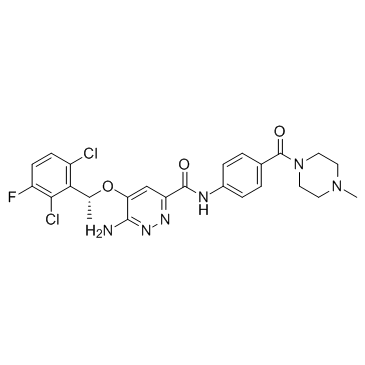
Ensartinib structure
|
Common Name | Ensartinib | ||
|---|---|---|---|---|
| CAS Number | 1365267-27-1 | Molecular Weight | 547.409 | |
| Density | 1.4±0.1 g/cm3 | Boiling Point | 695.1±55.0 °C at 760 mmHg | |
| Molecular Formula | C25H25Cl2FN6O3 | Melting Point | N/A | |
| MSDS | N/A | Flash Point | 374.2±31.5 °C | |
Use of EnsartinibX-376 is a potent and dual ALK/MET inhibitor with IC50s of 0.61 nM and 0.69 nM, respectively. |
This table lists Chinese names, IUPAC names and various aliases of this chemical substance.
| Name | 6-amino-5-[(1R)-1-(2,6-dichloro-3-fluorophenyl)ethoxy]-N-[4-(4-methylpiperazine-1-carbonyl)phenyl]pyridazine-3-carboxamide |
|---|---|
| Synonym | More Synonyms |
This table contains bioactivity, target information and biological‑assay experimental data of this compound.
| Description | X-376 is a potent and dual ALK/MET inhibitor with IC50s of 0.61 nM and 0.69 nM, respectively. |
|---|---|
| Related Catalog | |
| Target |
ALK:0.61 nM (IC50) MET:0.69 nM (IC50) |
| In Vitro | The ability of X-376 to inhibit the growth of different cancer cell lines harboring ALK fusions or point mutations is tested. X-376 is potent in H3122 lung cancer cells harboring EML4-ALK E13;A20 (IC50: 77 nM). X-376 is also potent in H2228 lung cancer cells harboring EML4-ALK E6a/b; A20 (IC50: 57 nM). Furthermore, X-376 is potent in SUDHL-1 lymphoma cells harboring NPM-ALK (IC50: 32 nM). X-376 also inhibits SY5Y neuroblastoma cells harboring ALK F1174L, MKN-45 gastric carcinoma cells harboring MET dependent, HepG2 cells and PC-9 lung cancer cell lines harboring EGFR exon 19 del with IC50s of 142 nM, 150 nM, 15.137 μM and 3.062 μM, respectively[1]. |
| In Vivo | The effects of X-376 in vivo against H3122 xenografts are examined. A pharmacokinetic study reveals that X-376 shows substantial bioavailability and moderate half-lives in vivo. Nude mice harboring H3122 xenografts are treated with X-376 at 50 mg/kg bid. X-376 significantly delays the growth of tumors compared to vehicle alone. In the xenograft experiments, X-376 appears well-tolerated in vivo. Mouse weight is unaffected by X-376 treatment. Drug-treated mice appear healthy and do not display any signs of compound related toxicity. To further assess potential side effects of X-376, additional systemic toxicity and toxico-kinetic studies are performed in Sprague Dawley (SD) rats. Following 10 days of repeated oral administration of X-376 at 25, 50, 100 mg/kg in SD rats, all animals survive to study termination. The no significant toxicity (NST) levels are determined to be 50 mg/kg for X-376. At NST levels, X-376 achieves an AUC of 41 μM×hr and a Cmax of 5.04 μM[1]. |
| Cell Assay | For viability experiments, cells are seeded in 96-well plates at 25%-33% confluency and exposed to drugs. The human lung adenocarcinoma cell lines H3122 and H2228 are treated with X-376 (10, 30, 100, 300 and 1000 nM). SUDHL-1 lymphoma cells are treated with X-376 (5, 10, 30, 100 and 300 nM). SY5Y neuroblastoma cells are treated with X-376 (30, 100, 300 and 1000 nM). At 72 hours post X-376 addition, Cell Titer Blue Reagent is added and fluorescence is measured on a Spectramax spectrophotometer. All experimental points are set up in hextuplicate replicates and are performed at least two independent times. IC50s are calculated using GraphPad Prism version 5 for Windows. The curves are fit using a nonlinear regression model with a log (inhibitor) vs. response formula[1]. |
| Animal Admin | Mice[1] Nude mice (nu/nu) are injected with H3122 cells. Once tumors reach an average volume of 450 mm3, a total of 27 athymic mice harboring H3122 tumors are randomized and dosed via oral gavage with 50 mg/kg X-376 or the control vehicle. Two, five, and fifteen hours after the single treatment (3 tumors/timepoint/group), mice are sacrificed and serum is collected for assessment of drug concentration using an LC-MS based bioanalytical method. |
| References |
This table shows physicochemical parameters including melting point, boiling point, density, solubility and optical rotation. Missing data is marked as N/A.
| Density | 1.4±0.1 g/cm3 |
|---|---|
| Boiling Point | 695.1±55.0 °C at 760 mmHg |
| Molecular Formula | C25H25Cl2FN6O3 |
| Molecular Weight | 547.409 |
| Flash Point | 374.2±31.5 °C |
| Exact Mass | 546.134949 |
| PSA | 113.68000 |
| LogP | 4.21 |
| Vapour Pressure | 0.0±2.2 mmHg at 25°C |
| Index of Refraction | 1.654 |
| InChIKey | ONPGOSVDVDPBCY-CQSZACIVSA-N |
| SMILES | CC(Oc1cc(C(=O)Nc2ccc(C(=O)N3CCN(C)CC3)cc2)nnc1N)c1c(Cl)ccc(F)c1Cl |
This table lists upstream starting materials and downstream derivative products related to this chemical.
| Precursor 6 | |
|---|---|
| DownStream 0 | |
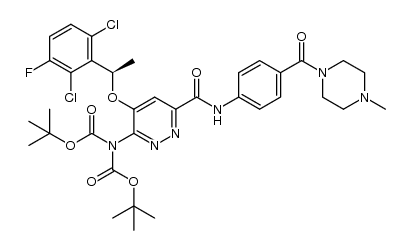 CAS#:1370651-39-0
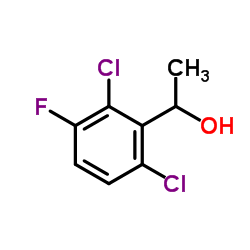 CAS#:756520-66-8
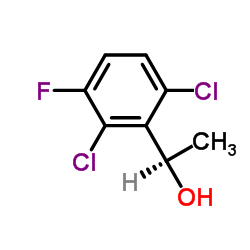 CAS#:330156-50-8
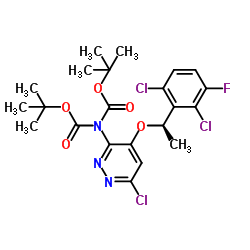 CAS#:1370651-32-3
![6-[Bis[(1,1-diMethylethoxy)carbonyl]aMino]-5-[(1r)-1- (2,6-dichloro-3-fluorophenyl)ethoxy]-3-pyridazinecarboxylic acid ethyl ester Structure](https://image.chemsrc.com/caspic/375/1370651-34-5.png) CAS#:1370651-34-5
CAS#:1370651-34-5![6-[bis(tert-butoxycarbonyl)amino]-5-[(1R)-1-(2,6-dichloro-3-fluorophenyl)ethoxy]pyridazine-3-carboxylic acid Structure](https://image.chemsrc.com/caspic/299/1370651-36-7.png) CAS#:1370651-36-7
CAS#:1370651-36-7This table contains target information, in‑vitro & in‑vivo assay data for this compound.
|
Name: Kinobeads (epsilon), multiple immobilized ATP-competitive broad spectrum kinase inhib...
Source: ChEMBL
Target: Aurora kinase A
External Id: CHEMBL3991630
|
|
Name: Kinobeads (epsilon), multiple immobilized ATP-competitive broad spectrum kinase inhib...
Source: ChEMBL
Target: Breakpoint cluster region protein
External Id: CHEMBL3991632
|
|
Name: Kinobeads (epsilon), multiple immobilized ATP-competitive broad spectrum kinase inhib...
Source: ChEMBL
Target: Aurora kinase B
External Id: CHEMBL3991631
|
|
Name: Kinobeads (epsilon), multiple immobilized ATP-competitive broad spectrum kinase inhib...
Source: ChEMBL
Target: Serine/threonine-protein kinase A-Raf
External Id: CHEMBL3991628
|
|
Name: Kinobeads (epsilon), multiple immobilized ATP-competitive broad spectrum kinase inhib...
Source: ChEMBL
Target: Adenine phosphoribosyltransferase
External Id: CHEMBL3991627
|
|
Name: Kinobeads (epsilon), multiple immobilized ATP-competitive broad spectrum kinase inhib...
Source: ChEMBL
Target: Tyrosine-protein kinase BTK
External Id: CHEMBL3991638
|
|
Name: Kinobeads (epsilon), multiple immobilized ATP-competitive broad spectrum kinase inhib...
Source: ChEMBL
Target: Serine/threonine-protein kinase B-raf
External Id: CHEMBL3991637
|
|
Name: Kinobeads (epsilon), multiple immobilized ATP-competitive broad spectrum kinase inhib...
Source: ChEMBL
Target: Mitotic checkpoint serine/threonine-protein kinase BUB1
External Id: CHEMBL3991639
|
|
Name: Kinobeads (epsilon), multiple immobilized ATP-competitive broad spectrum kinase inhib...
Source: ChEMBL
Target: Bone morphogenetic protein receptor type-1A
External Id: CHEMBL3991634
|
|
Name: Kinobeads (epsilon), multiple immobilized ATP-competitive broad spectrum kinase inhib...
Source: ChEMBL
Target: BMP-2-inducible protein kinase
External Id: CHEMBL3991633
|
This table collects all English aliases, systematic names and CAS‑related synonyms of the compound.
| X-376 |
| UNII-7DR7JMB8BH |
| X-396 |
| 3-Pyridazinecarboxamide,6-amino-5-((1R)-1-(2,6-dichloro-3-fluorophenyl)ethoxy)-N-(4-((4-methyl-1-piperazinyl)carbonyl)phenyl) |
| {5-[(1R)-1-(2,6-dichloro-3-fluorophenyl)ethoxy]-6-aminopyridazin-3-yl}-N-{4-[(4-methylpiperazinyl)carbonyl]phenyl}carboxamide |
| 6-Amino-5-[(1R)-1-(2,6-dichloro-3-fluorophenyl)ethoxy]-N-{4-[(4-methyl-1-piperazinyl)carbonyl]phenyl}-3-pyridazinecarboxamide |
| (R)-6-Amino-5-(1-(2,6-dichloro-3-fluorophenyl)ethoxy)-N-(4-(4-methylpiperazine-1-carbonyl)phenyl)pyridazine-3-carboxamide |
| X 396 |
| Ensartinib |
This section contains frequently‑asked‑questions about this compound, including basic parameters, properties, storage conditions and corresponding answers.
| Q: What is the English name of 6-amino-5-[(1R)-1-(2,6-dichloro-3-fluorophenyl)ethoxy]-N-[4-(4-methylpiperazine-1-carbonyl)phenyl]pyridazine-3-carboxamide? |
| A: The English name of 6-amino-5-[(1R)-1-(2,6-dichloro-3-fluorophenyl)ethoxy]-N-[4-(4-methylpiperazine-1-carbonyl)phenyl]pyridazine-3-carboxamide is 6-amino-5-[(1R)-1-(2,6-dichloro-3-fluorophenyl)ethoxy]-N-[4-(4-methylpiperazine-1-carbonyl)phenyl]pyridazine-3-carboxamide. |
| Q: What is the molecular weight of 6-amino-5-[(1R)-1-(2,6-dichloro-3-fluorophenyl)ethoxy]-N-[4-(4-methylpiperazine-1-carbonyl)phenyl]pyridazine-3-carboxamide? |
| A: Molecular weight of 6-amino-5-[(1R)-1-(2,6-dichloro-3-fluorophenyl)ethoxy]-N-[4-(4-methylpiperazine-1-carbonyl)phenyl]pyridazine-3-carboxamide is 547.409. |
| Q: What is the InChIKey of 6-amino-5-[(1R)-1-(2,6-dichloro-3-fluorophenyl)ethoxy]-N-[4-(4-methylpiperazine-1-carbonyl)phenyl]pyridazine-3-carboxamide? |
| A: InChIKey of 6-amino-5-[(1R)-1-(2,6-dichloro-3-fluorophenyl)ethoxy]-N-[4-(4-methylpiperazine-1-carbonyl)phenyl]pyridazine-3-carboxamide is ONPGOSVDVDPBCY-CQSZACIVSA-N. |
| Q: What is the polar surface area (PSA) of 6-amino-5-[(1R)-1-(2,6-dichloro-3-fluorophenyl)ethoxy]-N-[4-(4-methylpiperazine-1-carbonyl)phenyl]pyridazine-3-carboxamide? |
| A: Polar surface area (PSA) of 6-amino-5-[(1R)-1-(2,6-dichloro-3-fluorophenyl)ethoxy]-N-[4-(4-methylpiperazine-1-carbonyl)phenyl]pyridazine-3-carboxamide is 113.68000. |
| Q: What is the boiling point of 6-amino-5-[(1R)-1-(2,6-dichloro-3-fluorophenyl)ethoxy]-N-[4-(4-methylpiperazine-1-carbonyl)phenyl]pyridazine-3-carboxamide? |
| A: Boiling point of 6-amino-5-[(1R)-1-(2,6-dichloro-3-fluorophenyl)ethoxy]-N-[4-(4-methylpiperazine-1-carbonyl)phenyl]pyridazine-3-carboxamide is 695.1±55.0 °C at 760 mmHg. |
| Q: What is the LogP of 6-amino-5-[(1R)-1-(2,6-dichloro-3-fluorophenyl)ethoxy]-N-[4-(4-methylpiperazine-1-carbonyl)phenyl]pyridazine-3-carboxamide? |
| A: LogP of 6-amino-5-[(1R)-1-(2,6-dichloro-3-fluorophenyl)ethoxy]-N-[4-(4-methylpiperazine-1-carbonyl)phenyl]pyridazine-3-carboxamide is 4.21. |
| Q: What is the molecular formula of 6-amino-5-[(1R)-1-(2,6-dichloro-3-fluorophenyl)ethoxy]-N-[4-(4-methylpiperazine-1-carbonyl)phenyl]pyridazine-3-carboxamide? |
| A: Molecular formula of 6-amino-5-[(1R)-1-(2,6-dichloro-3-fluorophenyl)ethoxy]-N-[4-(4-methylpiperazine-1-carbonyl)phenyl]pyridazine-3-carboxamide is C25H25Cl2FN6O3. |
| Q: What is the CAS number of 6-amino-5-[(1R)-1-(2,6-dichloro-3-fluorophenyl)ethoxy]-N-[4-(4-methylpiperazine-1-carbonyl)phenyl]pyridazine-3-carboxamide? |
| A: CAS number of 6-amino-5-[(1R)-1-(2,6-dichloro-3-fluorophenyl)ethoxy]-N-[4-(4-methylpiperazine-1-carbonyl)phenyl]pyridazine-3-carboxamide is 1365267-27-1. |
| Q: What are the upstream materials of 6-amino-5-[(1R)-1-(2,6-dichloro-3-fluorophenyl)ethoxy]-N-[4-(4-methylpiperazine-1-carbonyl)phenyl]pyridazine-3-carboxamide? |
| A: Related upstream materials(CAS) of 6-amino-5-[(1R)-1-(2,6-dichloro-3-fluorophenyl)ethoxy]-N-[4-(4-methylpiperazine-1-carbonyl)phenyl]pyridazine-3-carboxamide: 1370651-39-0;756520-66-8;330156-50-8;1370651-32-3;1370651-34-5;1370651-36-7. |
| Q: What are the uses of 6-amino-5-[(1R)-1-(2,6-dichloro-3-fluorophenyl)ethoxy]-N-[4-(4-methylpiperazine-1-carbonyl)phenyl]pyridazine-3-carboxamide? |
| A: Main uses of 6-amino-5-[(1R)-1-(2,6-dichloro-3-fluorophenyl)ethoxy]-N-[4-(4-methylpiperazine-1-carbonyl)phenyl]pyridazine-3-carboxamide: X-376 is a potent and dual ALK/MET inhibitor with IC50s of 0.61 nM and 0.69 nM, respectively. |
This table lists manufacturers and suppliers of this compound, including vendor names and product supply reference information.
| Shanghai Nianxing Industrial Co., Ltd |