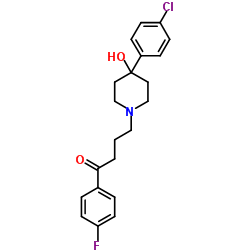
Ethoxylated hydrogenated castor oil

Modify Date: 2026-07-03 16:55:33

Ethoxylated hydrogenated castor oil Structure
Ethoxylated hydrogenated castor oil structure
Common Name Ethoxylated hydrogenated castor oil
CAS Number 61788-85-0 Molecular Weight 375.864
Density 1.2±0.1 g/cm3 Boiling Point 529.0±50.0 °C at 760 mmHg
Molecular Formula C21H23ClFNO2 Melting Point N/A
MSDS USA Flash Point 273.8±30.1 °C

 Use of Ethoxylated hydrogenated castor oil


Ethoxylated hydrogenated castor oil (PEG-40 hydrogenated castor oil) is a combination of synthetic polyethylene glycol (PEG) with natural castor oil. Ethoxylated hydrogenated castor oil can be used to emulsify and solubilize oil-in-water (o/w) emulsions. Ethoxylated hydrogenated castor oil can be used as a cosolvent in vivo[1].

 Names

Name Ethoxylated hydrogenated castor oil
Synonym More Synonyms

 Ethoxylated hydrogenated castor oil Biological Activity

Description Ethoxylated hydrogenated castor oil (PEG-40 hydrogenated castor oil) is a combination of synthetic polyethylene glycol (PEG) with natural castor oil. Ethoxylated hydrogenated castor oil can be used to emulsify and solubilize oil-in-water (o/w) emulsions. Ethoxylated hydrogenated castor oil can be used as a cosolvent in vivo[1].
Related Catalog
In Vivo 20% PEG-40 hydrogenated castor oil (10 μl) is applied to the left ear of the mouse, and the right ear served as a control. The mice are observed for development of erthyma for 6 days, no signs of irritation are observed in the mice[1]. PEG-40 hydrogenated castor oil (injection via the tail vein; 300, 900, and 2700 mg/kg; 4 weeks) is administared for short-term toxicity. At doses of 300 and 900 mg/kg PEG-40 Hydrogenated Castor Oi exhibits no systemic toxicity. However, at a dose of 2700 mg/kg, slight ataxia is observed and body weight is reduced significantly in the males and slightly in the females[1]. A toxicity study of blank nanoemulsion using PEG-40 hydrogenated castor oil as a surfactant is applied in order to load various active compounds for oral administration[2]. Nearly 20% of PEG-40 hydrogenated castor oil was used to emulsify the glyceryl monooleate (GMO) as an oil to the aqueous phase. In Webster mice, 5000 mg/kg blank nanoemulsion is given orally to mice once a day for 14 days, this nanoemulsion does not produce hazardous effects, and it has no effect on food intake[2].
References

[1]. PEG-40 HYDROGENATED CASTOR OIL

[2]. Heni Rachmawati, et al. The In Vitro-In Vivo Safety Confirmation of PEG-40 Hydrogenated Castor Oil as a Surfactant for Oral Nanoemulsion Formulation. Sci Pharm. 2017 Mar 31;85(2):18. doi: 10.3390/scipharm85020018.

[3]. PEGylated Oils as Used in Cosmetics

 Chemical & Physical Properties

Density 1.2±0.1 g/cm3
Boiling Point 529.0±50.0 °C at 760 mmHg
Molecular Formula C21H23ClFNO2
Molecular Weight 375.864
Flash Point 273.8±30.1 °C
Exact Mass 375.140137
LogP 3.01
Vapour Pressure 0.0±1.5 mmHg at 25°C
Index of Refraction 1.581

 Safety Information

RIDADR NONH for all modes of transport

 Articles25

More Articles
Formulation and biopharmaceutical evaluation of silymarin using SMEDDS.

Arch. Pharm. Res. 30(1) , 82-9, (2007)

Silymarin has been used to treat hepatobiliary diseases. However, it has a low bioavailability after being administered orally on account of its low solubility in water. In order to improve the dissol...

Preparation and evaluation of self-nanoemulsifying tablets of carvedilol.

AAPS PharmSciTech 10(1) , 183-92, (2009)

The purpose of this study was to combine the advantages of self-nanoemulsifying drug delivery systems and tablets as a conventional dosage form emphasizing the excipients' effect on the development of...

Detailed molecular characterization of castor oil ethoxylates by liquid chromatography multistage mass spectrometry.

J. Chromatogr. A. 1218(40) , 7166-72, (2011)

The molecular characterization of castor oil ethoxylates (CASEOs) was studied by reverse-phase liquid chromatography (RPLC) mass spectrometry (MS) and multistage mass spectrometry (MS(n)). The develop...

 Synonyms

Brotopon
Einalon S
Eukystol
4-[4-(4-Chlorophenyl)-4-hydroxy-1-piperidinyl]-1-(4-fluorophenyl)-1-butanone
Peluces
Haldol
Halosten
Linton
Aloperidin
4-[4-(p-Chlorophenyl)-4-hydroxypiperidino]-4'-fluorobutyrophenone
Sigaperidol
haloperidol
Haloperidol [USAN:BAN:INN:JAN]
4-[4-(4-chlorophenyl)-4-hydroxypiperidin-1-yl]-1-(4-fluorophenyl)butan-1-one
Serenace
4-[4-(4-Chlorphenyl)-4-hydroxypiperidin-1-yl]-1-(4-fluorphenyl)butan-1-on
Bioperidolo
Dozic
Keselan
The content on this webpage is sourced from various professional data sources. If you have any questions or concerns regarding the content, please feel free to contact service1@chemsrc.com.