Imidacloprid
Published date: 2018-07-13 14:51:34
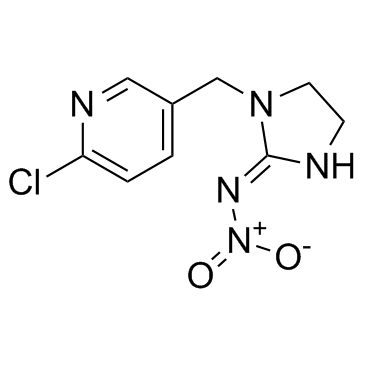


|
Name | Imidacloprid | CAS# | 138261-41-3 |
|---|---|---|---|---|
| Price | $Inquiry/1kg | Purity | 99.0% | |
| Stocking Period |
Inquiry | Stock | In Stock |
| Detail
Product Information
Names [ Name ]: (E)-imidacloprid [ Synonym ]: More Synonyms Chemical & Physical Properties [ Density ]: 1.6±0.1 g/cm3 [ Boiling Point ]: 442.3±55.0 °C at 760 mmHg [ Melting Point ]: 144ºC [ Molecular Formula ]: C9H10ClN5O2 [ Molecular Weight ]: 255.661 [ Flash Point ]: 221.3±31.5 °C [ Exact Mass ]: 255.052307 [ PSA ]: 89.04000 [ LogP ]: -0.43 [ Vapour Pressure ]: 0.0±1.1 mmHg at 25°C [ Index of Refraction ]: 1.706 MSDS SECTION 1: Identification of the substance/mixture and of the company/undertaking Product identifiers Product name: Imidacloprid : Fluka
REACH No.: A registration number is not available for this substance as the substance or its uses are exempted from registration, the annual tonnage does not require a registration or the registration is envisaged for a later registration deadline. CAS-No.: 138261-41-3 SECTION 2: Hazards identification Classification of the substance or mixture Classification according to Regulation (EC) No 1272/2008 Acute toxicity, Oral (Category 4), H302 Acute aquatic toxicity (Category 1), H400 Chronic aquatic toxicity (Category 1), H410 For the full text of the H-Statements mentioned in this Section, see Section 16. Classification according to EU Directives 67/548/EEC or 1999/45/EC Xn HarmfulR22 For the full text of the R-phrases mentioned in this Section, see Section 16. Label elements Labelling according Regulation (EC) No 1272/2008 Pictogram Signal wordWarning Hazard statement(s) Harmful if swallowed. Very toxic to aquatic life with long lasting effects. Precautionary statement(s) Avoid release to the environment. Dispose of contents/ container to an approved waste disposal plant. Supplemental Hazardnone Statements Other hazards - none SECTION 3: Composition/information on ingredients Substances Formula: C9H10ClN5O2 Molecular Weight: 255,66 g/mol CAS-No.: 138261-41-3 Hazardous ingredients according to Regulation (EC) No 1272/2008 ComponentClassificationConcentration Imidacloprid CAS-No.138261-41-3Acute Tox. 4; Aquatic Acute 1; 5.323 mg/m3 LD50 Dermal - rat - > 5.000 mg/kg Skin corrosion/irritation no data available Serious eye damage/eye irritation no data available Respiratory or skin sensitisation no data available Germ cell mutagenicity no data available Carcinogenicity IARC:No component of this product present at levels greater than or equal to 0.1% is identified as probable, possible or confirmed human carcinogen by IARC. Reproductive toxicity no data available Specific target organ toxicity - single exposure no data available Specific target organ toxicity - repeated exposure no data available Aspiration hazard no data available Additional Information RTECS: NJ0560000 To the best of our knowledge, the chemical, physical, and toxicological properties have not been thoroughly investigated. SECTION 12: Ecological information Toxicity no data available Toxicity to fishLC50 - Oncorhynchus mykiss (rainbow trout) - 211 mg/l - 96 h Persistence and degradability no data available Bioaccumulative potential no data available Mobility in soil no data available Results of PBT and vPvB assessment PBT/vPvB assessment not available as chemical safety assessment not required/not conducted Other adverse effects no data available SECTION 13: Disposal considerations Waste treatment methods Product Offer surplus and non-recyclable solutions to a licensed disposal company. Dissolve or mix the material with a combustible solvent and burn in a chemical incinerator equipped with an afterburner and scrubber. Contaminated packaging Dispose of as unused product. SECTION 14: Transport information UN number ADR/RID: 3077IMDG: 3077IATA: 3077 UN proper shipping name ADR/RID: ENVIRONMENTALLY HAZARDOUS SUBSTANCE, SOLID, N.O.S. (Imidacloprid) IMDG: ENVIRONMENTALLY HAZARDOUS SUBSTANCE, SOLID, N.O.S. (Imidacloprid) IATA:Environmentally hazardous substance, solid, n.o.s. (Imidacloprid) Transport hazard class(es) ADR/RID: 9IMDG: 9IATA: 9 Packaging group ADR/RID: IIIIMDG: IIIIATA: III Environmental hazards ADR/RID: yesIMDG Marine pollutant: yesIATA: yes Special precautions for user Further information EHS-Mark required (ADR 2.2.9.1.10, IMDG code 2.10.3) for single packagings and combination packagings containing inner packagings with Dangerous Goods > 5L for liquids or > 5kg for solids. SECTION 15: Regulatory information This safety datasheet complies with the requirements of Regulation (EC) No. 1907/2006. Safety, health and environmental regulations/legislation specific for the substance or mixture no data available Chemical Safety Assessment Further information only. The above information is believed to be correct but does not purport to be all inclusive and shall be used only as a guide. The information in this document is based on the present state of our knowledge and is applicable to the product with regard to appropriate safety precautions. It does not represent any SECTION 16 - ADDITIONAL INFORMATION N/A Toxicological Information CHEMICAL IDENTIFICATION RTECS NUMBER : NJ0560000 CHEMICAL NAME : 2-Imidazolidinimine, 1-((6-chloro-3-pyridinyl)methyl)-N-nitro- CAS REGISTRY NUMBER : 138261-41-3 LAST UPDATED : 199806 DATA ITEMS CITED : 5 MOLECULAR FORMULA : C9-H10-Cl-N5-O2 MOLECULAR WEIGHT : 255.69 HEALTH HAZARD DATA ACUTE TOXICITY DATA TYPE OF TEST : LD50 - Lethal dose, 50 percent kill ROUTE OF EXPOSURE : Oral SPECIES OBSERVED : Rodent - rat DOSE/DURATION : 410 mg/kg TOXIC EFFECTS : Details of toxic effects not reported other than lethal dose value REFERENCE : AGJAEP Agrochemcicals Japan. (Japan Plant Protection Association, 1-43-11, Komagome, Toshima-ku, Tokyo 170, Japan) No.62- 1993- Volume(issue)/page/year: (63),15,1993 TYPE OF TEST : LC50 - Lethal concentration, 50 percent kill ROUTE OF EXPOSURE : Inhalation SPECIES OBSERVED : Rodent - rat DOSE/DURATION : >5323 mg/m3 TOXIC EFFECTS : Details of toxic effects not reported other than lethal dose value REFERENCE : AGJAEP Agrochemcicals Japan. (Japan Plant Protection Association, 1-43-11, Komagome, Toshima-ku, Tokyo 170, Japan) No.62- 1993- Volume(issue)/page/year: (63),15,1993 TYPE OF TEST : LD50 - Lethal dose, 50 percent kill ROUTE OF EXPOSURE : Administration onto the skin SPECIES OBSERVED : Rodent - rat DOSE/DURATION : >5 gm/kg TOXIC EFFECTS : Details of toxic effects not reported other than lethal dose value REFERENCE : AGJAEP Agrochemcicals Japan. (Japan Plant Protection Association, 1-43-11, Komagome, Toshima-ku, Tokyo 170, Japan) No.62- 1993- Volume(issue)/page/year: (63),15,1993 TYPE OF TEST : LD50 - Lethal dose, 50 percent kill ROUTE OF EXPOSURE : Oral SPECIES OBSERVED : Rodent - mouse DOSE/DURATION : 98 mg/kg TOXIC EFFECTS : Details of toxic effects not reported other than lethal dose value REFERENCE : NNGADV Nippon Noyaku Gakkaishi. Journal of the Pesticide Science Society of Japan. (Nippon Noyaku Gakkai, 1-43-11, Komagome, Toshima-ku, Tokyo 170, Japan) V.1- 1976- Volume(issue)/page/year: 19,S209,1994 ** OTHER MULTIPLE DOSE TOXICITY DATA ** TYPE OF TEST : TDLo - Lowest published toxic dose ROUTE OF EXPOSURE : Oral SPECIES OBSERVED : Rodent - rat DOSE/DURATION : 4550 mg/kg/13W-C TOXIC EFFECTS : Behavioral - food intake (animal) Nutritional and Gross Metabolic - weight loss or decreased weight gain REFERENCE : TOXID9 Toxicologist. (Soc. of Toxicology, Inc., 475 Wolf Ledge Parkway, Akron, OH 44311) V.1- 1981- Volume(issue)/page/year: 36(1,pt2),64,1997 Safety Information [ Symbol ]: GHS02 GHS07 GHS02, GHS07 [ Signal Word ]: Danger [ Hazard Statements ]: H225-H302-H312-H319-H332 [ Precautionary Statements ]: P210-P280-P305 + P351 + P338 [ Personal Protective Equipment ]: Eyeshields;Faceshields;full-face respirator (US);Gloves;multi-purpose combination respirator cartridge (US);type ABEK (EN14387) respirator filter [ Hazard Codes ]: N: Dangerous for the environment;Xn: Harmful;F: Flammable; [ Risk Phrases ]: R11 [ Safety Phrases ]: 26-36-22 [ RIDADR ]: UN 2588 [ RTECS ]: NJ0560000 [ Packaging Group ]: III [ Hazard Class ]: 6.1(b) [ HS Code ]: 2933399026 Customs [ HS Code ]: 2933399026 Articles29More Articles Efficient removal of insecticide "imidacloprid" from water by electrochemical advanced oxidation processes. Environ. Sci. Pollut. Res. Int. 21(14) , 8387-97, (2014) The oxidative degradation of imidacloprid (ICP) has been carried out by electrochemical advanced oxidation processes (EAOPs), anodic oxidation, and electro-Fenton, in which hydroxyl radicals are gener... Detail Evaluation of imidacloprid-induced neurotoxicity in male rats: a protective effect of curcumin. Neurochem. Int. 78 , 122-9, (2014) The present study was carried out to evaluate the neurotoxic effect and biochemical alteration as a result of imidacloprid (IMI) exposure and potential protective role of curcumin (Cur) against it in ... Detail Capillary electrophoresis-mass spectrometry as a new approach to analyze neonicotinoid insecticides. J. Chromatogr. A. 1359 , 317-24, (2014) This paper represents the first report of a capillary electrophoresis (CE) method compatible with mass spectrometry (MS) detection for simultaneously analyzing seven neonicotinoid insecticides (acetam... Detail Synonyms 1-((6-chloropyridin-3-yl)methyl)-3-nitroimidazolidin-2-imine MFCD01721131 EINECS 200-835-2 Imidacloprid 1-((6-Chloro-3-pyridinyl)methyl)-N-nitro-imidazolidinimine More
|
- Shanghai Nianxing Industrial Co., Ltd
- China
- Product Name: Imidacloprid
- Price: Check
- Purity: 98.0%
- Stocking Period: 10 Day
- Contact: Yang
- Email: sales@echemcloud.com
- DC Chemicals Limited
- China
- Product Name: confidorsl
- Price: $Inquiry/100mg $Inquiry/250mg $Inquiry/500mg
- Purity: 98.0%
- Stocking Period: 3 Day
- Contact: Tony Cao
- Email: sales@dcchemicals.com
- ShangHai DC Chemicals Co.,Ltd
- China
- Product Name: confidorsl
- Price: ¥Inquiry/1g
- Purity: 98.9%
- Stocking Period: 1 Day
- Contact: Tony Lai
- Email: order@dcchemicals.com
- Dayang Chem (Hangzhou) Co., Ltd.
- China
- Product Name: Imidacloprid
- Price: $Inquiry/100g $Inquiry/1kg $Inquiry/100kg $Inquiry/1000kg
- Purity: 98.0%
- Stocking Period: Inquiry
- Contact: Ms Wang
- Email: enquiry@dycnchem.com
- Shanghai Amole Biotechnology Co., Ltd.
- China
- Product Name: Imidacloprid
- Price: ¥Inquiry/1g ¥Inquiry/250mg ¥Inquiry/25g ¥Inquiry/5g
- Purity: 98.0%
- Stocking Period: Inquiry
- Contact: Xiyao Wang
- Email: 3623107365@qq.com
- Henan Tianfu Chemical Co., Ltd.
- China
- Product Name: Imidacloprid
- Price: $Inquiry/1kg $Inquiry/25kg $Inquiry/1000kg $Inquiry/10ton
- Purity: 99.0%
- Stocking Period: Inquiry
- Contact: Anson
- Email: info@tianfuchem.com
- Zhongshan Xingrui Chemical Co. , Ltd.
- China
- Product Name: Imidacloprid
- Price: ¥Inquiry/25kg
- Purity: 99.0%
- Stocking Period: Inquiry
- Contact: Wang Jie

- Email: 3096638339@qq.com
Get all suppliers by the below link:
Price: $66/10mM*1mLinDMSO