Bioorganic & Medicinal Chemistry Letters
2012-09-01
DBD dyes as fluorescent probes for sensing lipophilic environments.
Robert Wawrzinek, Pablo Wessig, Kristian Möllnitz, Jörg Nikolaus, Roland Schwarzer, Peter Müller, Andreas Herrmann
Index: Bioorg. Med. Chem. Lett. 22(17) , 5367-71, (2012)
Full Text: HTML
Abstract
Small fluorescent organic molecules based on [1,3]dioxolo[4,5-f][1,3]benzodioxole (DBD) could be used as probes for lipophillic microenvironments in aqueous solutions by indicating the critical micelles concentration of detergents and staining cell organelles. Their fluorescence lifetime decreases drastically by the amount of water in their direct environment. Therefore they are potential probes for fluorescence lifetime imaging microscopy (FLIM).Copyright © 2012 Elsevier Ltd. All rights reserved.
Related Compounds
| Structure | Name/CAS No. | Molecular Formula | Articles |
|---|---|---|---|
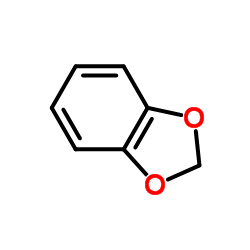 |
1,3-Benzodioxole
CAS:274-09-9 |
C7H6O2 |
Related Articles:
More...
|
Smooth photocatalytic preparation of 2-substituted 1,3-benzo...
2011-01-10 [Chemistry 17(2) , 572-9, (2011)] |
|
Computer graphics analysis of the interaction of alkoxy meth...
1995-02-01 [Toxicol. Lett. 76(1) , 39-45, (1995)] |
|
Synthesis and cytotoxicity of podophyllotoxin analogues modi...
2003-01-01 [Eur. J. Med. Chem. 38(1) , 65-74, (2003)] |
|
Sesamol as an inhibitor of growth and lipid metabolism in Mu...
1997-06-01 [Lipids 32(6) , 605-10, (1997)] |
|
A natural component as coinitiator for unfilled dental resin...
2007-07-01 [J. Biomed. Mater. Res. B. Appl. Biomater. 82(1) , 44-50, (2007)] |