Recent advances in submolecular resolution with scanning probe microscopy.
Leo Gross
Index: Nature Chemistry 3(4) , 273-8, (2011)
Full Text: HTML
Abstract
Recently scanning probe microscopy has made tremendous progress in imaging organic molecules with high lateral resolution. Atoms and bonds within individual molecules have been clearly resolved, indicating the exciting potential of this technique for studying molecular structures, bonding within and between molecules, molecular conformational changes and chemical reactions at the single-molecule level. It turns out that the key step enabling such studies is an atomically controlled functionalization of the microscope tip. In this Perspective, the different techniques used for high-resolution molecular imaging, their implementations, advantages and limitations are described, and possible scientific areas of applications are discussed.
Related Compounds
| Structure | Name/CAS No. | Molecular Formula | Articles |
|---|---|---|---|
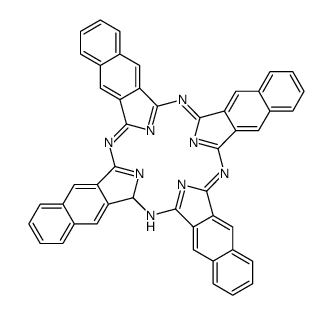 |
2,3-naphthalocyanine
CAS:23627-89-6 |
C48H26N8 |
|
Soluble precursors of 2,3-naphthalocyanine and phthalocyanin...
2008-10-21 [Chem. Commun. (Camb.) (39) , 4714-6, (2008)] |
|
Si(IV)-naphthalocyanine: modulation of its pharmacokinetic p...
1992-08-14 [Cancer Lett. 65(2) , 145-50, (1992)] |
|
Spatial imaging of individual vibronic states in the interio...
2011-07-07 [J. Chem. Phys. 135(1) , 014705, (2011)] |
|
Tetraamido-substituted 2,3-naphthalocyanine zinc(II) complex...
1996-09-01 [J. Photochem. Photobiol. B, Biol. 35(3) , 167-74, (1996)] |
|
Photoinactivation of amelanotic and melanotic melanoma cells...
1998-03-01 [J. Photochem. Photobiol. B, Biol. 42(3) , 202-10, (1998)] |